
Research basics
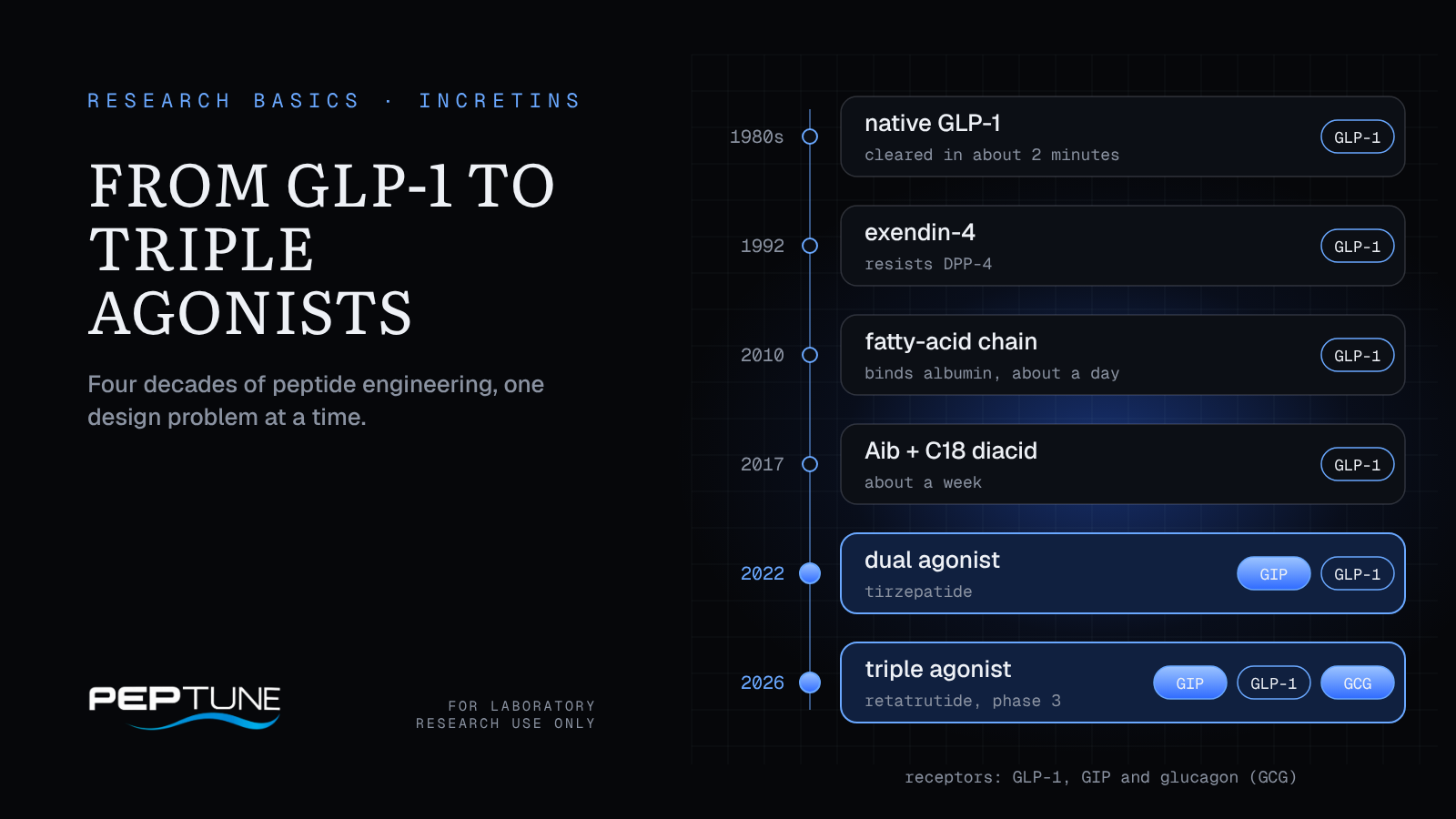 Research basicsFrom GLP-1 to triple agonists: how incretin peptide research evolvedNative GLP-1 lasts about two minutes in the body. Four decades of peptide engineering turned it into weekly dual and triple agonists. A short history of the design problems researchers solved along the way.4 min read
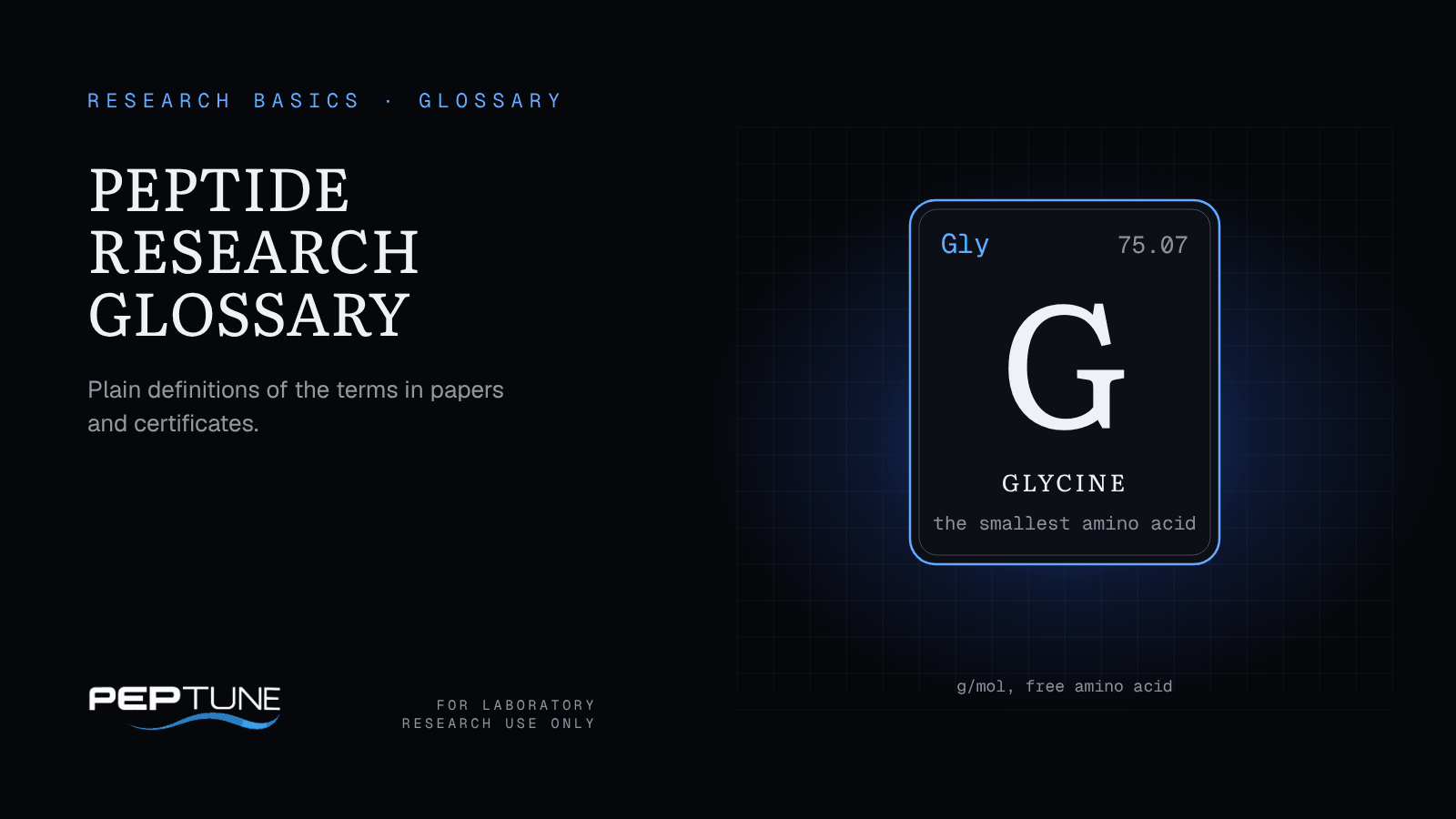 Research basicsPeptide research glossary: plain definitions of common termsFrom amino acid to endotoxin: short, plain definitions of the terms that come up in peptide papers and certificates of analysis.3 min read
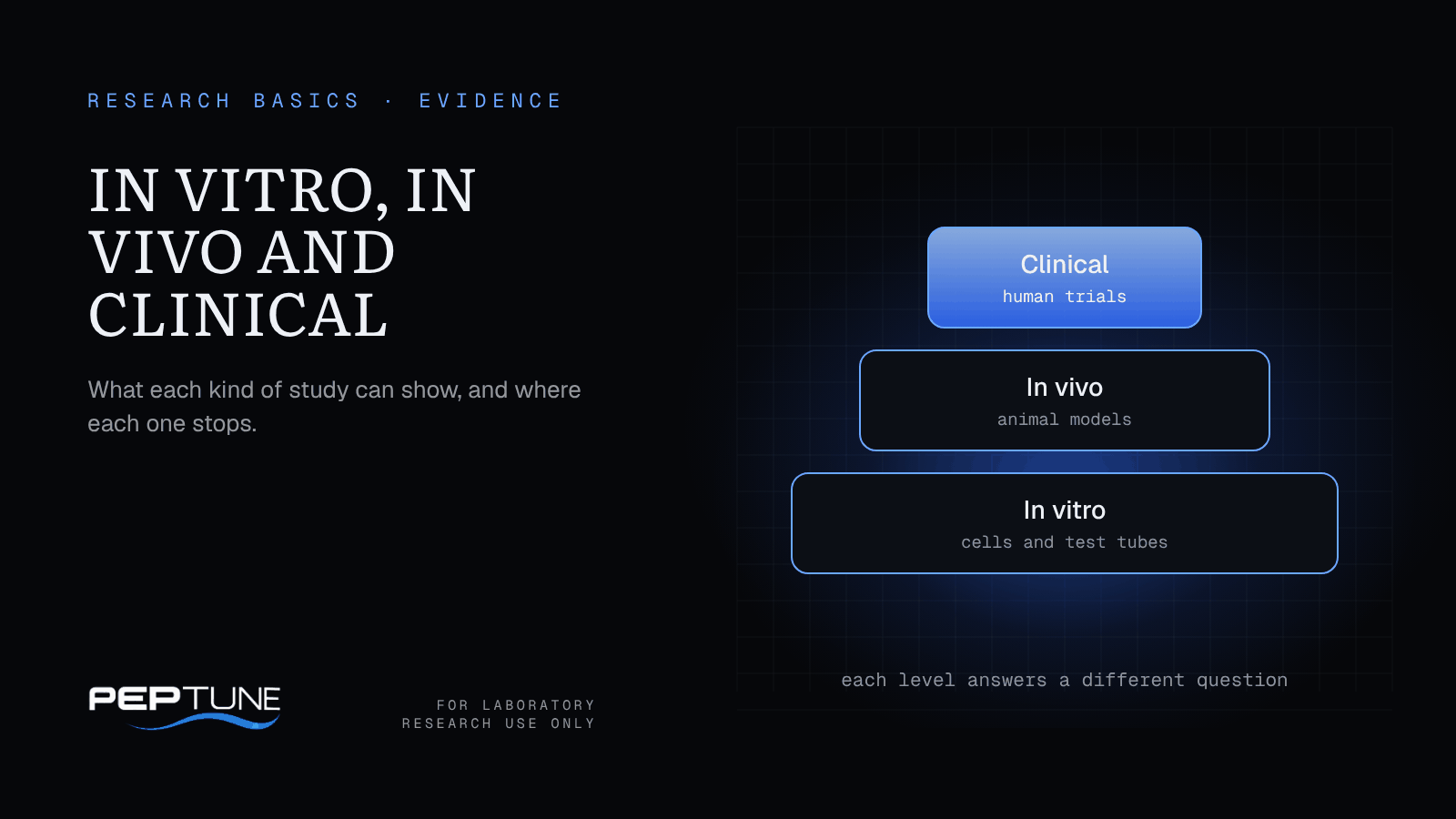 Research basicsIn vitro, in vivo and clinical research: what each can showTest tube, animal model or human trial: each kind of study answers a different question. What in vitro, in vivo and clinical research can show, and where each one stops.3 min read
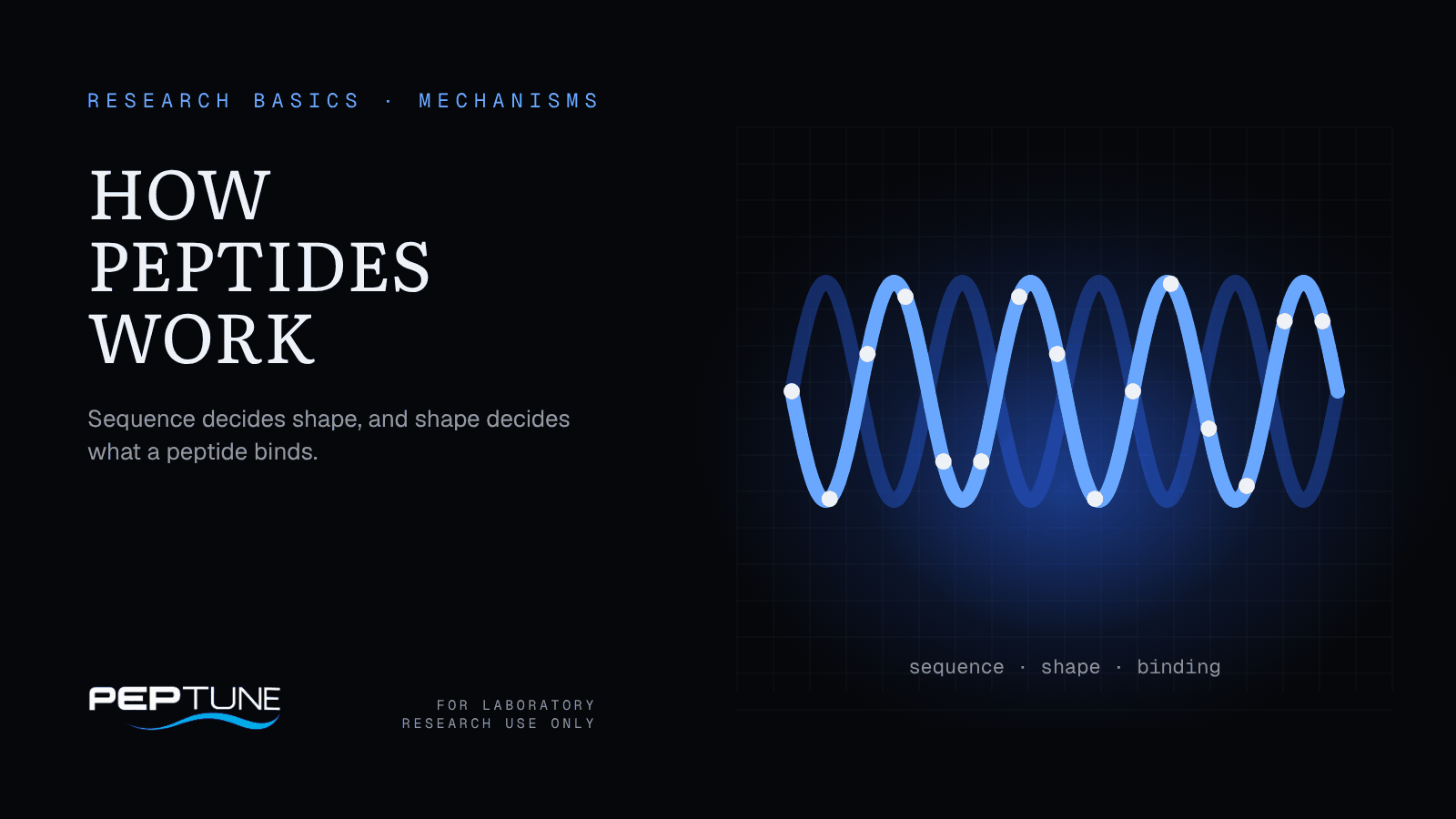 Research basicsHow peptides work: structure, receptors and signallingA peptide's sequence decides its shape, and its shape decides what it can bind. How peptides interact with receptors and enzymes, and why a mechanism is only the start of the evidence.4 min read
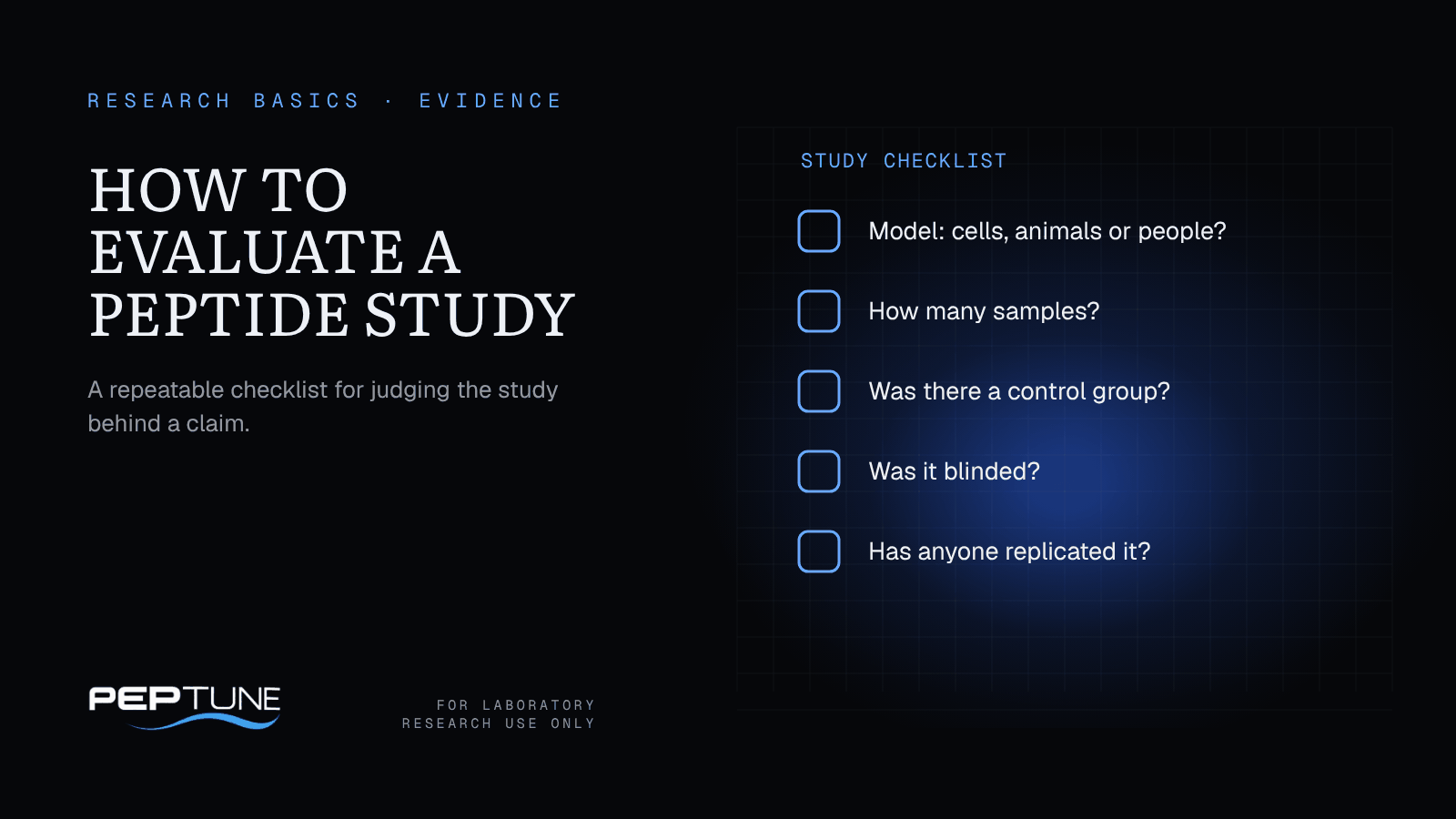 Research basicsHow to evaluate a peptide study: a practical checklistHeadlines and product pages summarise studies; the paper is what counts. A repeatable checklist for judging the study behind a peptide claim.3 min read
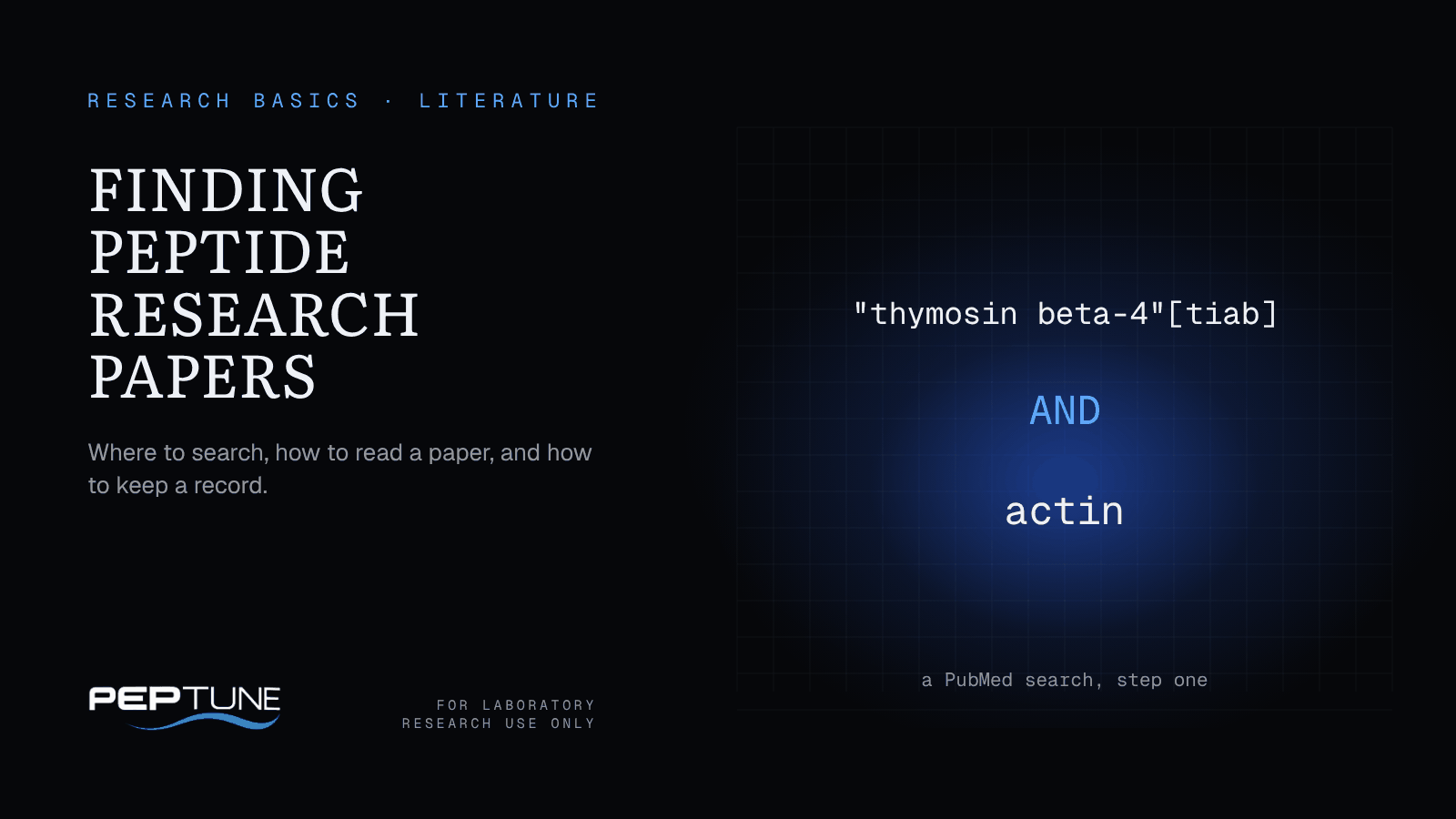 Research basicsHow to find and read peptide research papersWhere to search for peptide research, how to read a paper without getting lost, and how to keep a simple record of the evidence behind each claim.3 min read
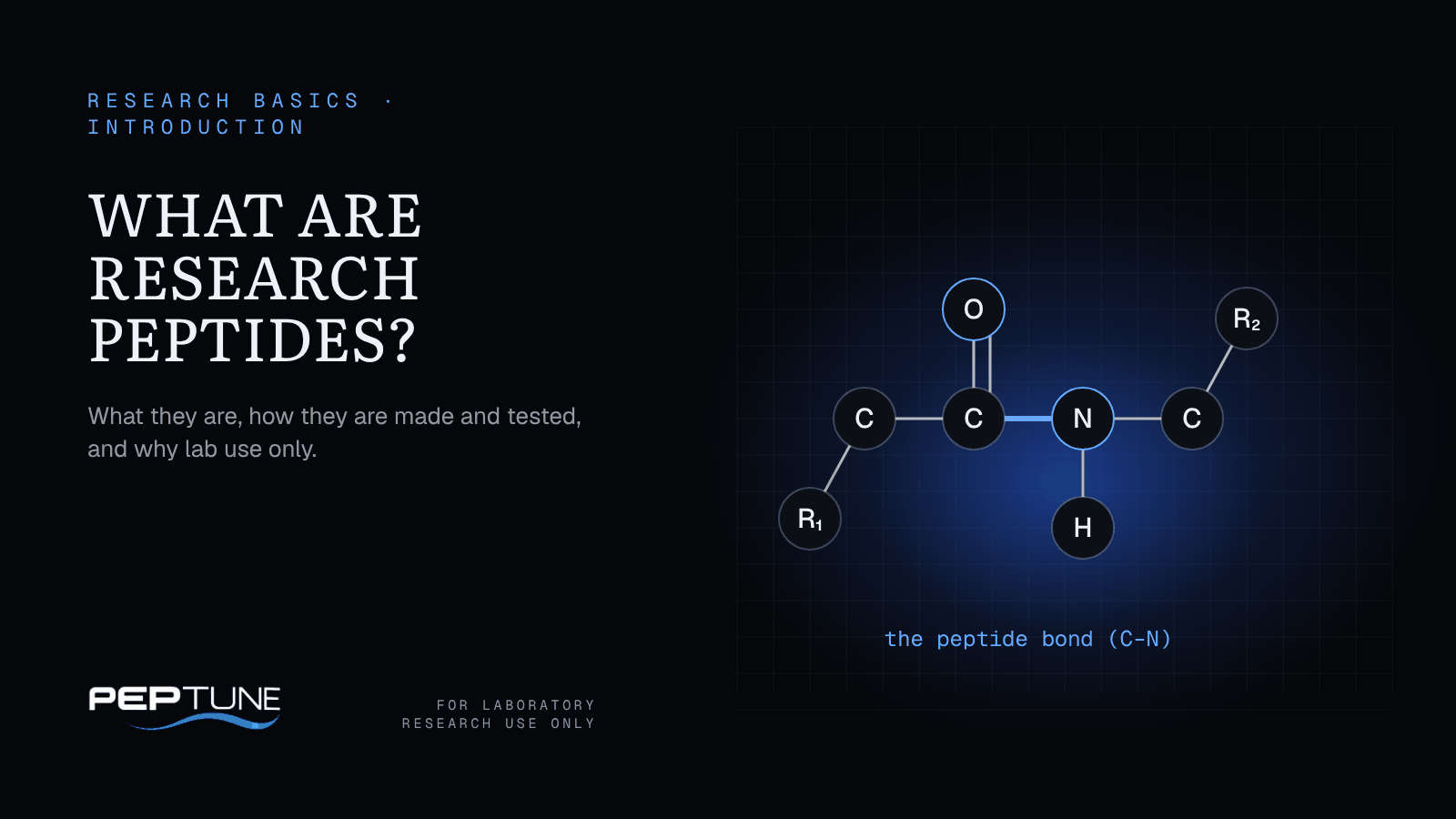 Research basicsWhat are research peptides?A plain introduction to synthetic peptides: what they are, how they are made and tested, and why they are sold for laboratory use only.3 min read
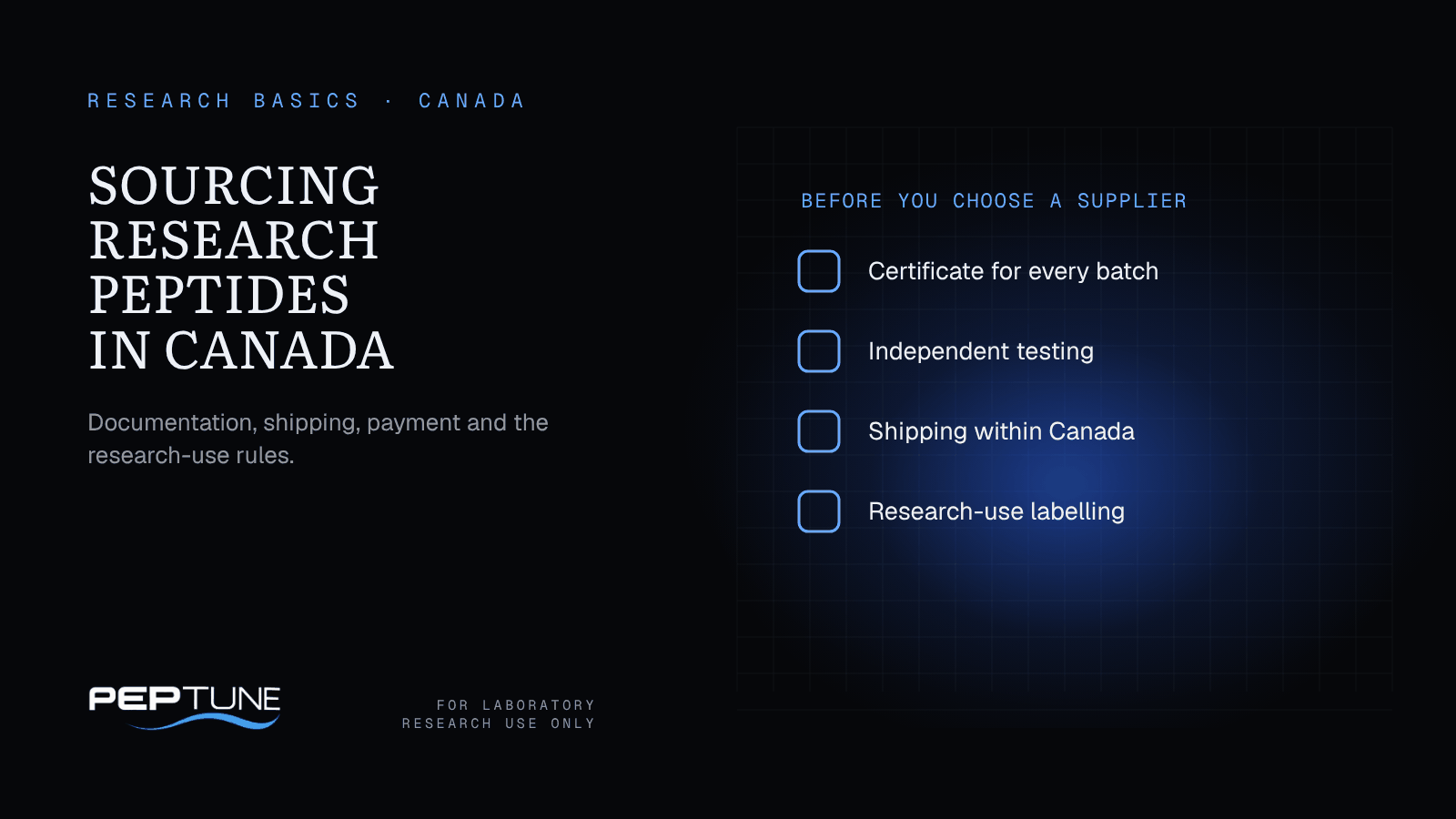 Research basicsSourcing research peptides in CanadaWhat Canadian laboratories should check before choosing a supplier of research peptides: documentation, shipping, payment and the research-use rules.5 min read