
Quality & testing
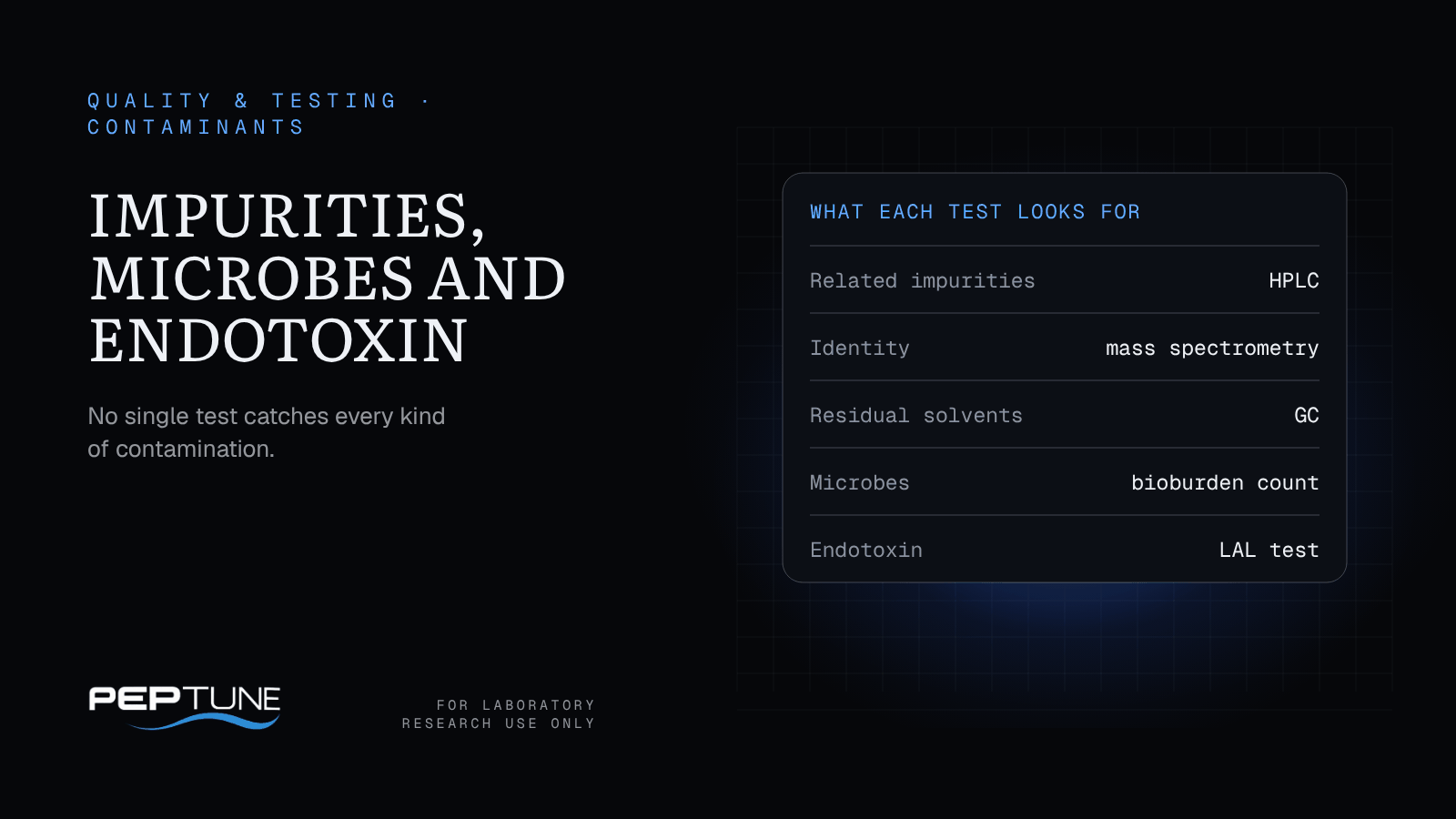 Quality & testingImpurities, microbes and endotoxin: what each test can detect"Contamination" covers several different problems, and no single test catches them all. What HPLC, mass spectrometry, solvent, microbial and endotoxin tests each look for.3 min read
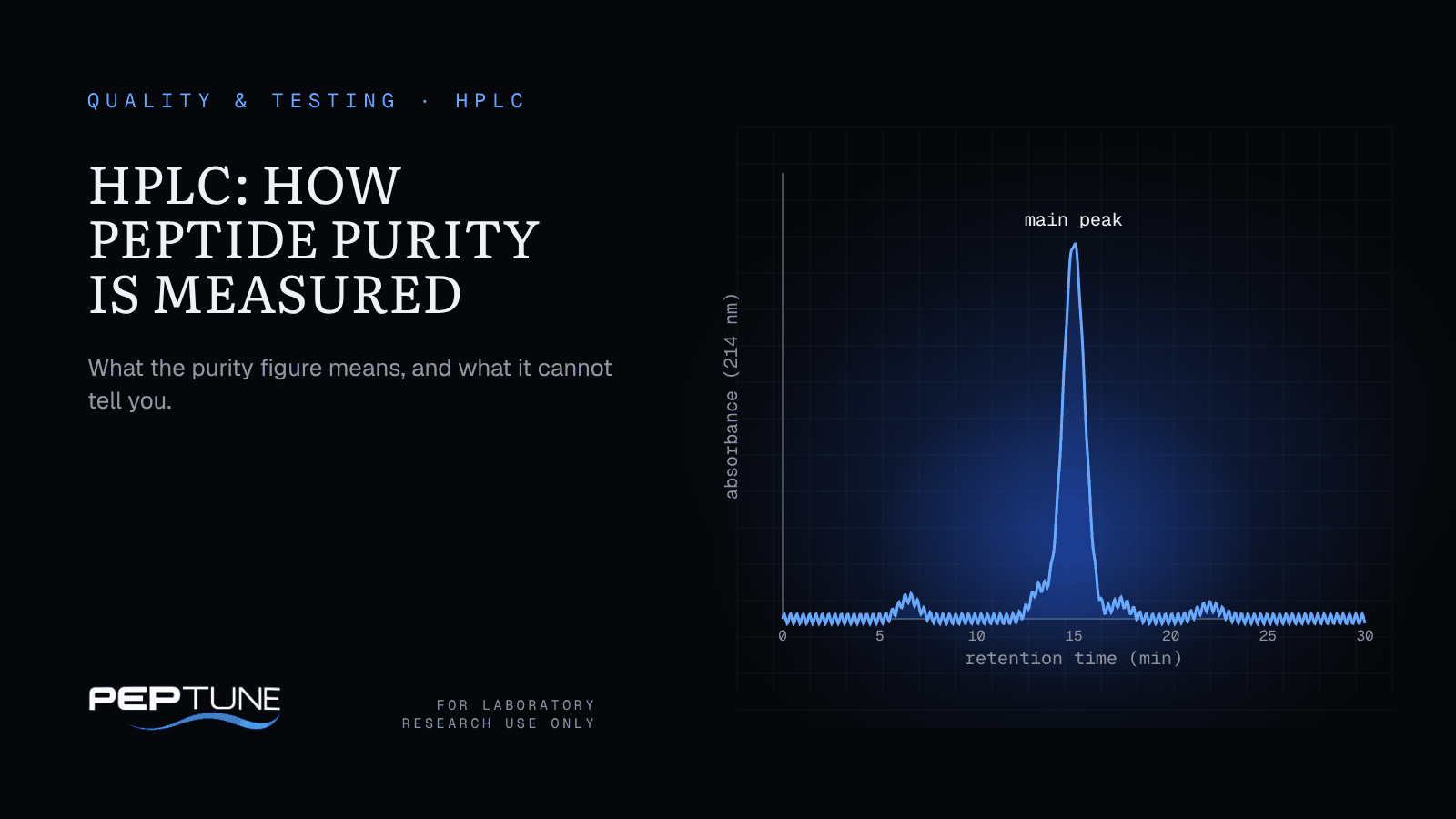 Quality & testingHPLC: how peptide purity is measuredWhat high-performance liquid chromatography does, what the purity figure on a certificate means, and what it cannot tell you.4 min read
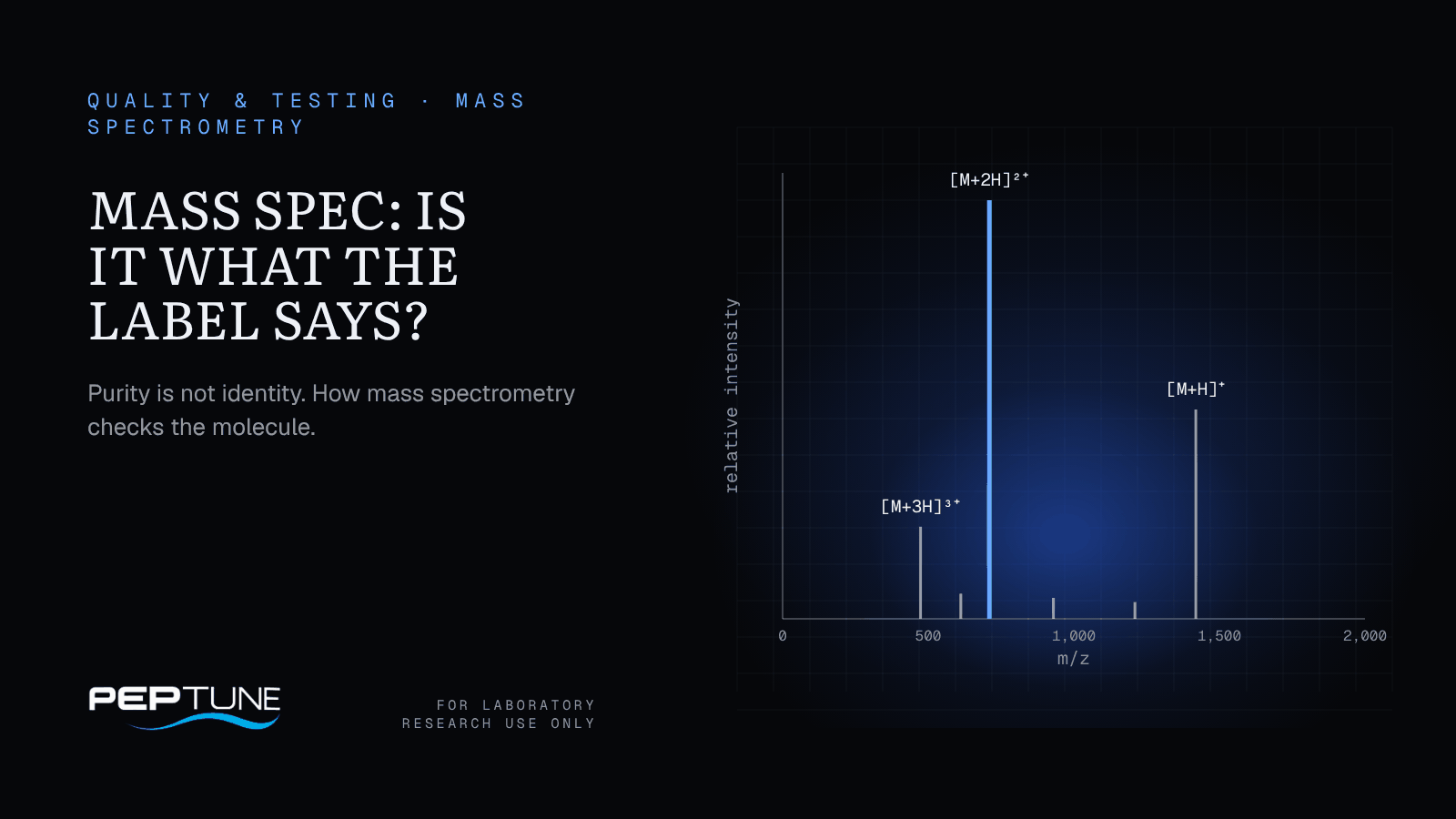 Quality & testingMass spectrometry: confirming a peptide is what the label saysWhy purity is not identity, and how mass spectrometry checks that the molecule in the vial is the one named on it.3 min read
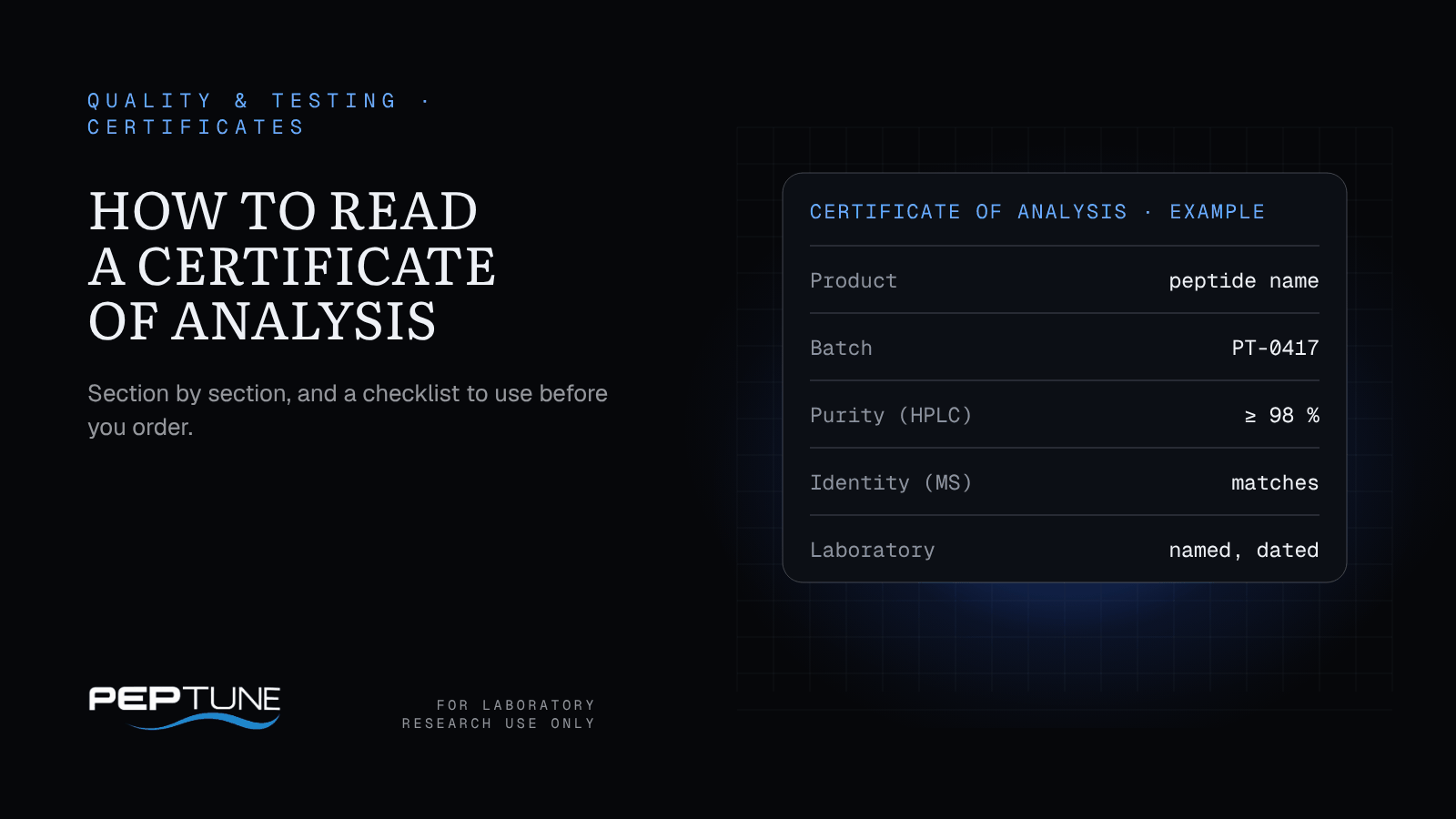 Quality & testingHow to read a certificate of analysisA section-by-section guide to the certificate of analysis that should come with every research peptide batch, and a checklist to use before you order.4 min read
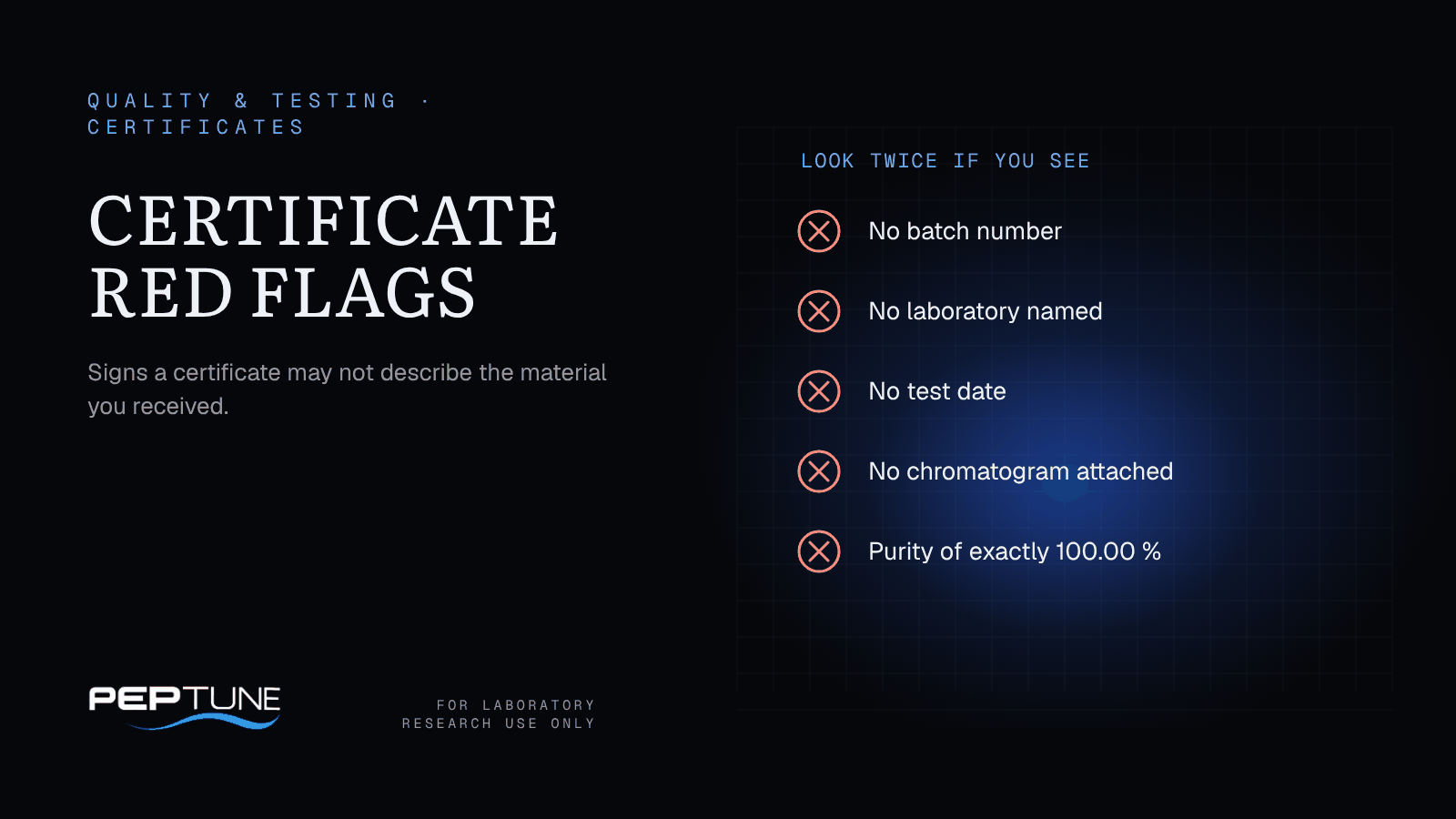 Quality & testingCertificate red flags: what should make you look twiceThe warning signs that a certificate of analysis may not describe the material you received, and what to do when you spot one.3 min read
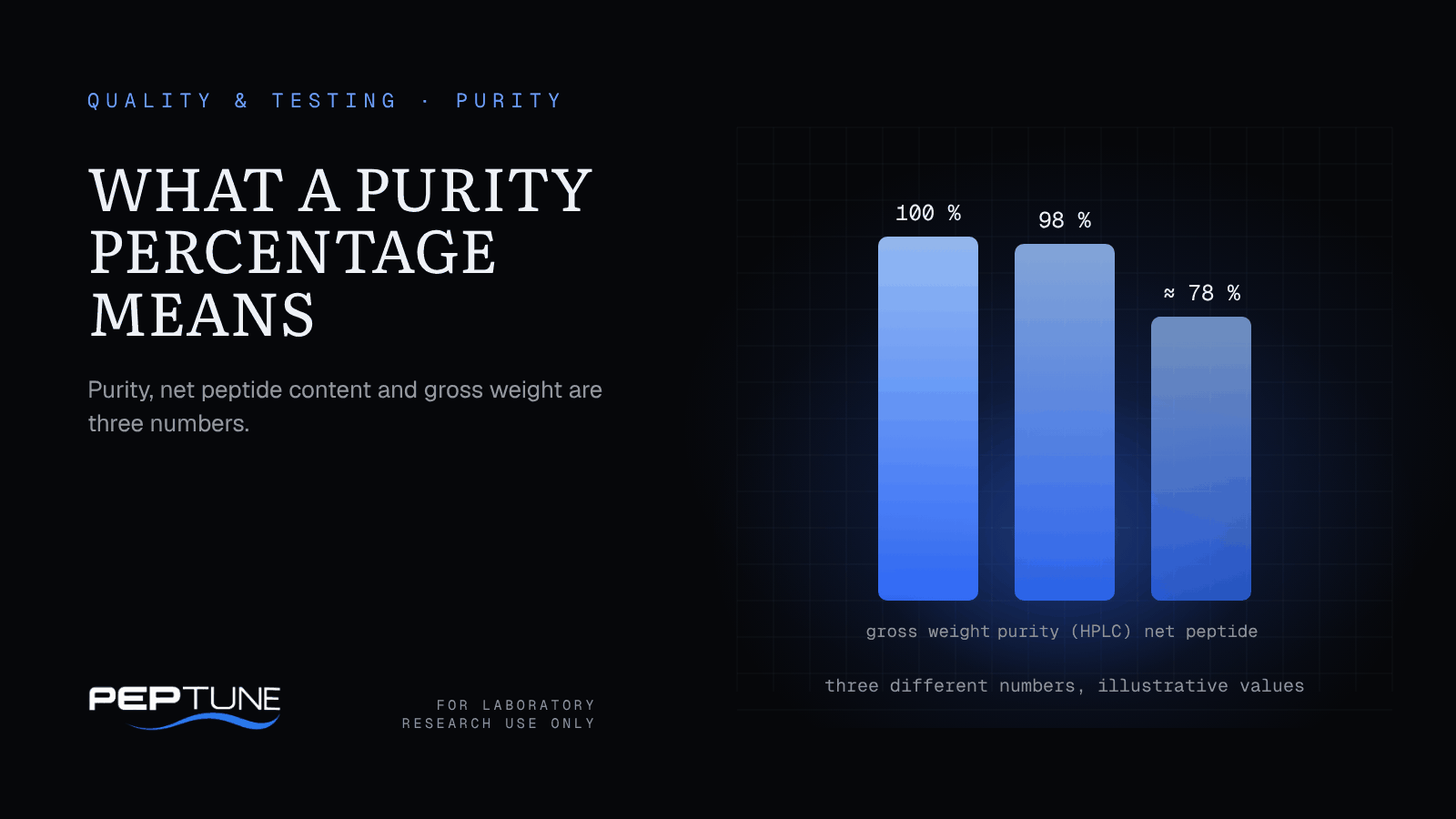 Quality & testingWhat a purity percentage does and does not meanPurity, net peptide content and gross weight are three different numbers. Here is how they relate, and why it matters in the lab.3 min read
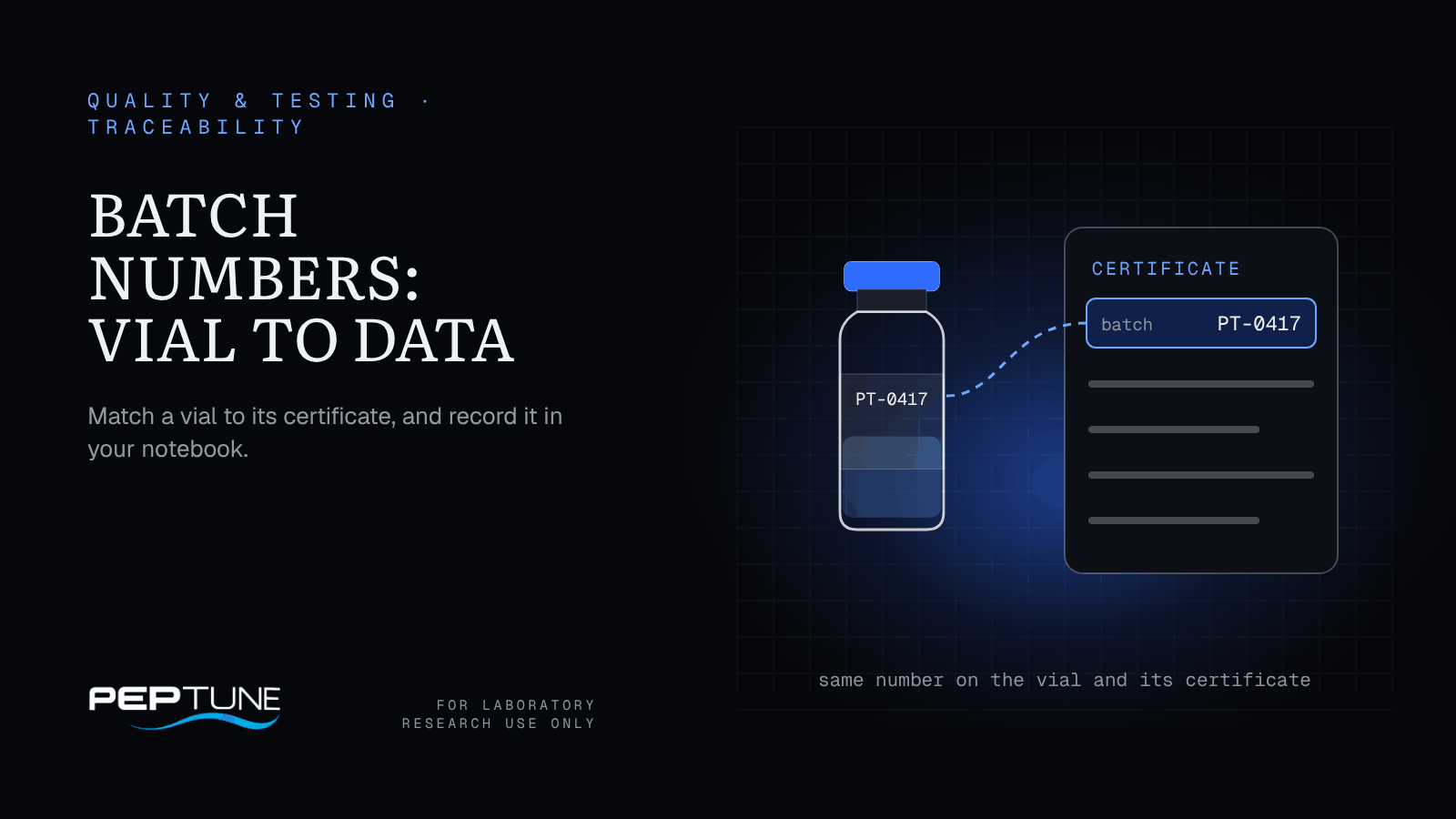 Quality & testingBatch numbers: the link between a vial and its dataEvery vial carries a batch number. Here is how to match it to its certificate, what to compare and what to record in your lab notebook.4 min read
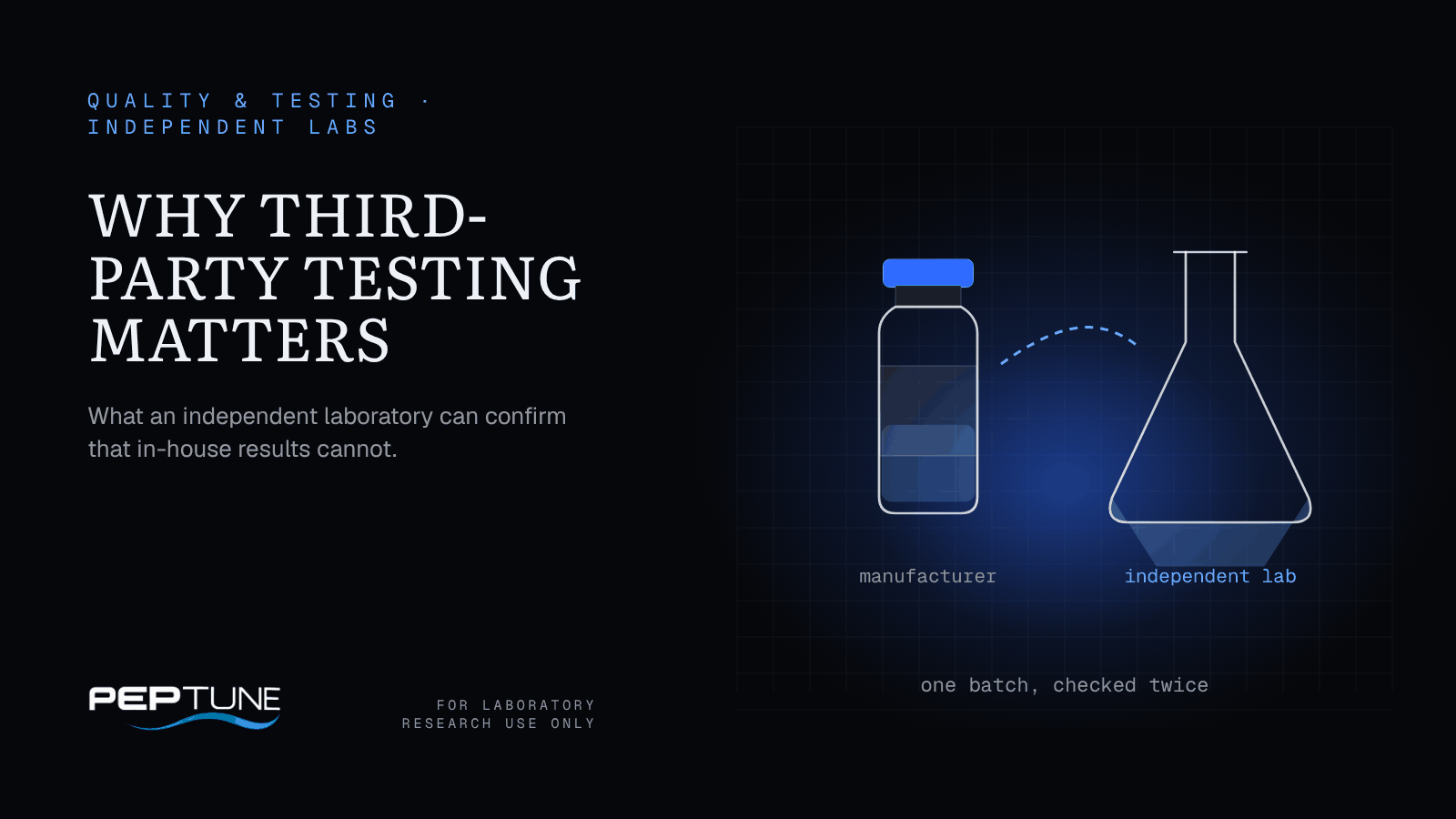 Quality & testingWhy third-party testing mattersIn-house results, independent laboratories and what each can and cannot assure about a research peptide.3 min read