
Compounds
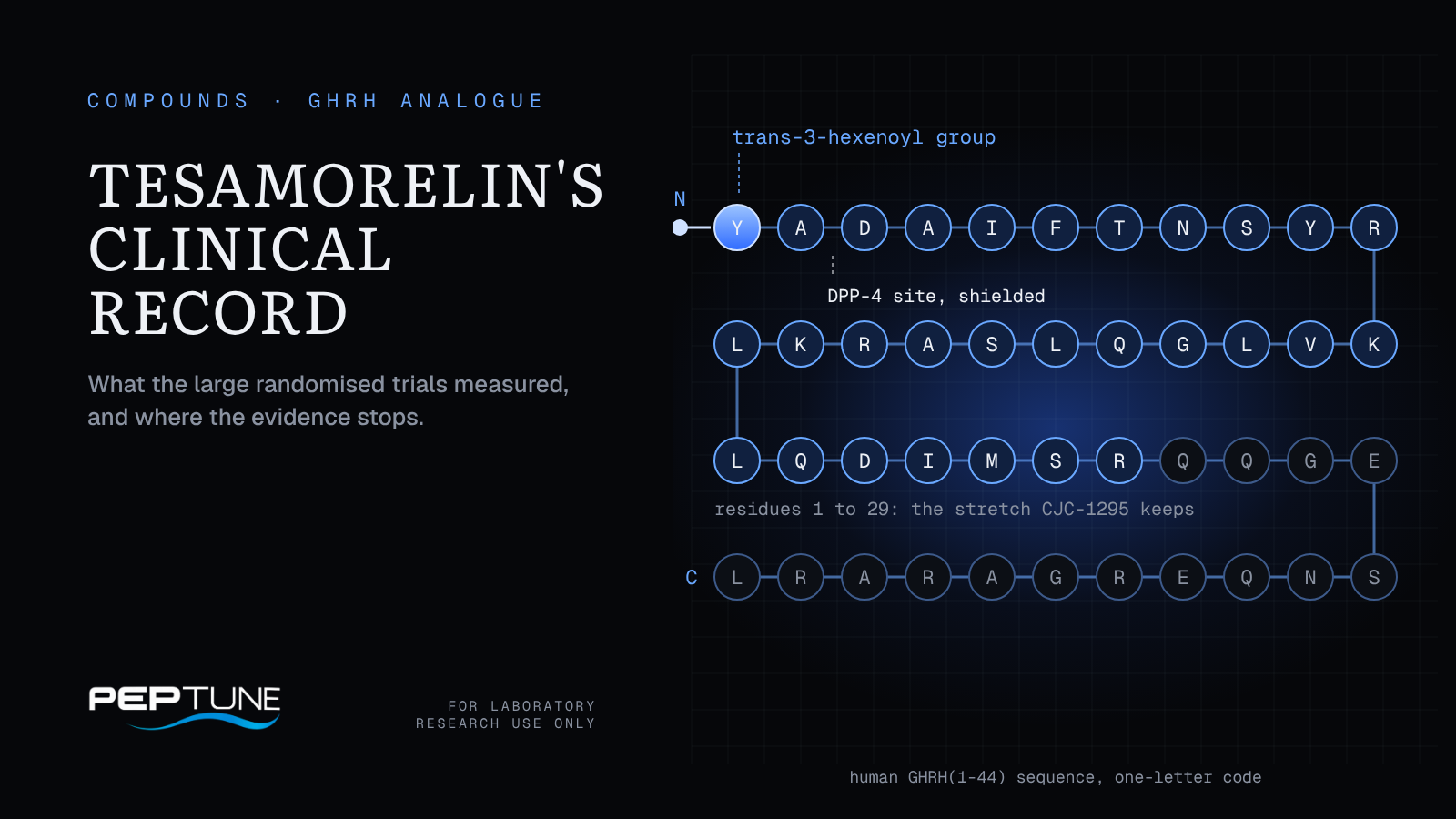 CompoundsTesamorelin's clinical record: what the trials measuredTesamorelin is the GHRH analogue with the largest body of controlled human research. A plain summary of what the trials measured, how it compares with shorter analogues, and where the evidence stops.4 min read
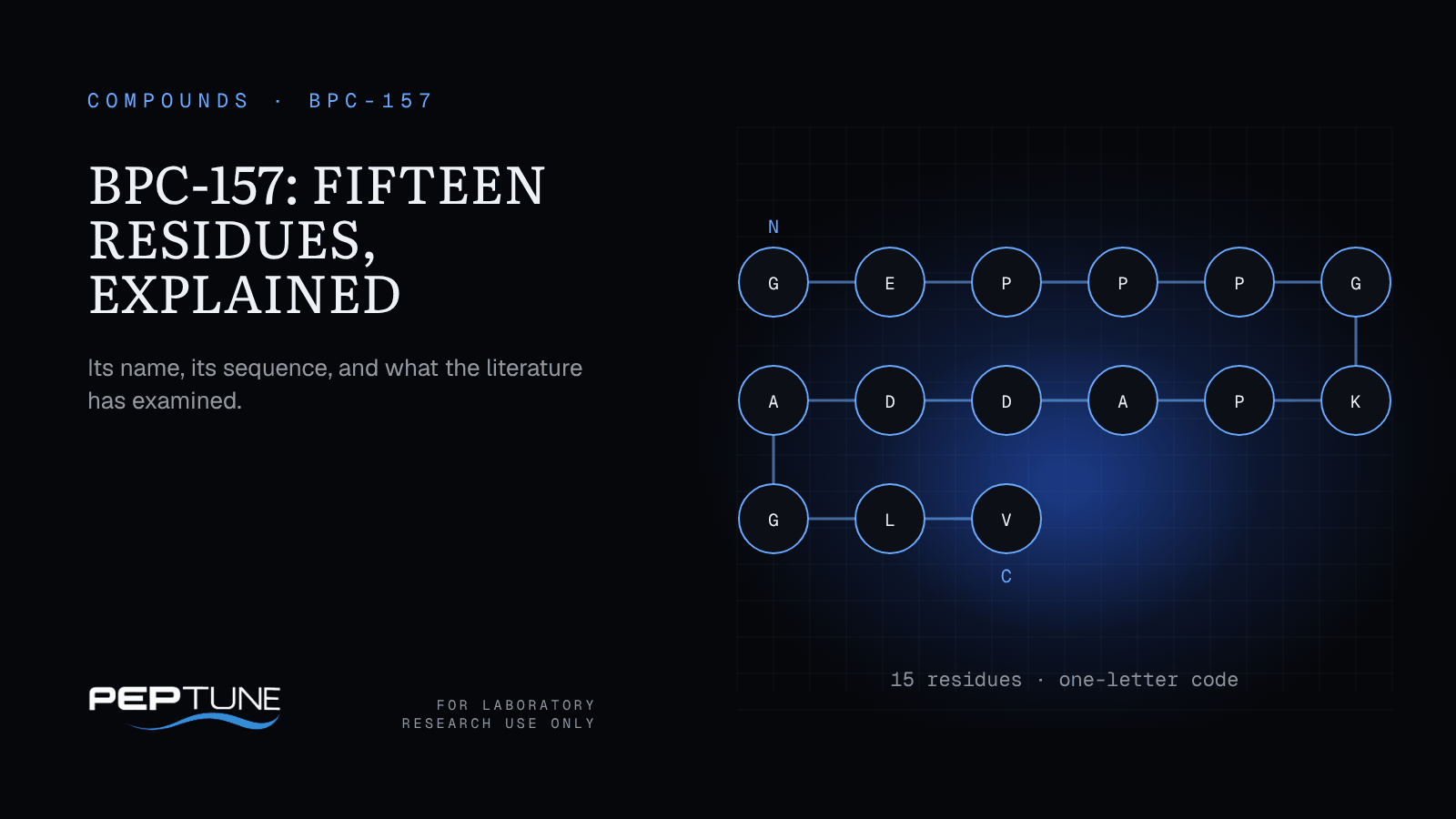 CompoundsBPC-157: a fifteen-residue fragment, explainedWhat BPC-157 is, where the name comes from, its fifteen-residue sequence, and what the research literature has and has not examined.3 min read
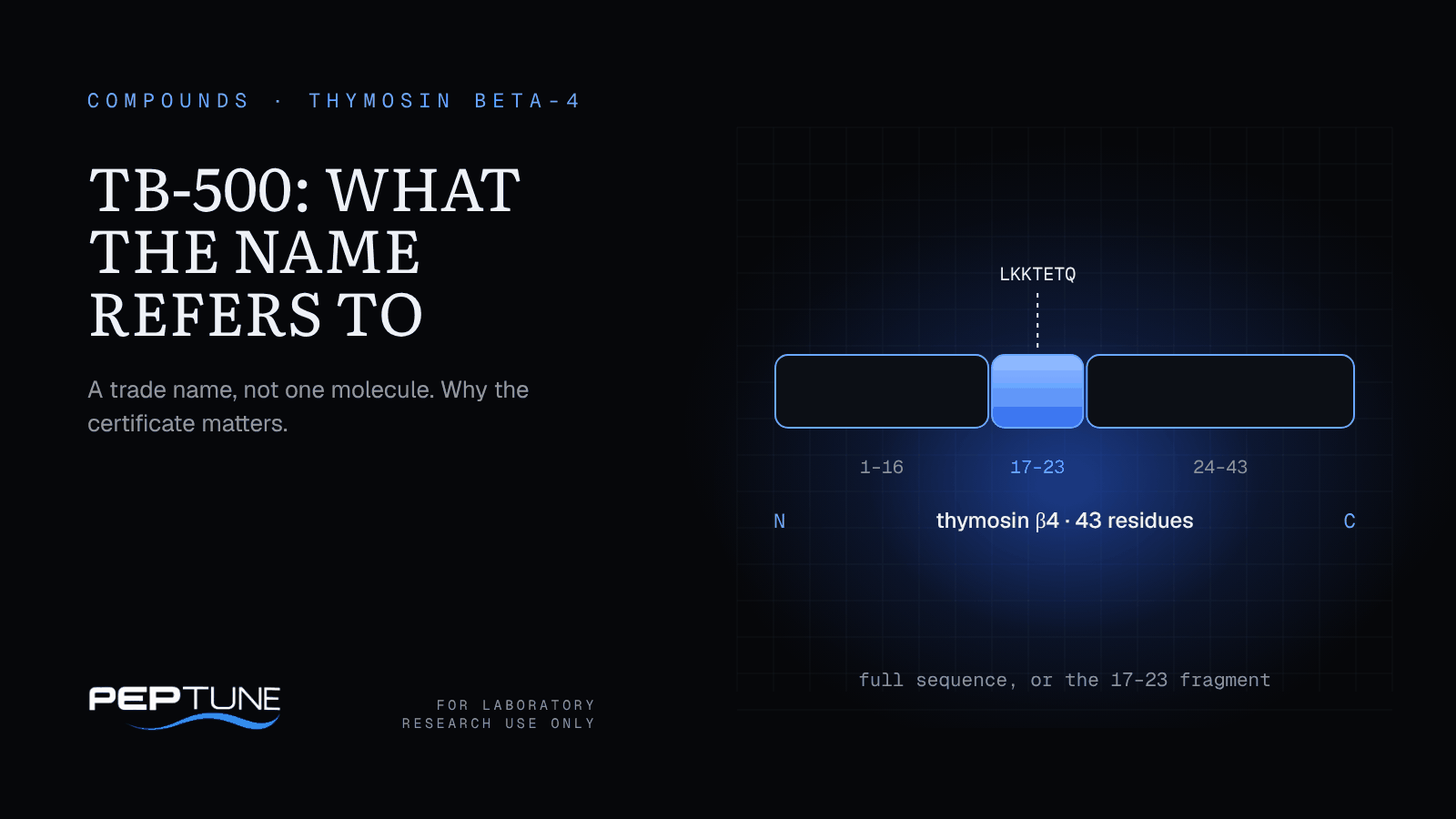 CompoundsTB-500 and thymosin beta-4: what the name refers toTB-500 is a trade name, not a single molecule. How it relates to thymosin beta-4, and why the certificate matters more than the label.3 min read
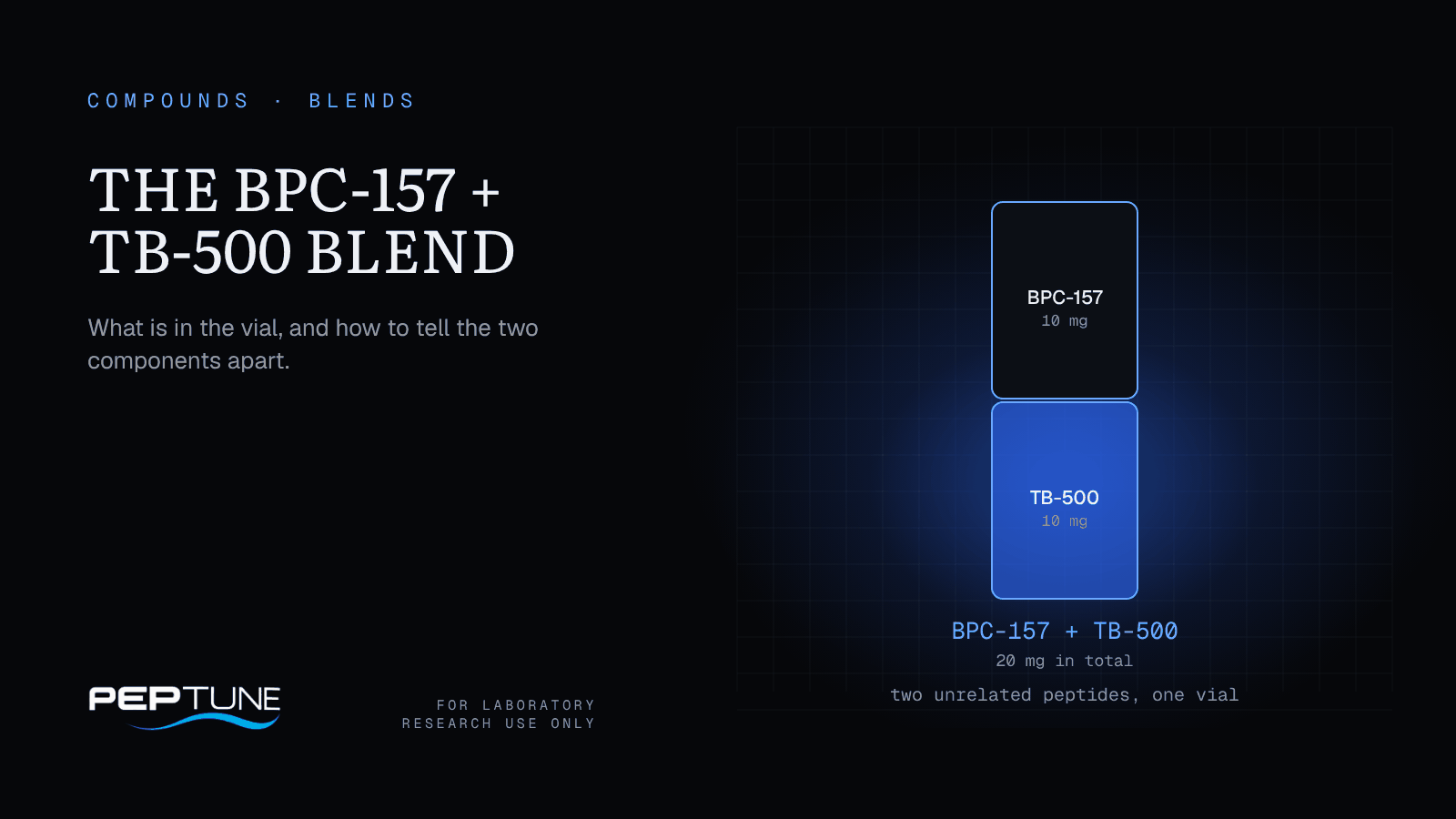 CompoundsThe BPC-157 + TB-500 blend: composition and study designWhy researchers combine BPC-157 and TB-500, what is in the vial, and how to design an experiment that can tell the two components apart.3 min read
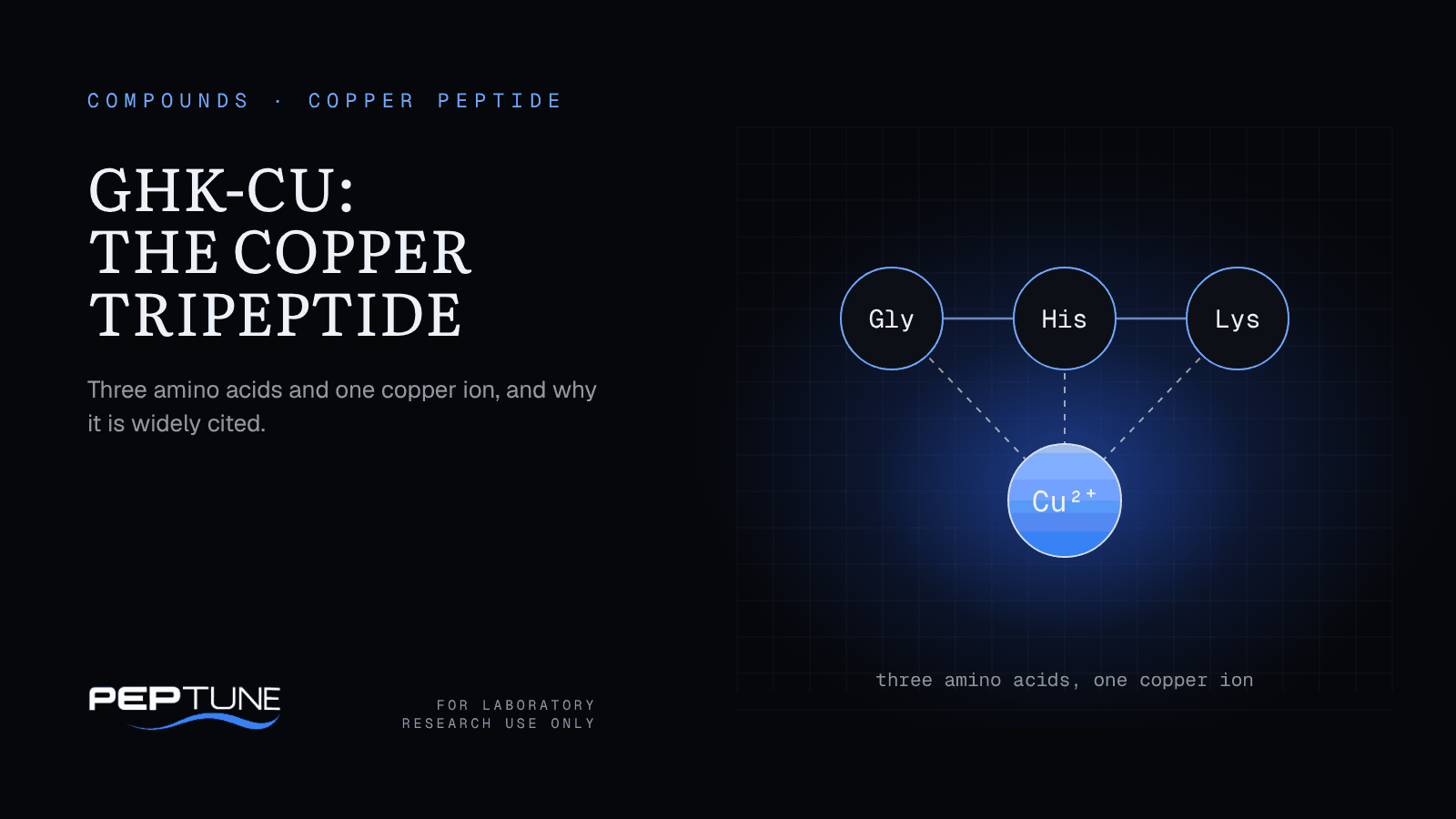 CompoundsGHK-Cu: the copper tripeptideThree amino acids and one copper ion. What GHK-Cu is, how it binds copper, and why such a small complex is one of the most cited peptides in research.3 min read
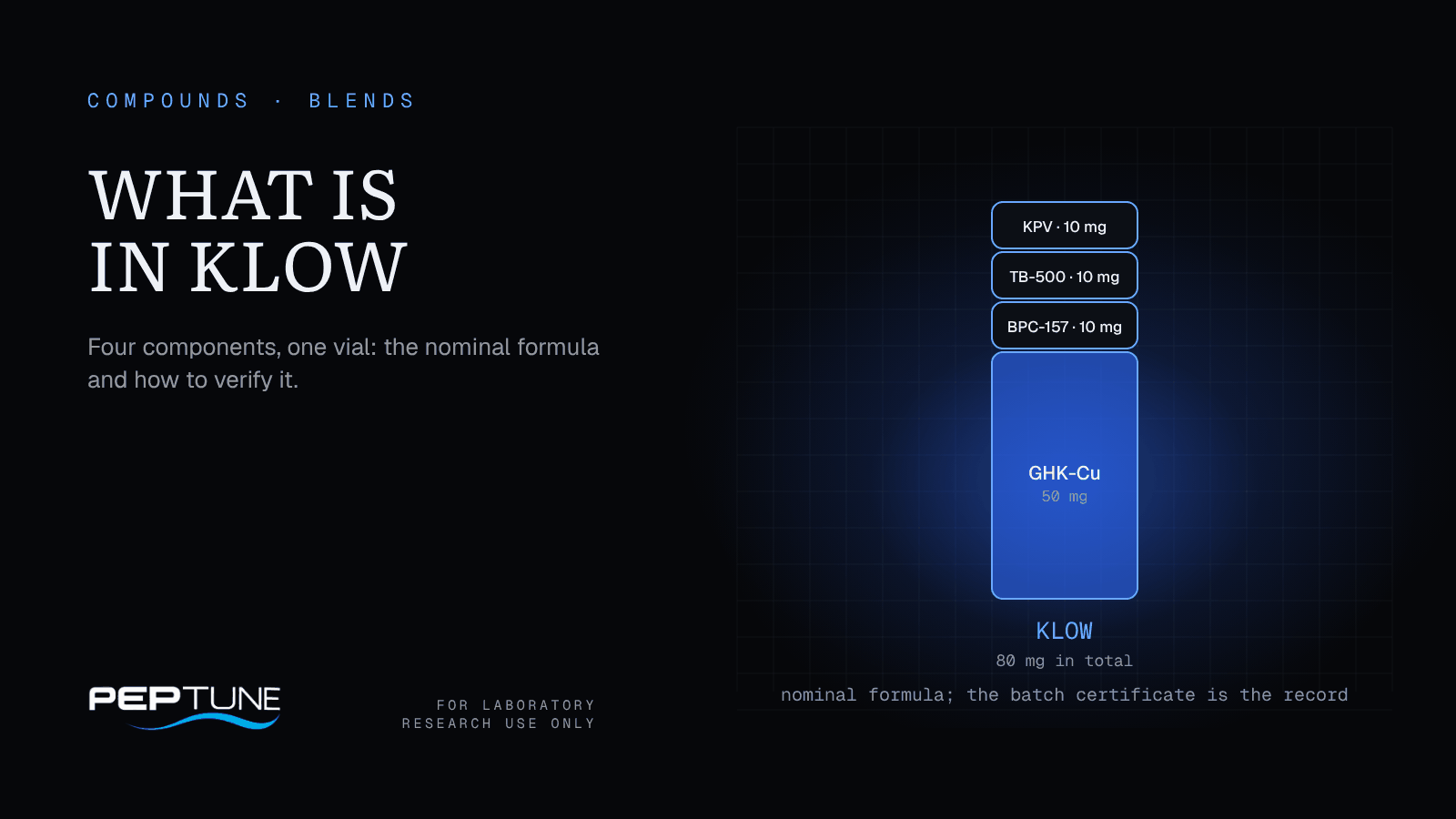 CompoundsWhat is in KLOW: four components, one vialGHK-Cu, BPC-157, TB-500 and KPV in one vial. The nominal formula, what each part is, and how to verify all four in a batch.3 min read
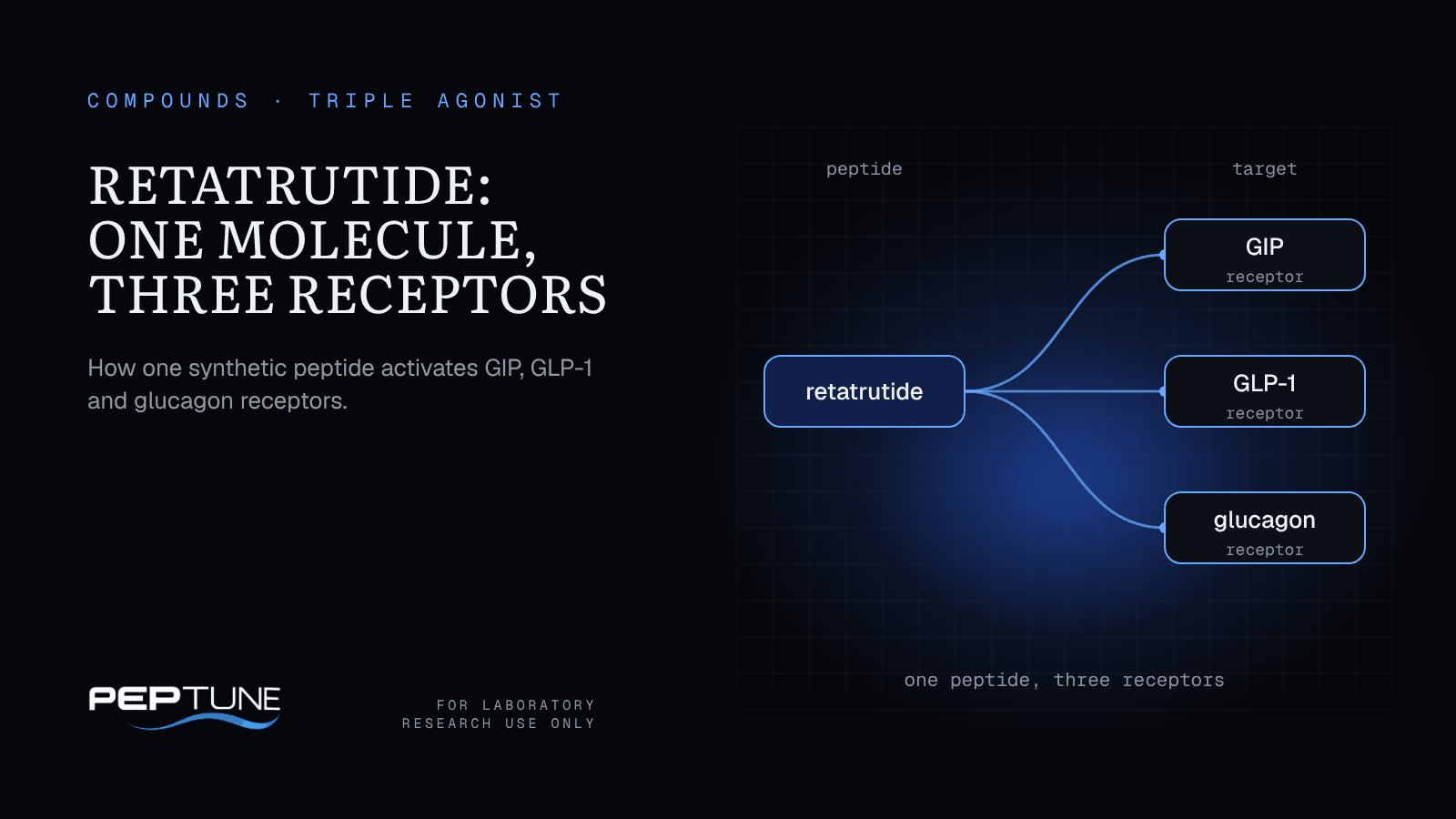 CompoundsRetatrutide: one molecule, three receptorsHow a single synthetic peptide activates the GIP, GLP-1 and glucagon receptors, and why that makes retatrutide a useful research tool.3 min read
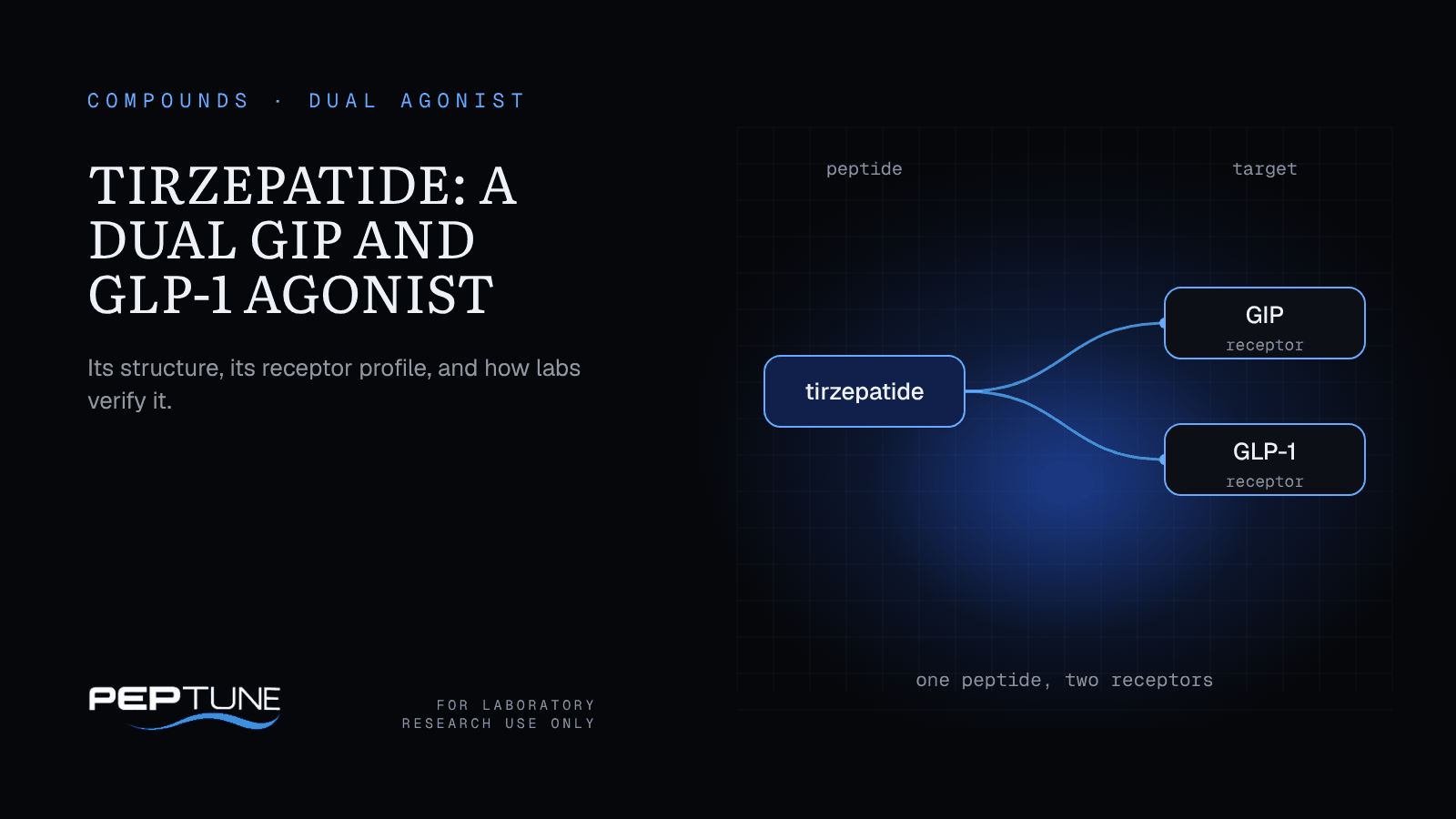 CompoundsTirzepatide: a dual GIP and GLP-1 receptor agonistWhat tirzepatide is at the molecular level: its structure, its dual GIP and GLP-1 receptor profile and how laboratories handle and verify it.3 min read
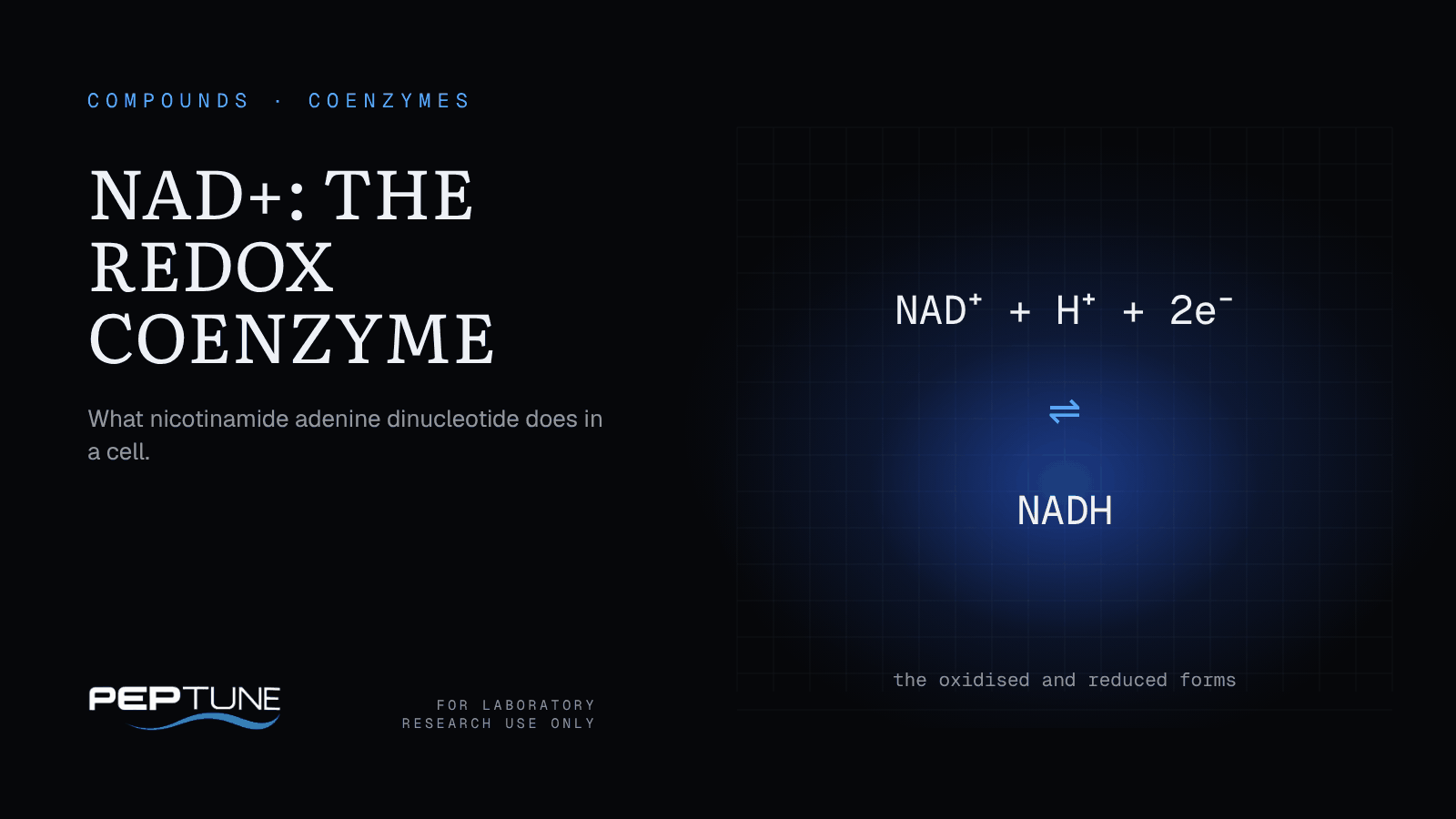 CompoundsNAD+: the coenzyme behind redox chemistryWhat nicotinamide adenine dinucleotide does in a cell, and why it is a staple of metabolic and enzyme research.3 min read
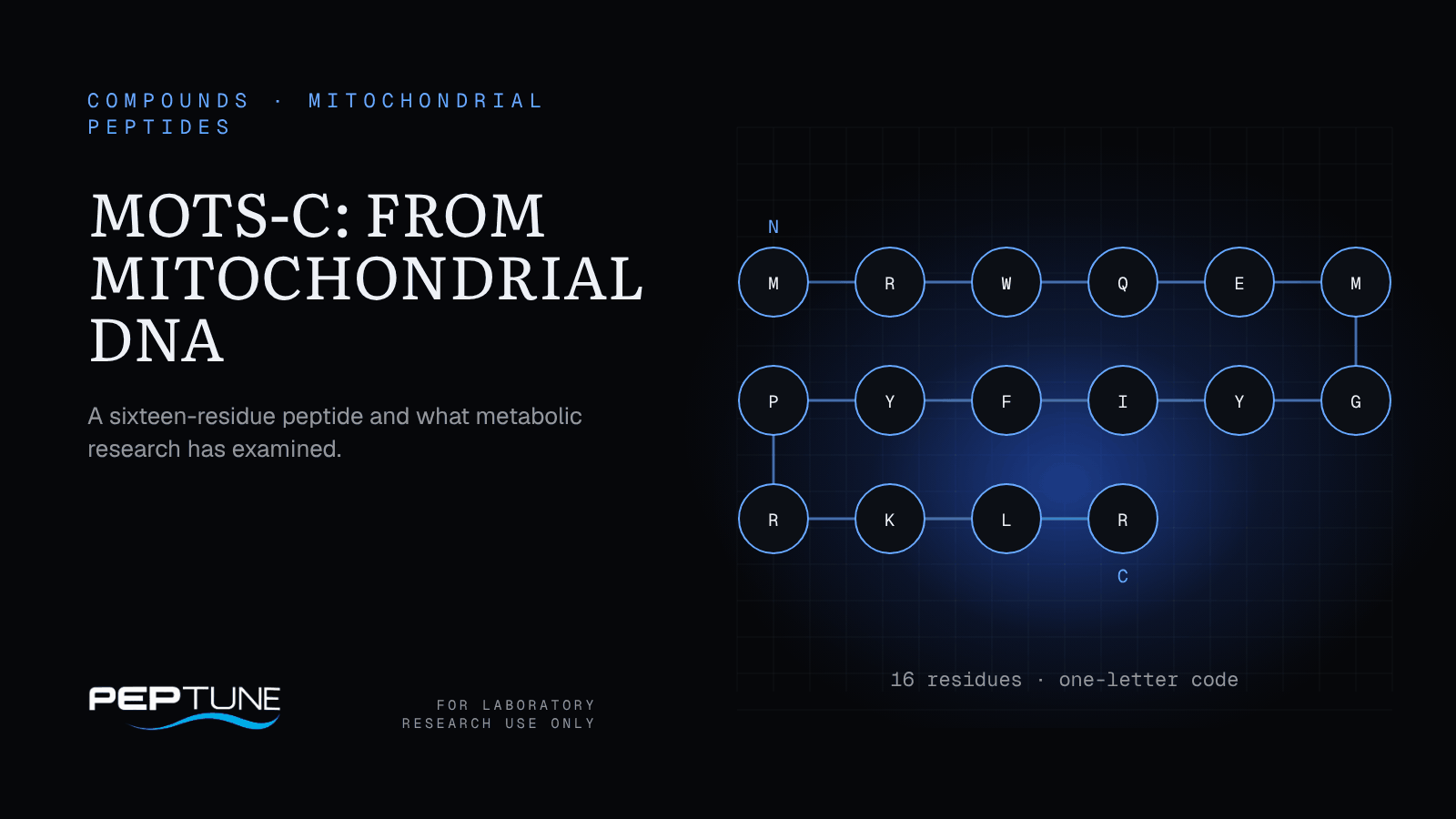 CompoundsMOTS-c: a peptide encoded in mitochondrial DNAA sixteen-residue peptide encoded in mitochondrial DNA, and what metabolic research has examined so far.3 min read
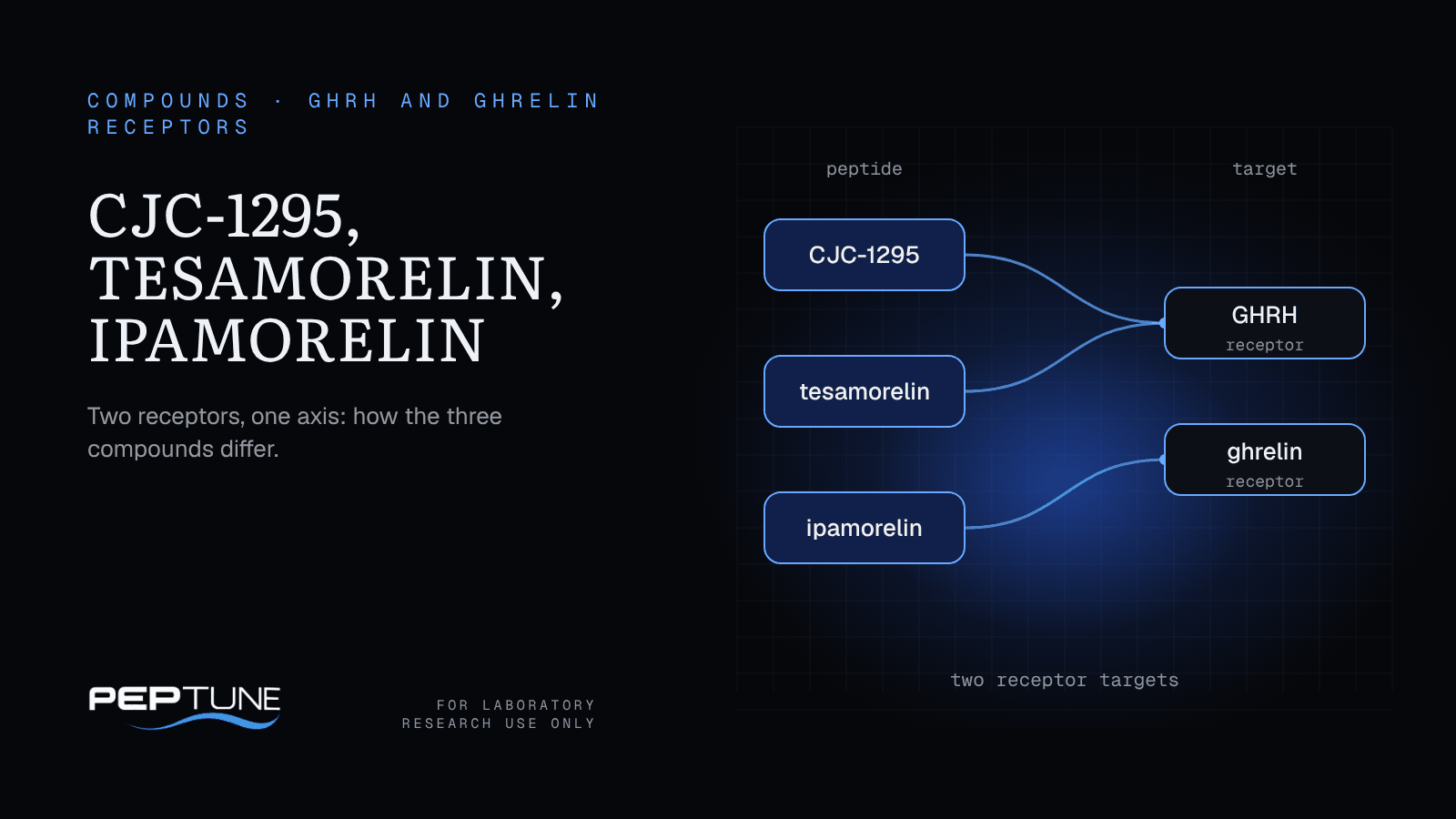 CompoundsCJC-1295, tesamorelin and ipamorelin: two receptors, one axisGHRH analogues and a ghrelin-receptor agonist. How CJC-1295, tesamorelin and ipamorelin differ, and why they are often studied together.3 min read
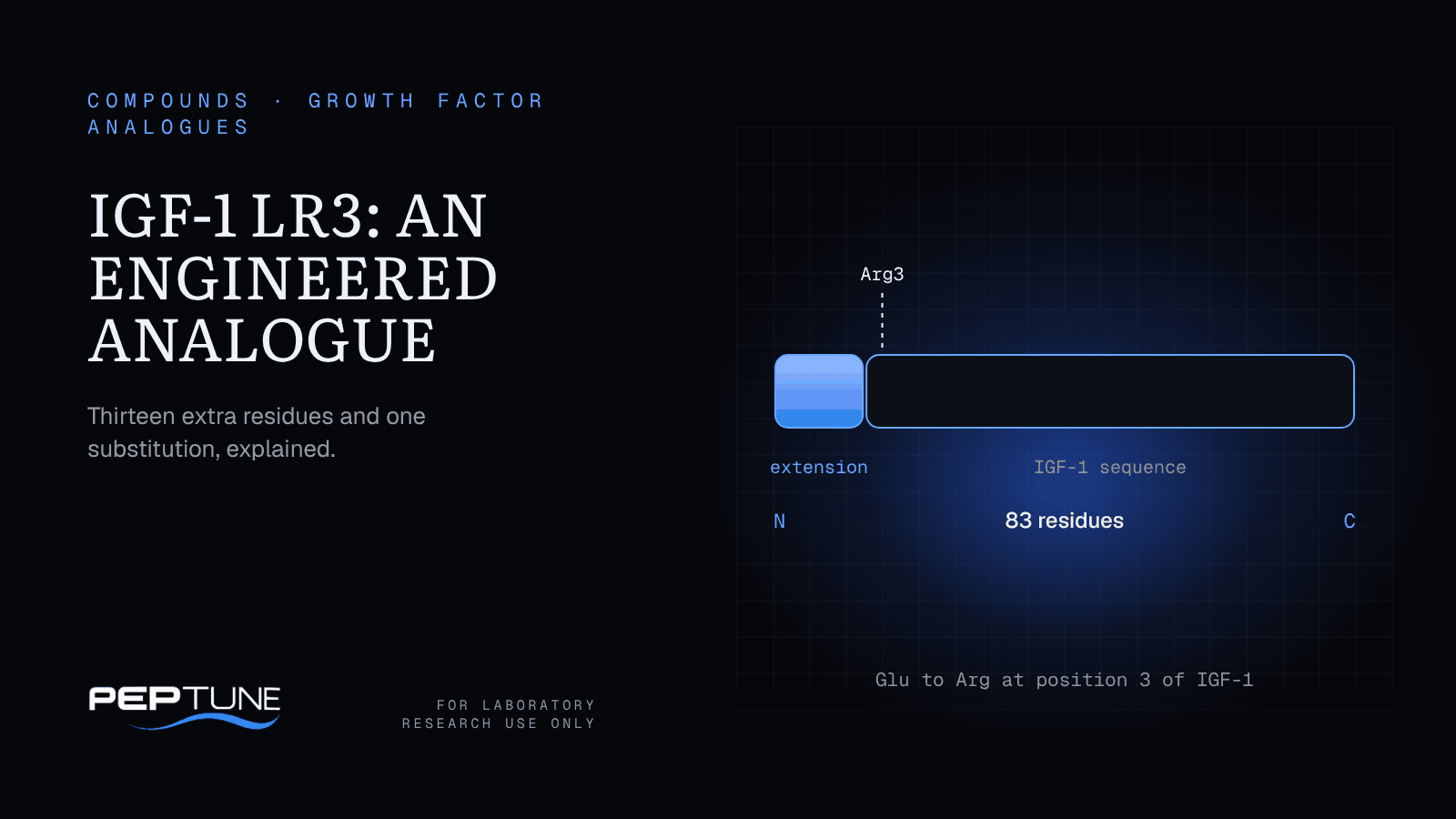 CompoundsIGF-1 LR3: an engineered IGF-1 analogueThirteen extra residues and one substitution. Why IGF-1 LR3 is a staple of cell-culture research, and how to handle it.3 min read