
Peptide research journal
Plain-language guides to the research peptides we carry, how purity and identity are tested, and how to store and handle them. For laboratory research use only.
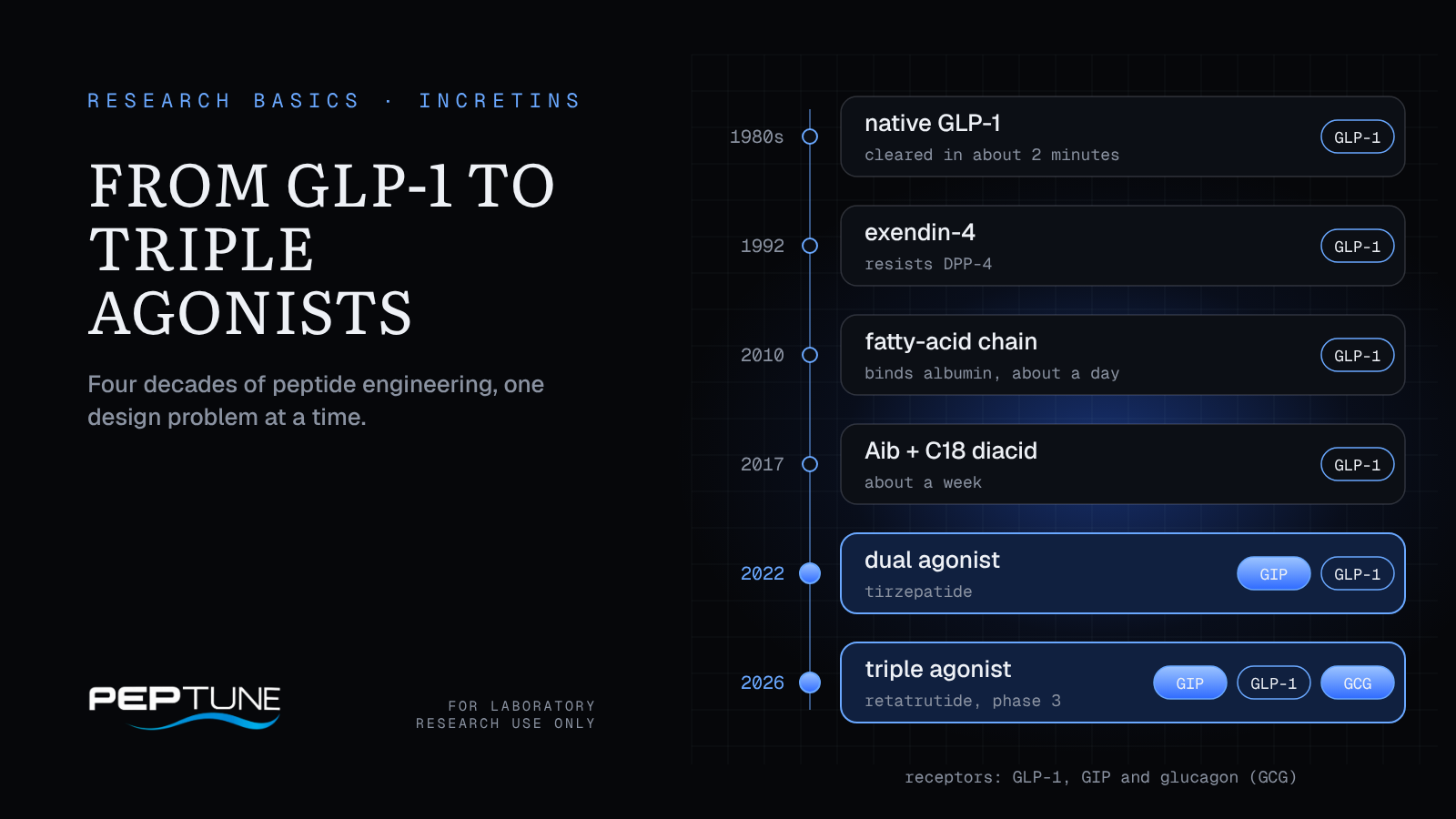 Research basicsFrom GLP-1 to triple agonists: how incretin peptide research evolvedNative GLP-1 lasts about two minutes in the body. Four decades of peptide engineering turned it into weekly dual and triple agonists. A short history of the design problems researchers solved along the way.4 min read
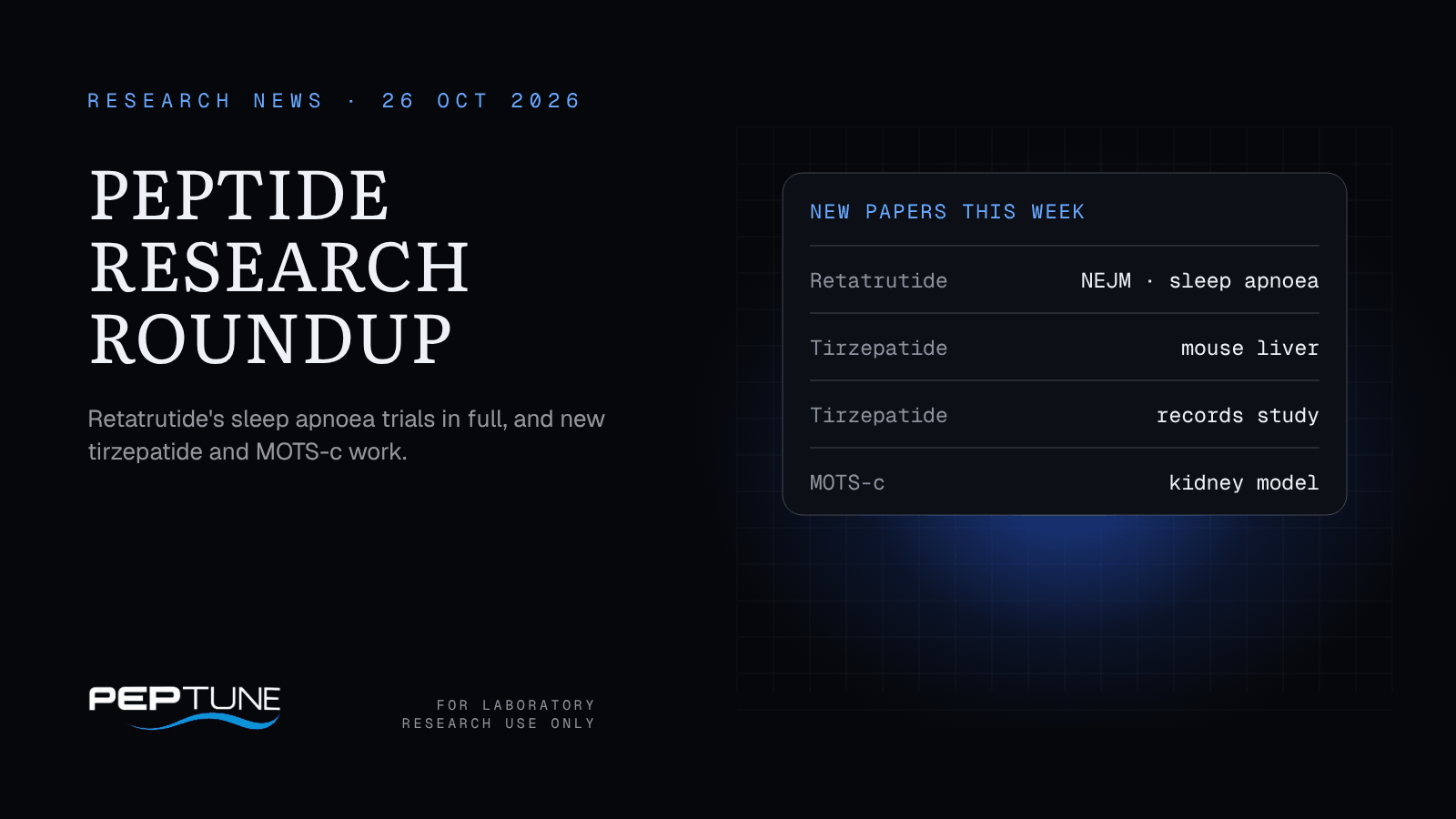 Research newsPeptide research roundup: 26 October 2026The full NEJM paper on retatrutide's sleep apnoea trials, tirzepatide in a mouse liver study and a large records study, and MOTS-c in a diabetic kidney model. New peptide research, with sources.4 min read
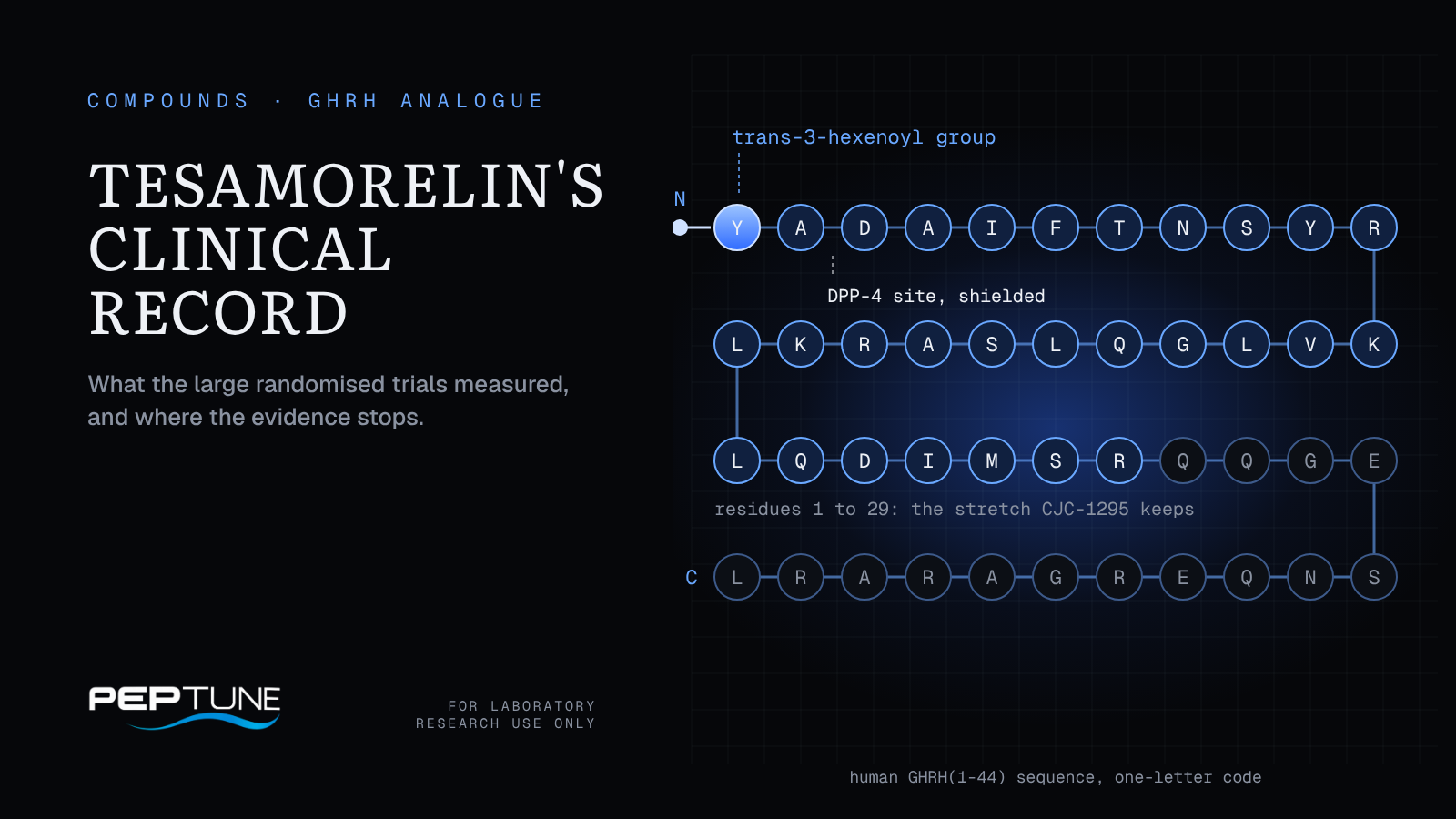 CompoundsTesamorelin's clinical record: what the trials measuredTesamorelin is the GHRH analogue with the largest body of controlled human research. A plain summary of what the trials measured, how it compares with shorter analogues, and where the evidence stops.4 min read
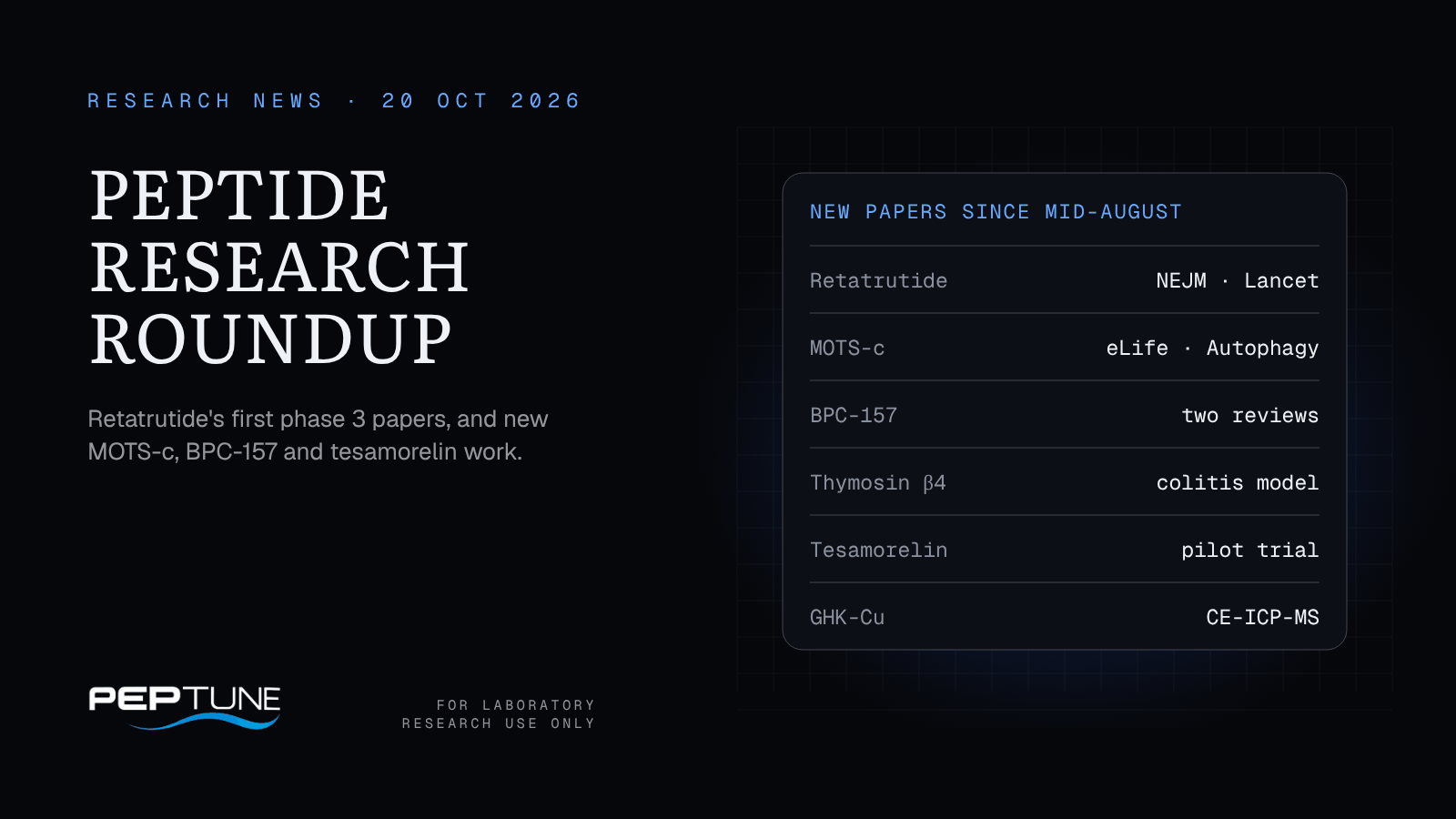 Research newsPeptide research roundup: 20 October 2026The first full phase 3 papers on retatrutide, a mitochondrial peptide that kills bacteria in the lab, and two reviews on how thin the BPC-157 evidence still is. New peptide research, summarised with sources.6 min read
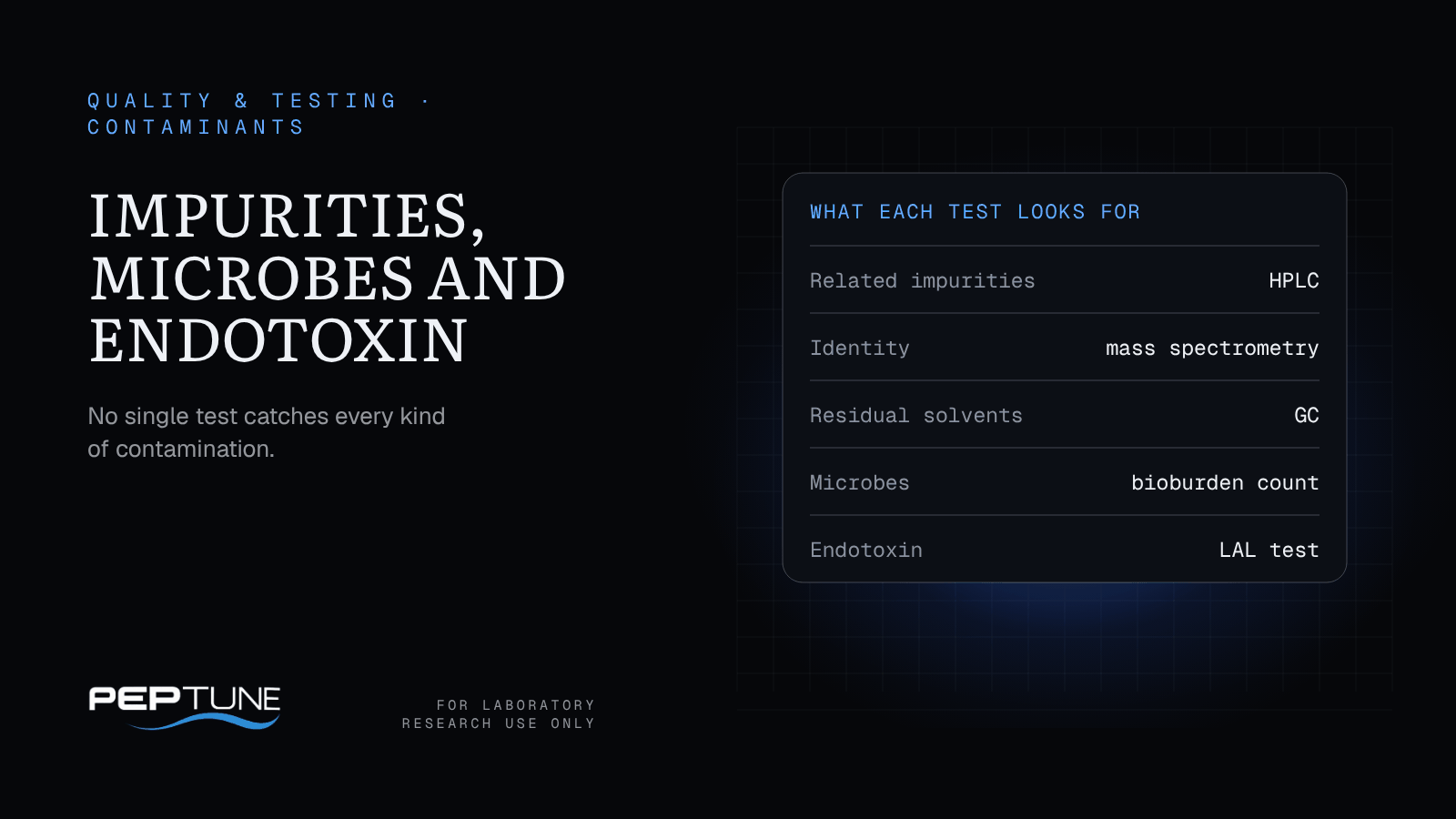 Quality & testingImpurities, microbes and endotoxin: what each test can detect"Contamination" covers several different problems, and no single test catches them all. What HPLC, mass spectrometry, solvent, microbial and endotoxin tests each look for.3 min read
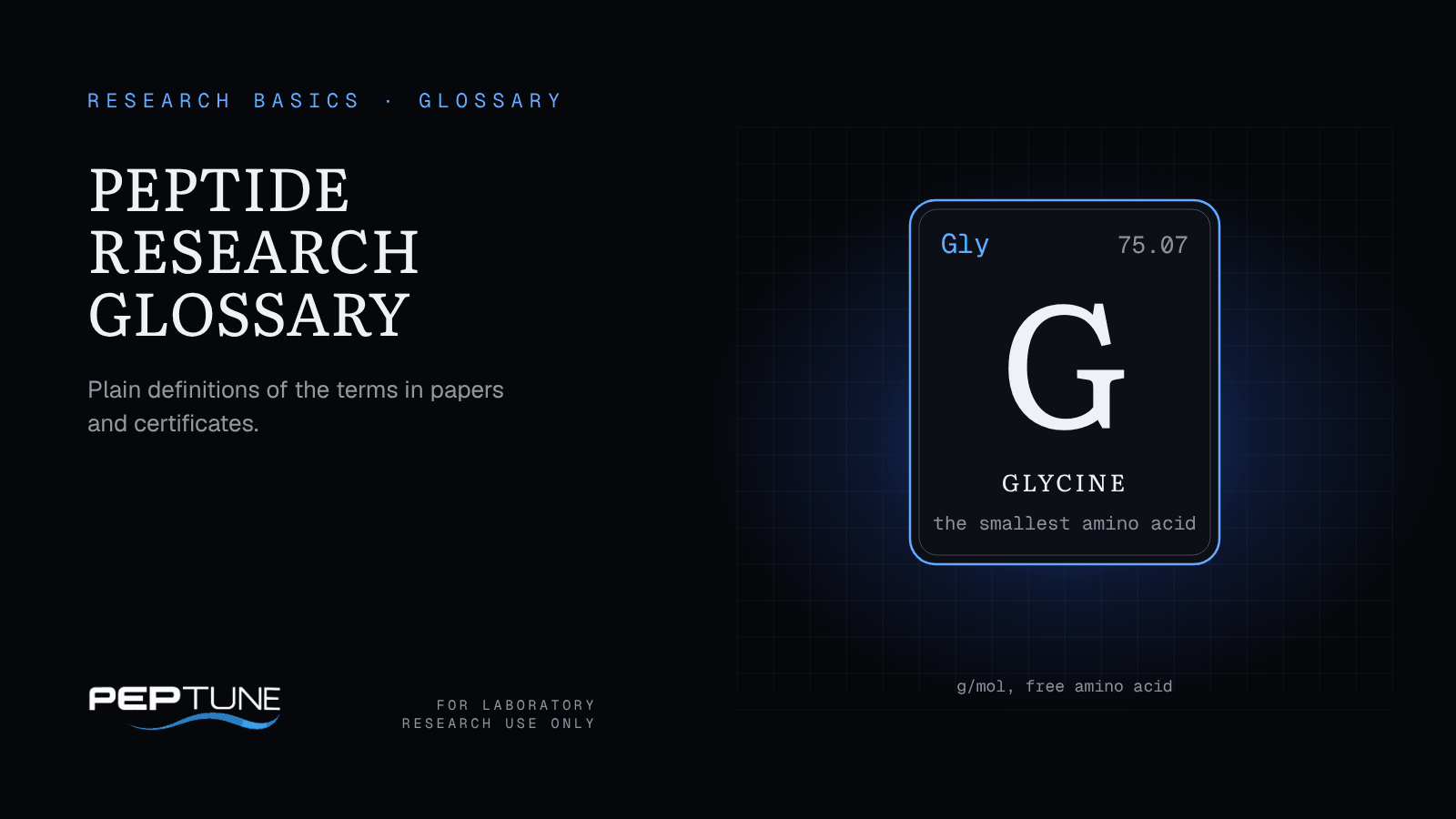 Research basicsPeptide research glossary: plain definitions of common termsFrom amino acid to endotoxin: short, plain definitions of the terms that come up in peptide papers and certificates of analysis.3 min read
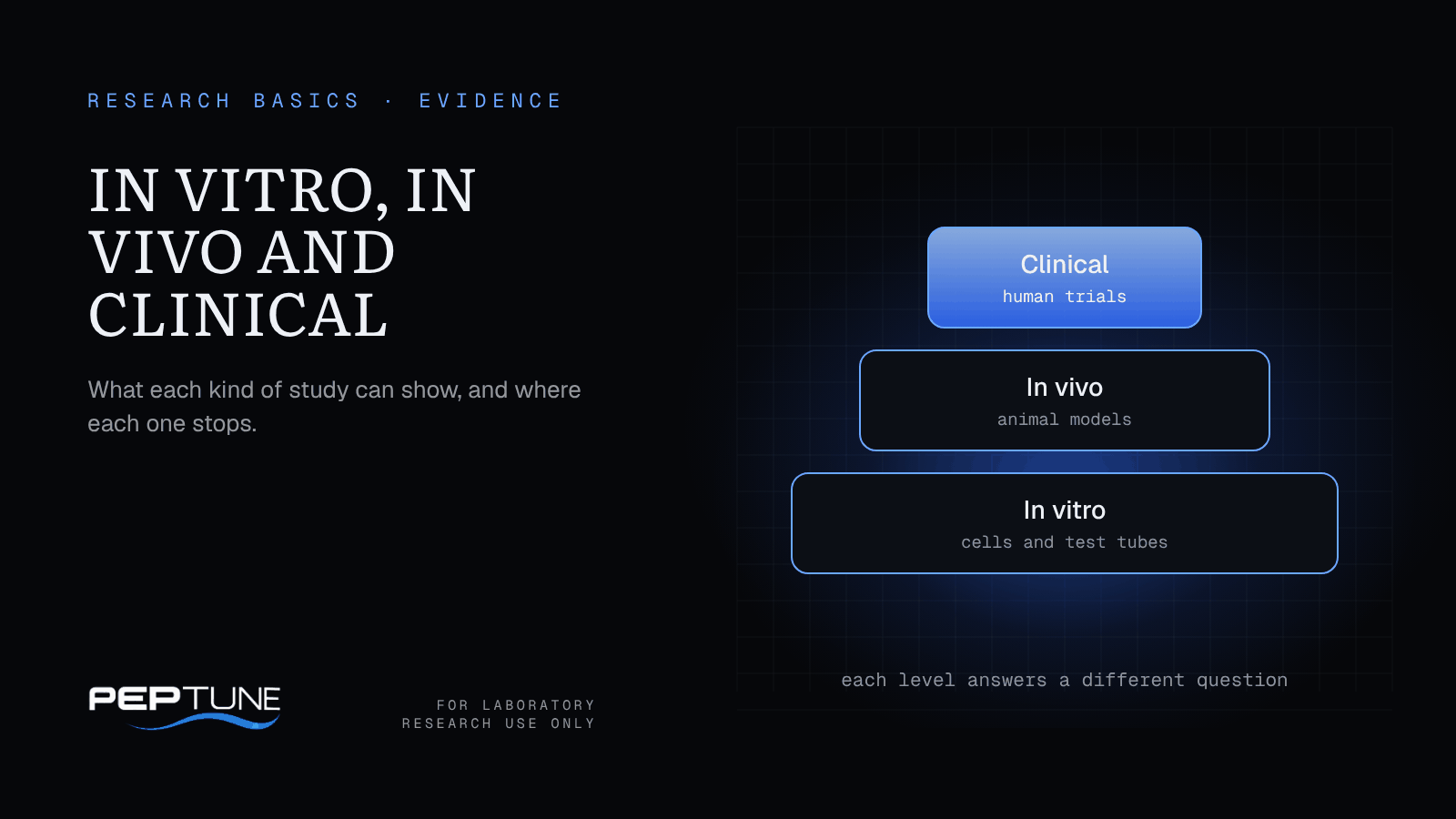 Research basicsIn vitro, in vivo and clinical research: what each can showTest tube, animal model or human trial: each kind of study answers a different question. What in vitro, in vivo and clinical research can show, and where each one stops.3 min read
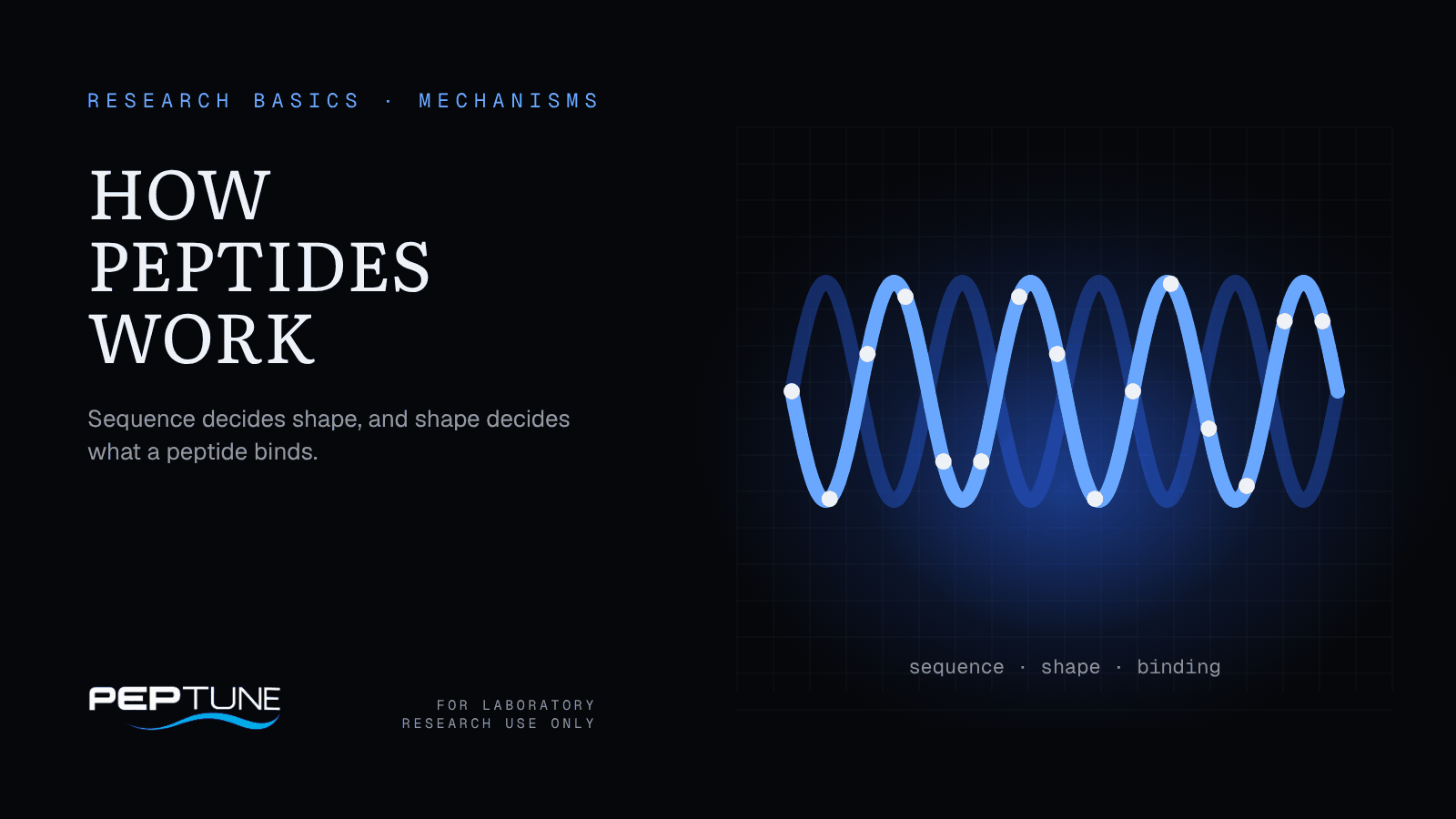 Research basicsHow peptides work: structure, receptors and signallingA peptide's sequence decides its shape, and its shape decides what it can bind. How peptides interact with receptors and enzymes, and why a mechanism is only the start of the evidence.4 min read
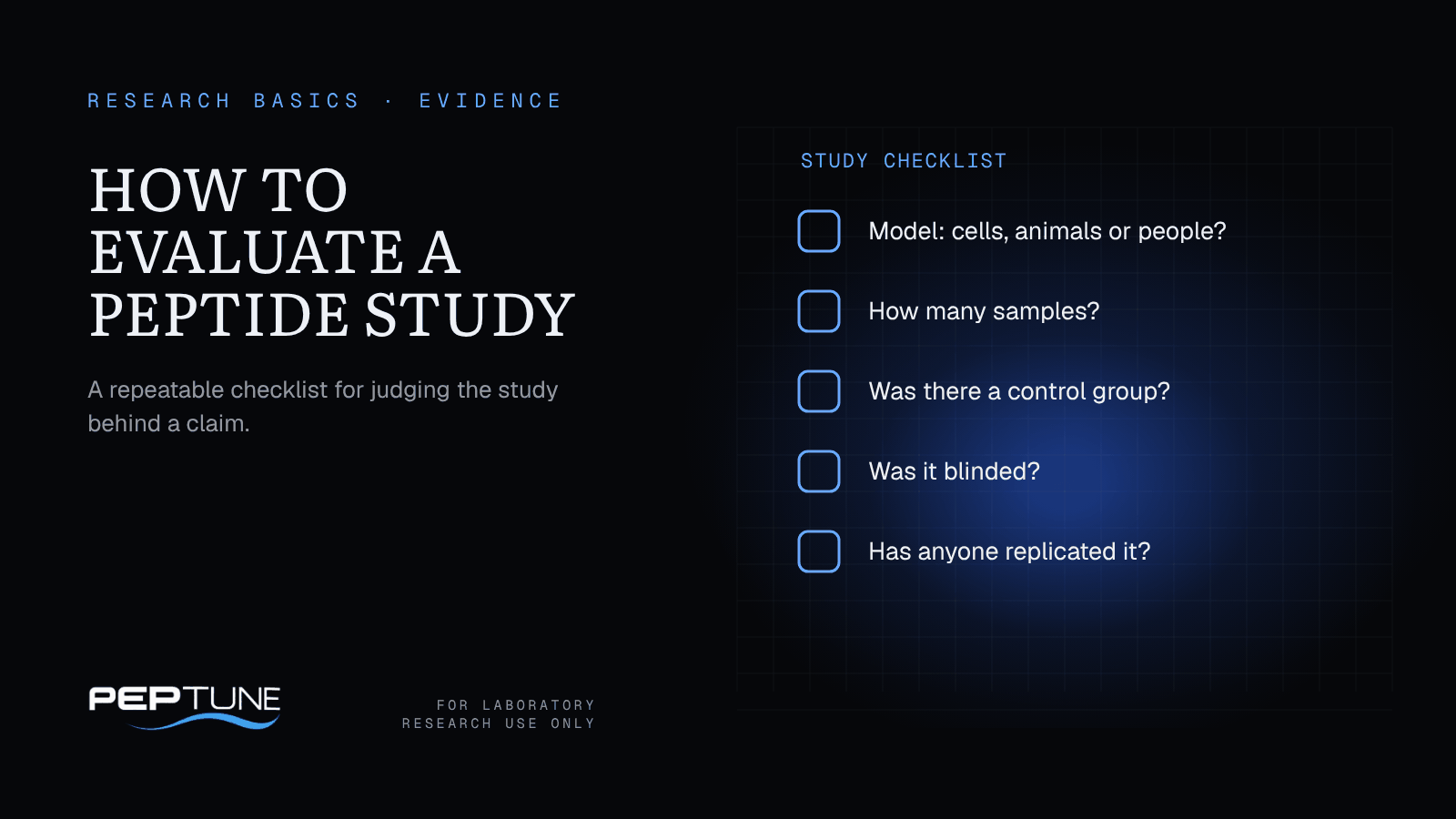 Research basicsHow to evaluate a peptide study: a practical checklistHeadlines and product pages summarise studies; the paper is what counts. A repeatable checklist for judging the study behind a peptide claim.3 min read
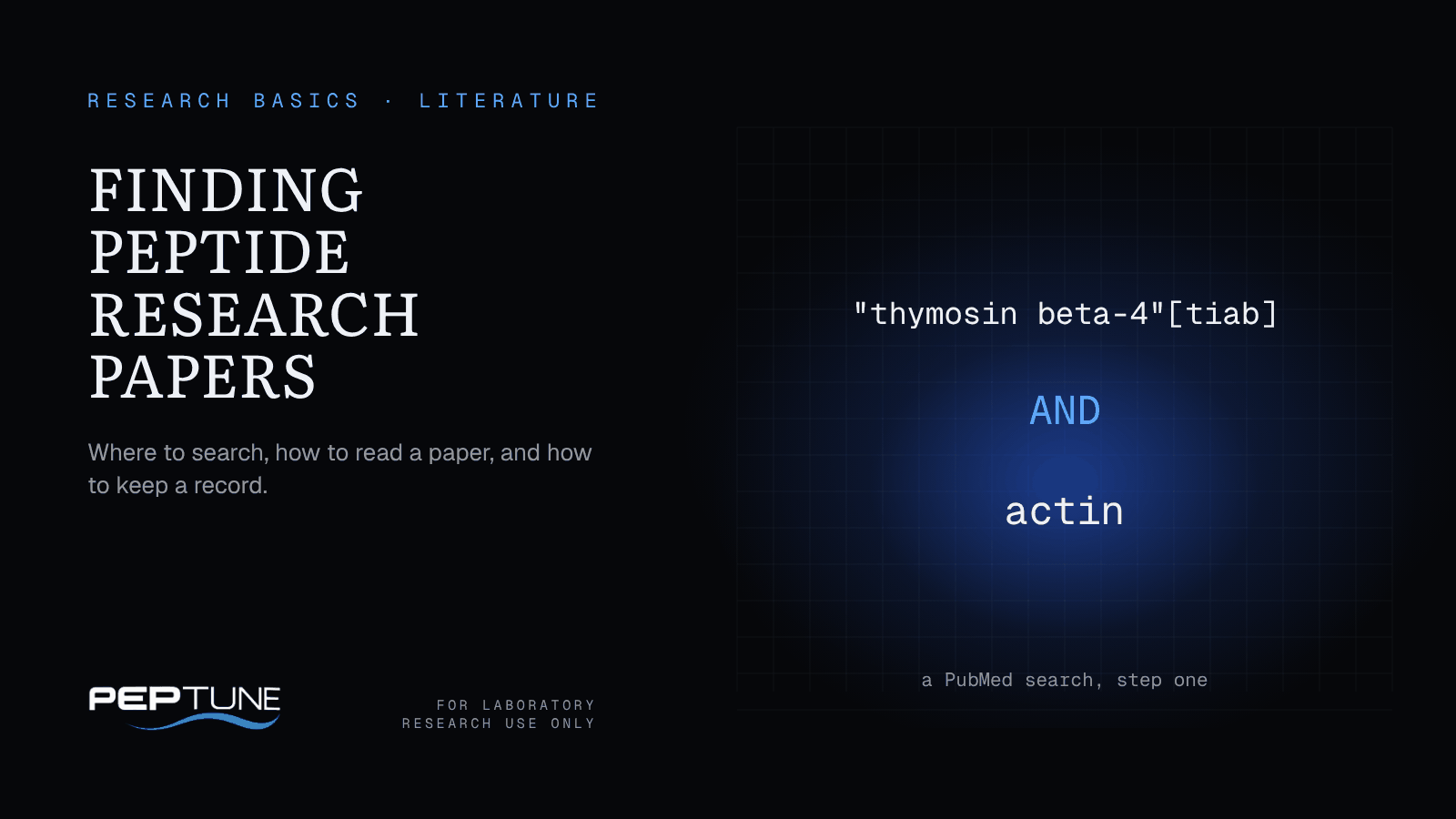 Research basicsHow to find and read peptide research papersWhere to search for peptide research, how to read a paper without getting lost, and how to keep a simple record of the evidence behind each claim.3 min read
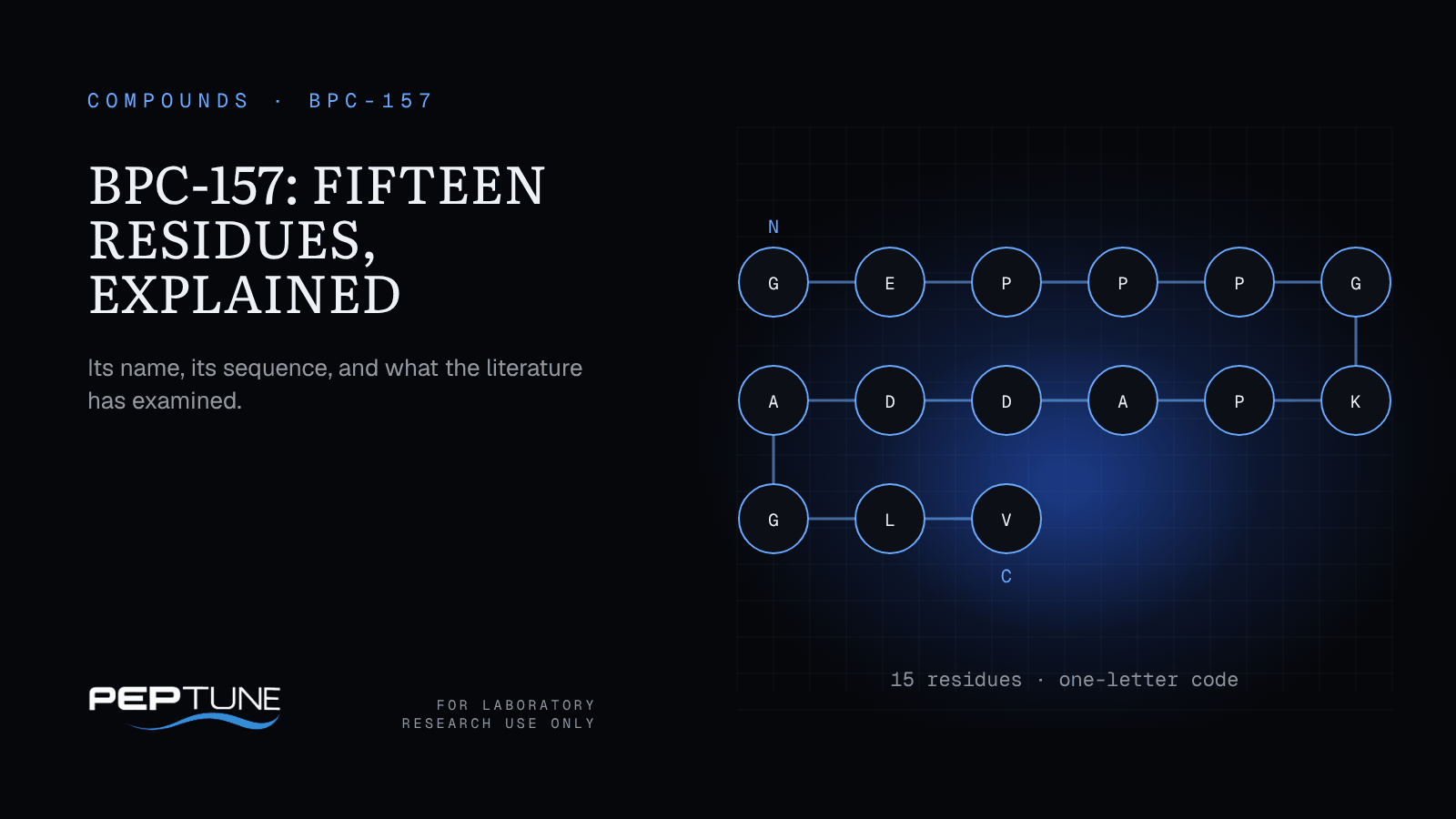 CompoundsBPC-157: a fifteen-residue fragment, explainedWhat BPC-157 is, where the name comes from, its fifteen-residue sequence, and what the research literature has and has not examined.3 min read
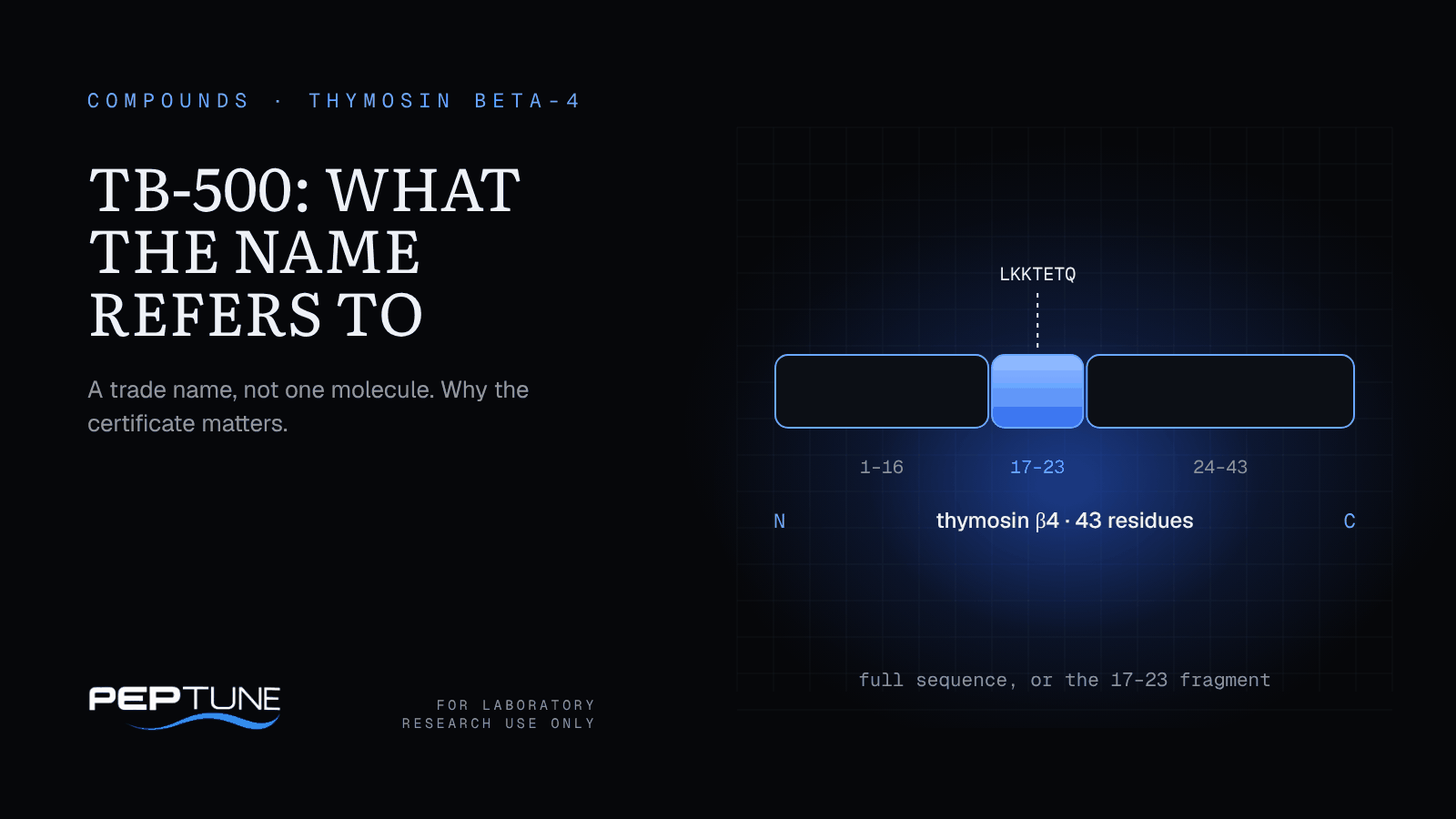 CompoundsTB-500 and thymosin beta-4: what the name refers toTB-500 is a trade name, not a single molecule. How it relates to thymosin beta-4, and why the certificate matters more than the label.3 min read
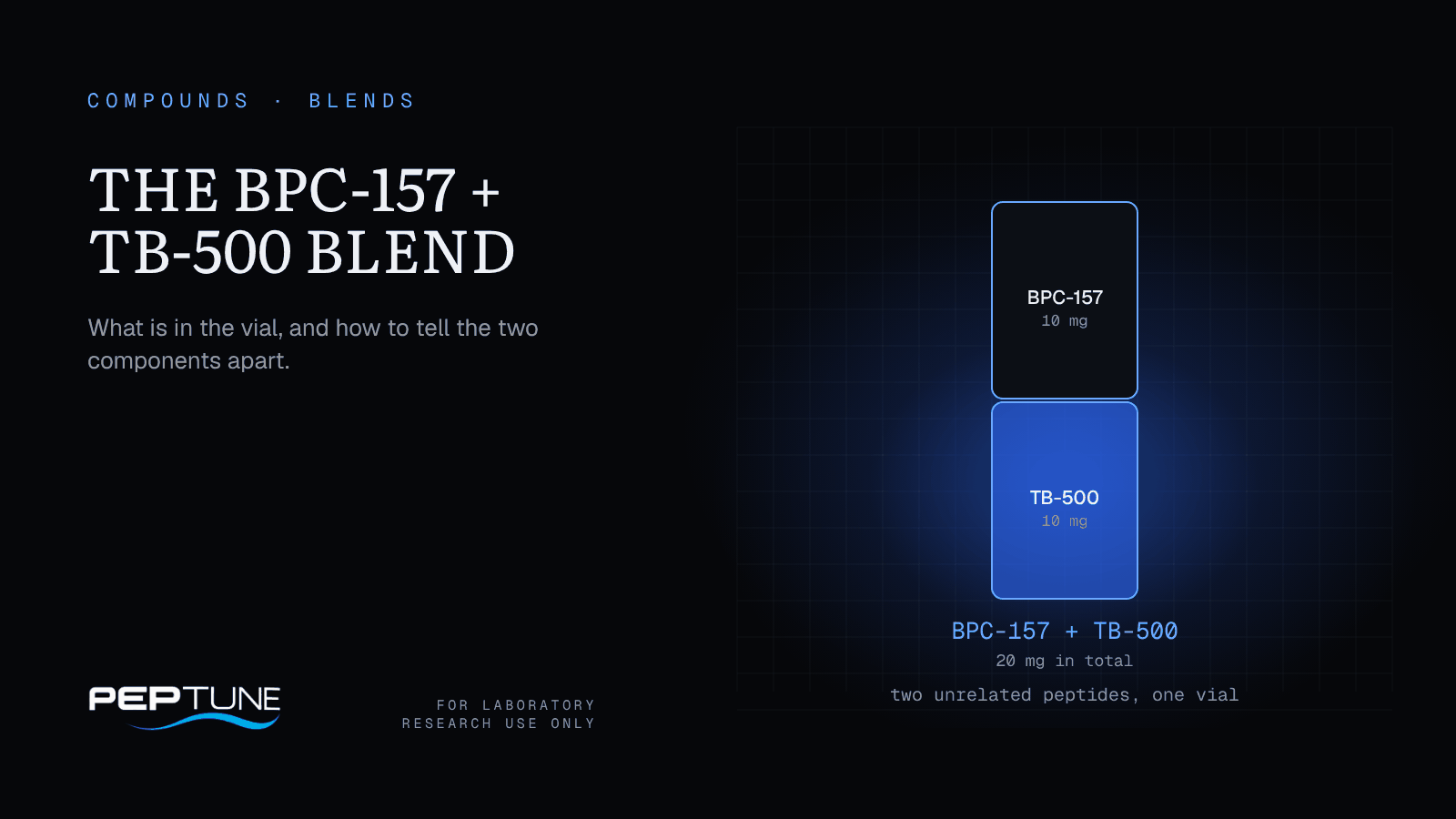 CompoundsThe BPC-157 + TB-500 blend: composition and study designWhy researchers combine BPC-157 and TB-500, what is in the vial, and how to design an experiment that can tell the two components apart.3 min read
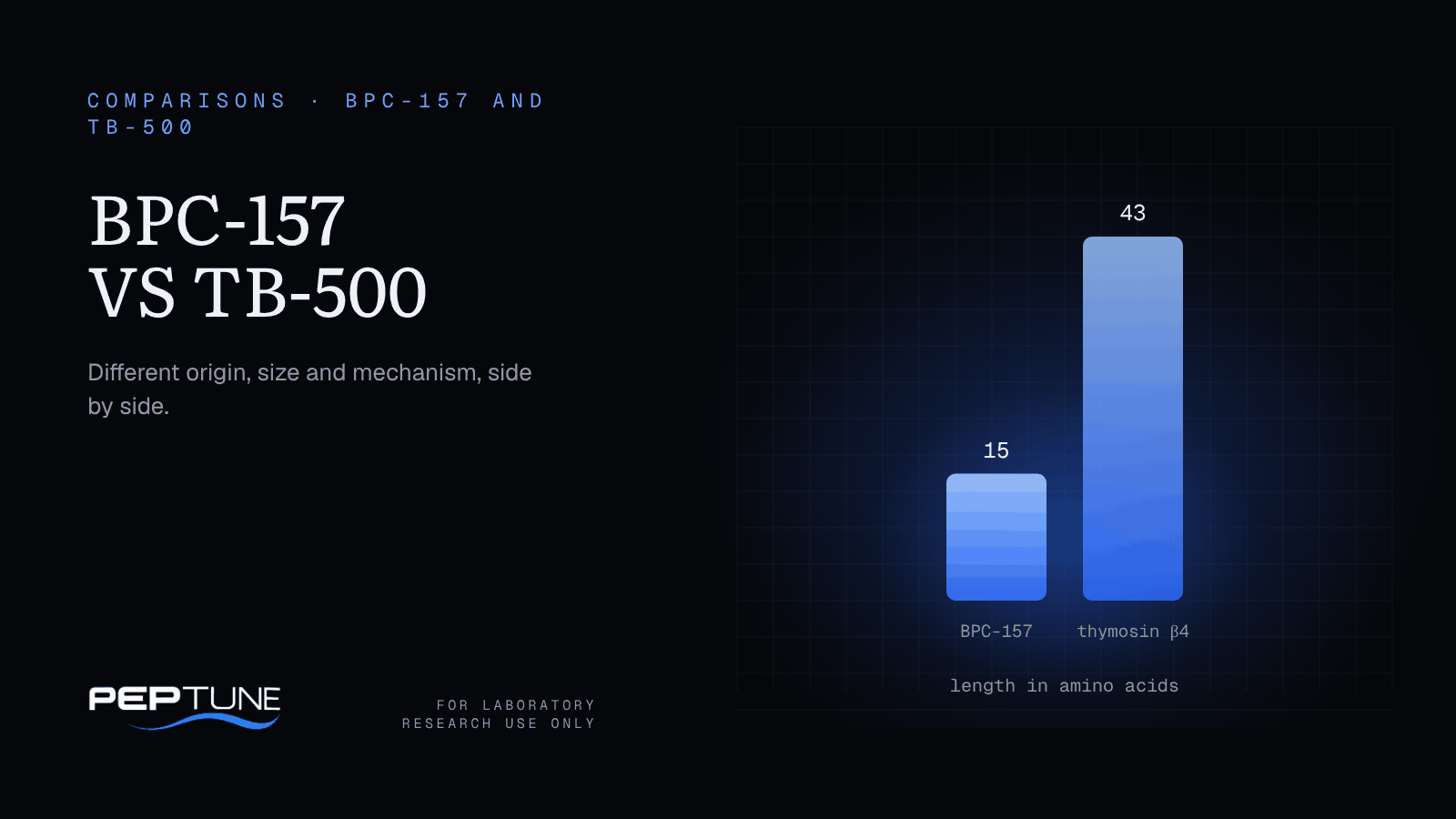 ComparisonsBPC-157 vs TB-500: two different moleculesThey are often mentioned together, but they share neither origin, size nor mechanism. A side-by-side comparison for researchers.3 min read
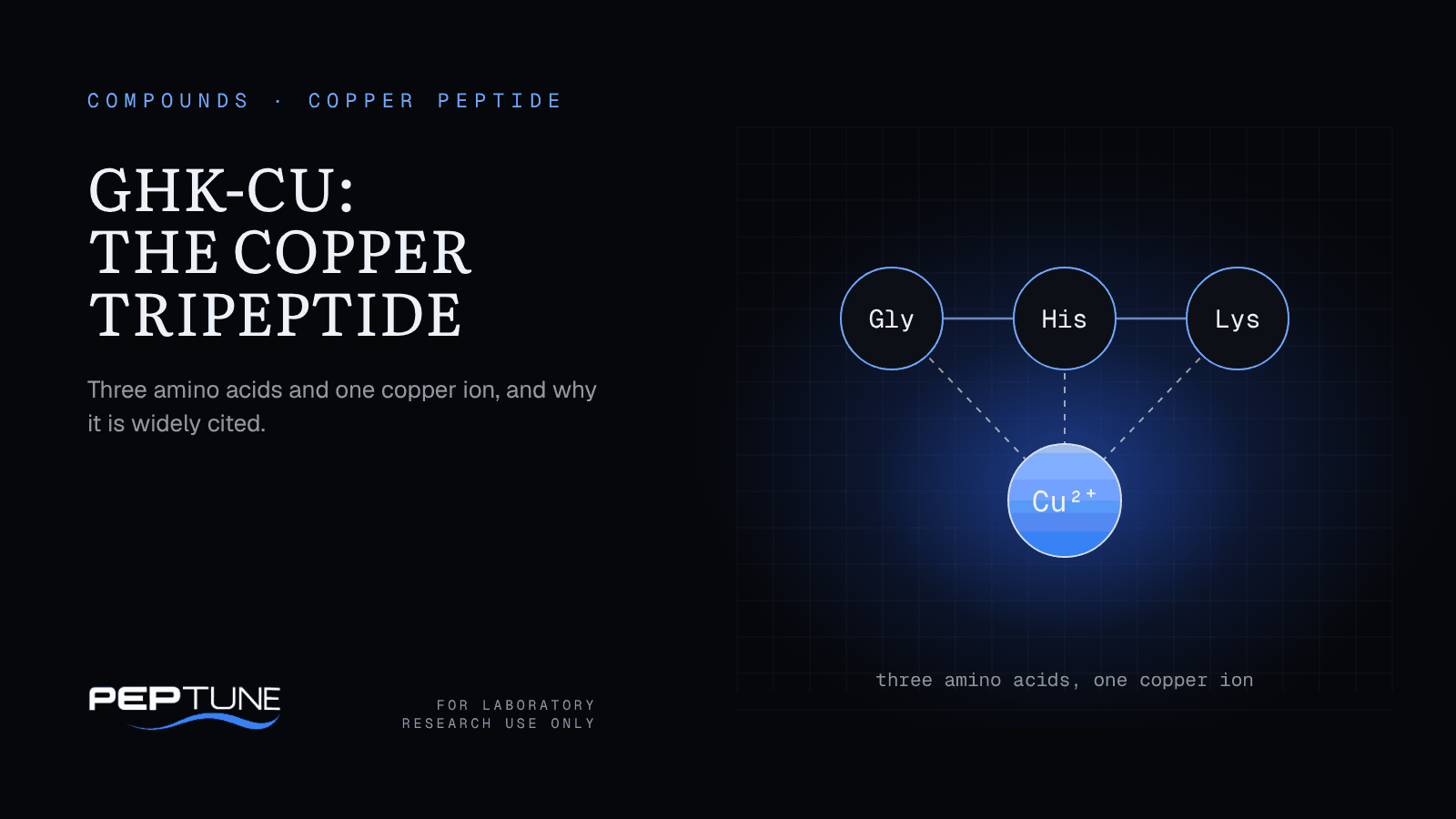 CompoundsGHK-Cu: the copper tripeptideThree amino acids and one copper ion. What GHK-Cu is, how it binds copper, and why such a small complex is one of the most cited peptides in research.3 min read
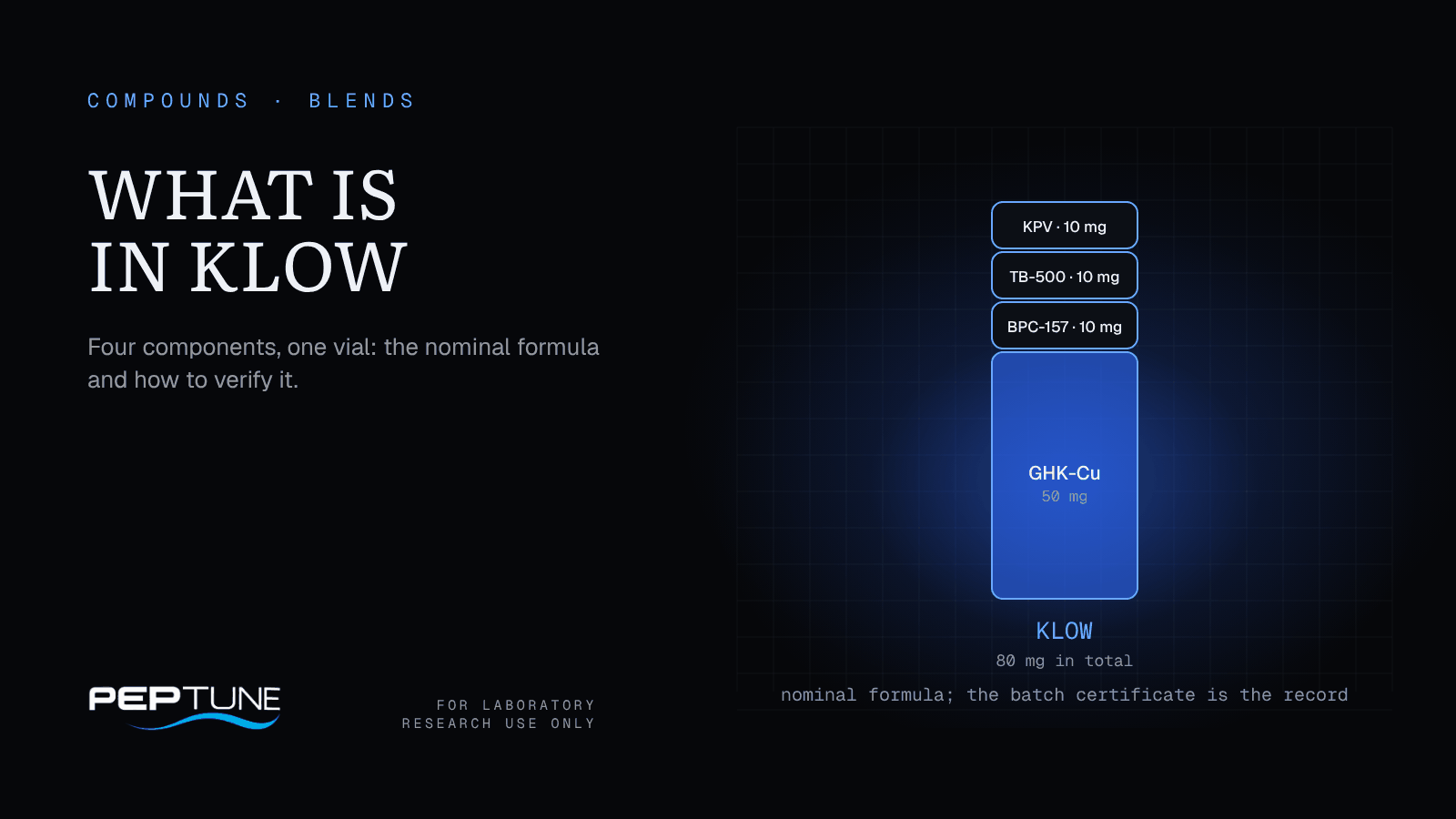 CompoundsWhat is in KLOW: four components, one vialGHK-Cu, BPC-157, TB-500 and KPV in one vial. The nominal formula, what each part is, and how to verify all four in a batch.3 min read
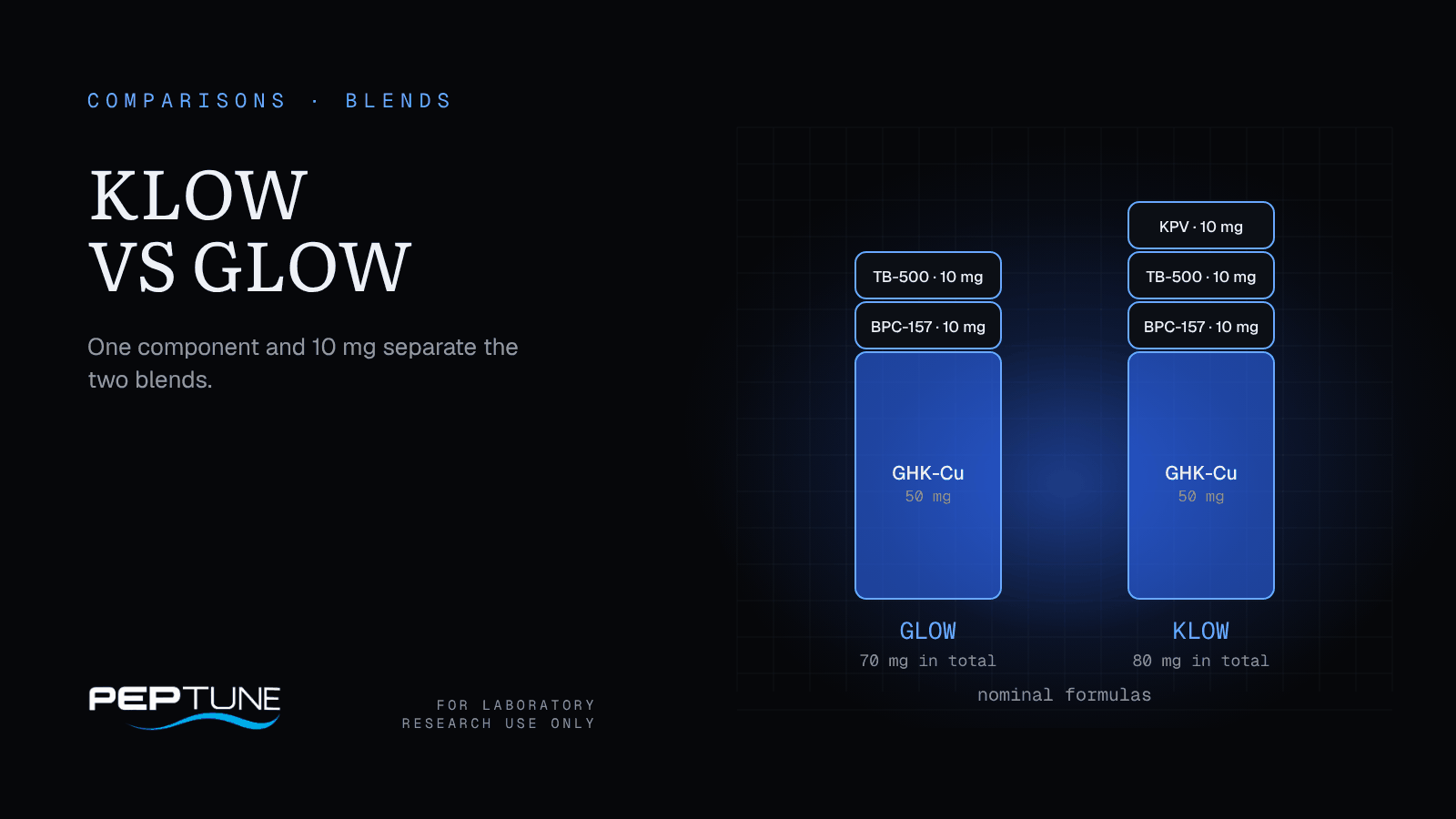 ComparisonsKLOW vs GLOW: how the two blends differOne component and 10 mg separate them. How KLOW and GLOW compare, and what that difference means for an experiment.3 min read
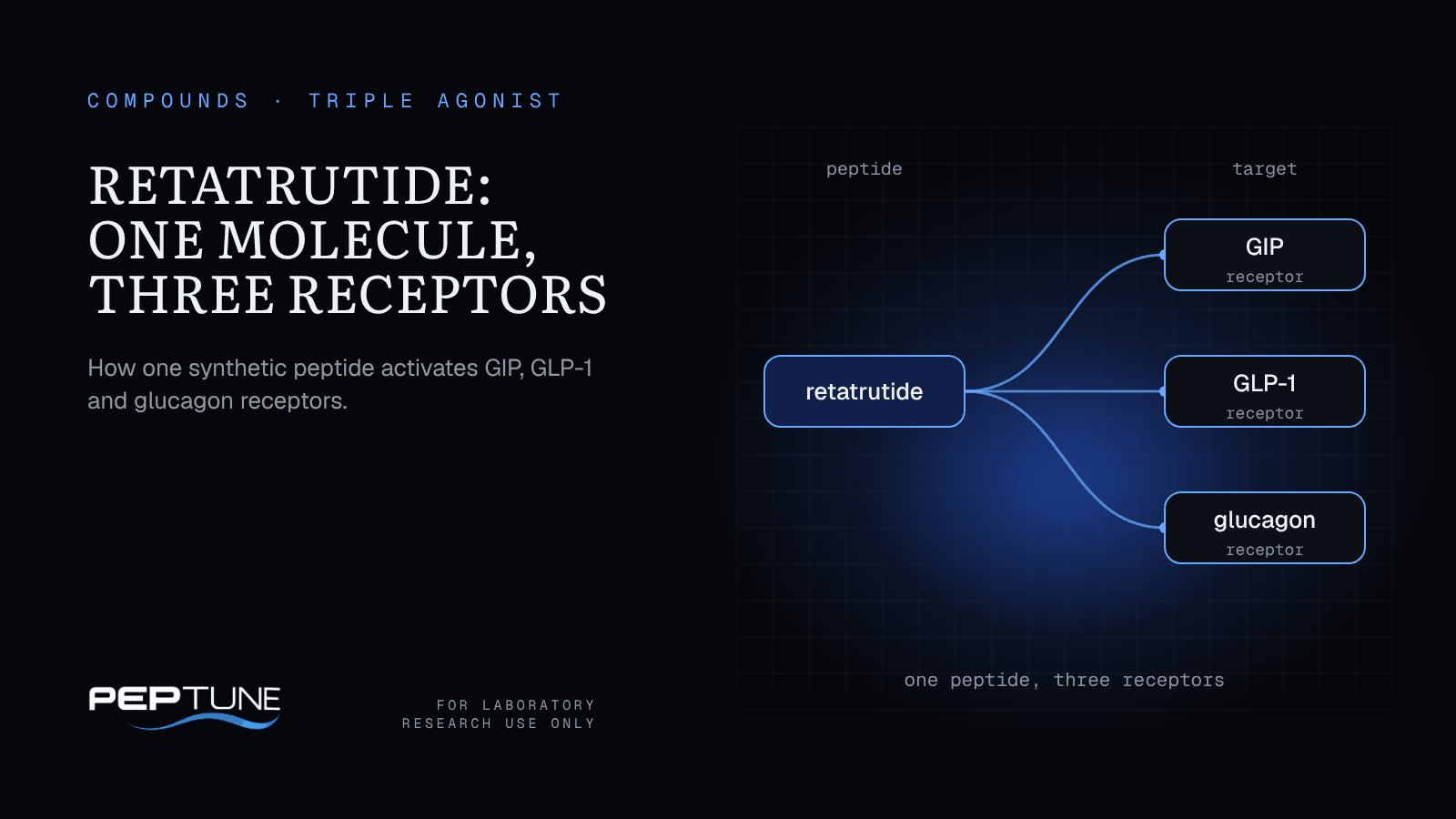 CompoundsRetatrutide: one molecule, three receptorsHow a single synthetic peptide activates the GIP, GLP-1 and glucagon receptors, and why that makes retatrutide a useful research tool.3 min read
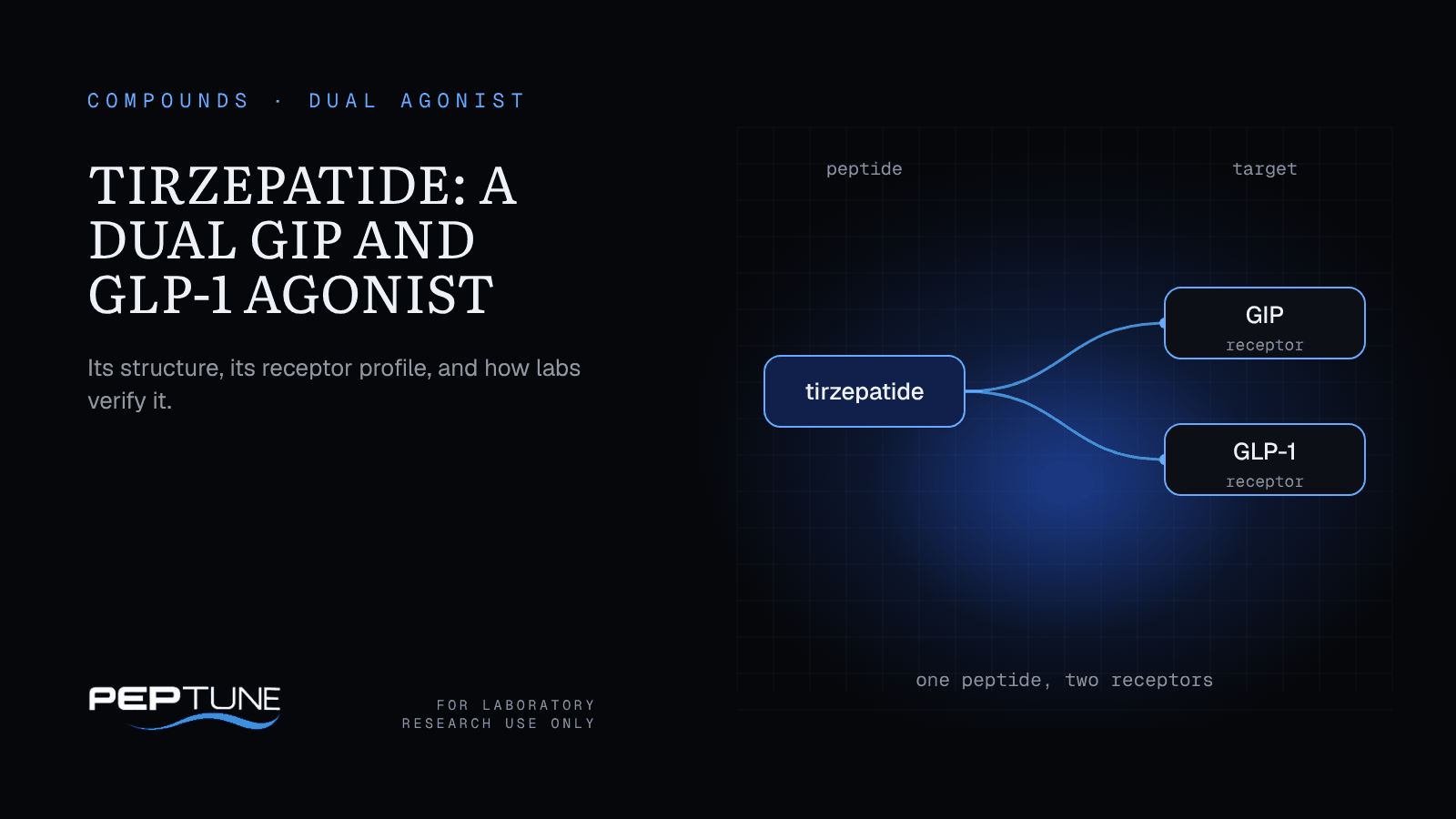 CompoundsTirzepatide: a dual GIP and GLP-1 receptor agonistWhat tirzepatide is at the molecular level: its structure, its dual GIP and GLP-1 receptor profile and how laboratories handle and verify it.3 min read
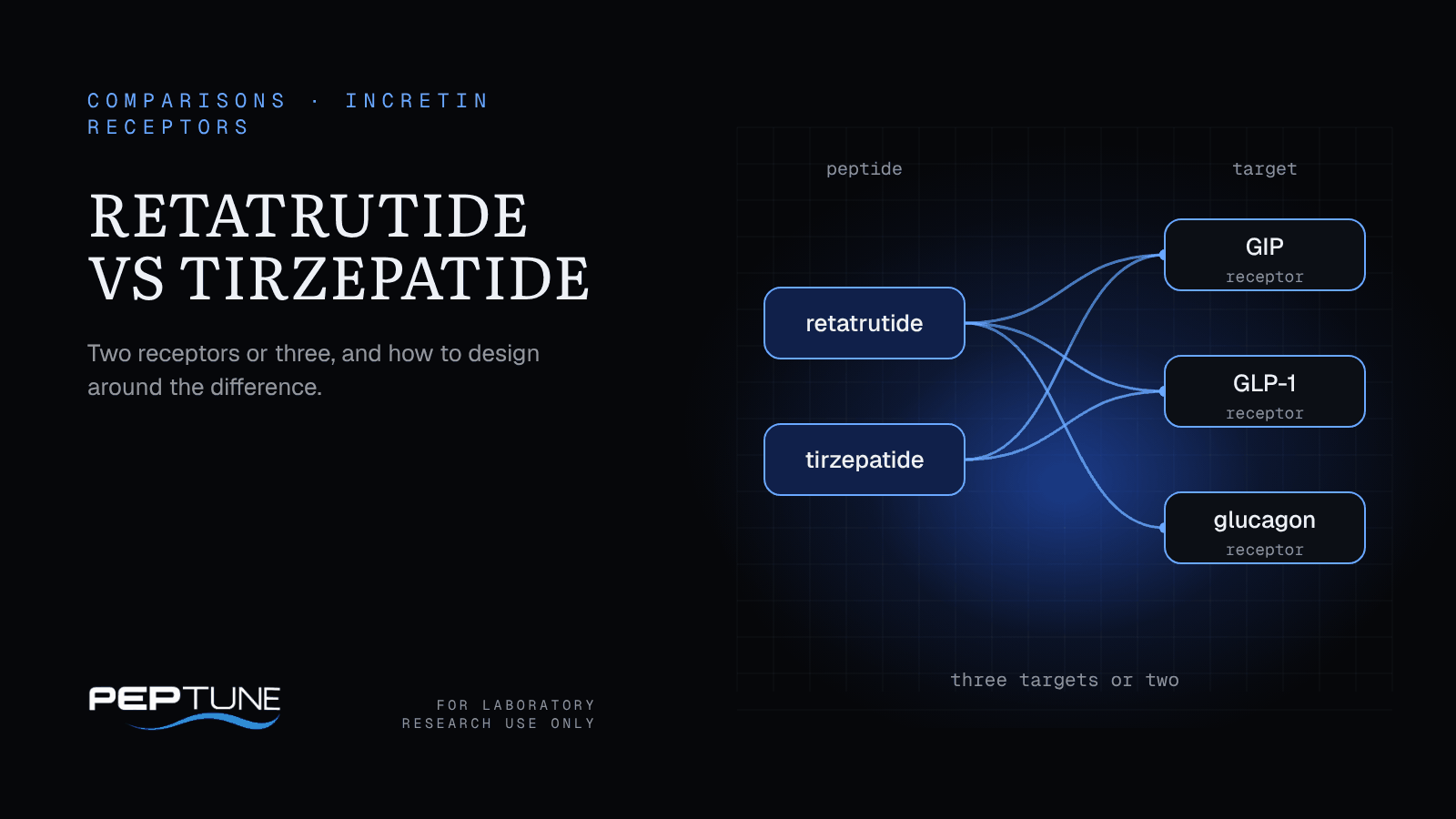 ComparisonsRetatrutide vs tirzepatide in receptor researchTwo receptors or three: how retatrutide and tirzepatide differ, and how to design experiments that use the difference.3 min read
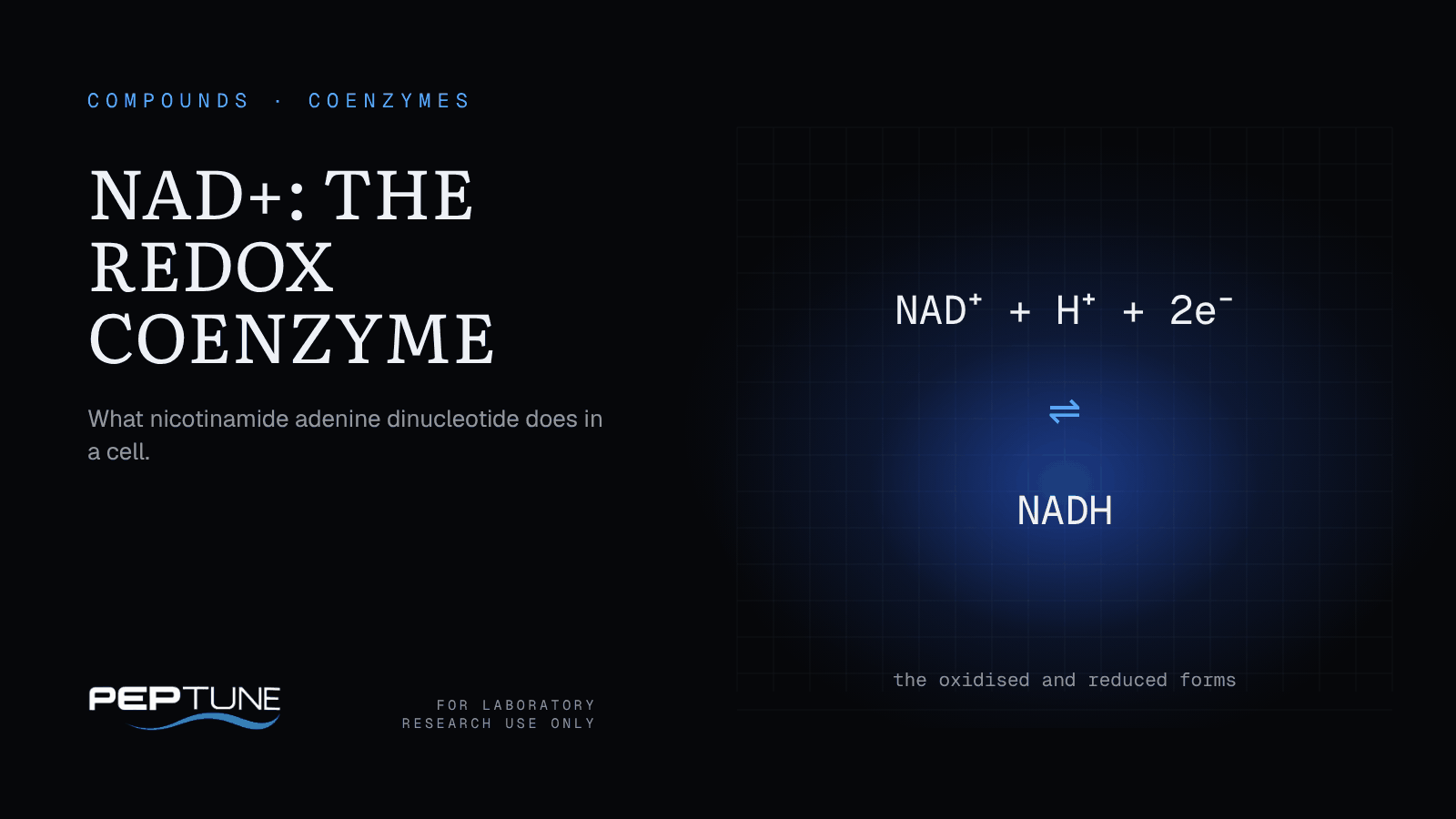 CompoundsNAD+: the coenzyme behind redox chemistryWhat nicotinamide adenine dinucleotide does in a cell, and why it is a staple of metabolic and enzyme research.3 min read
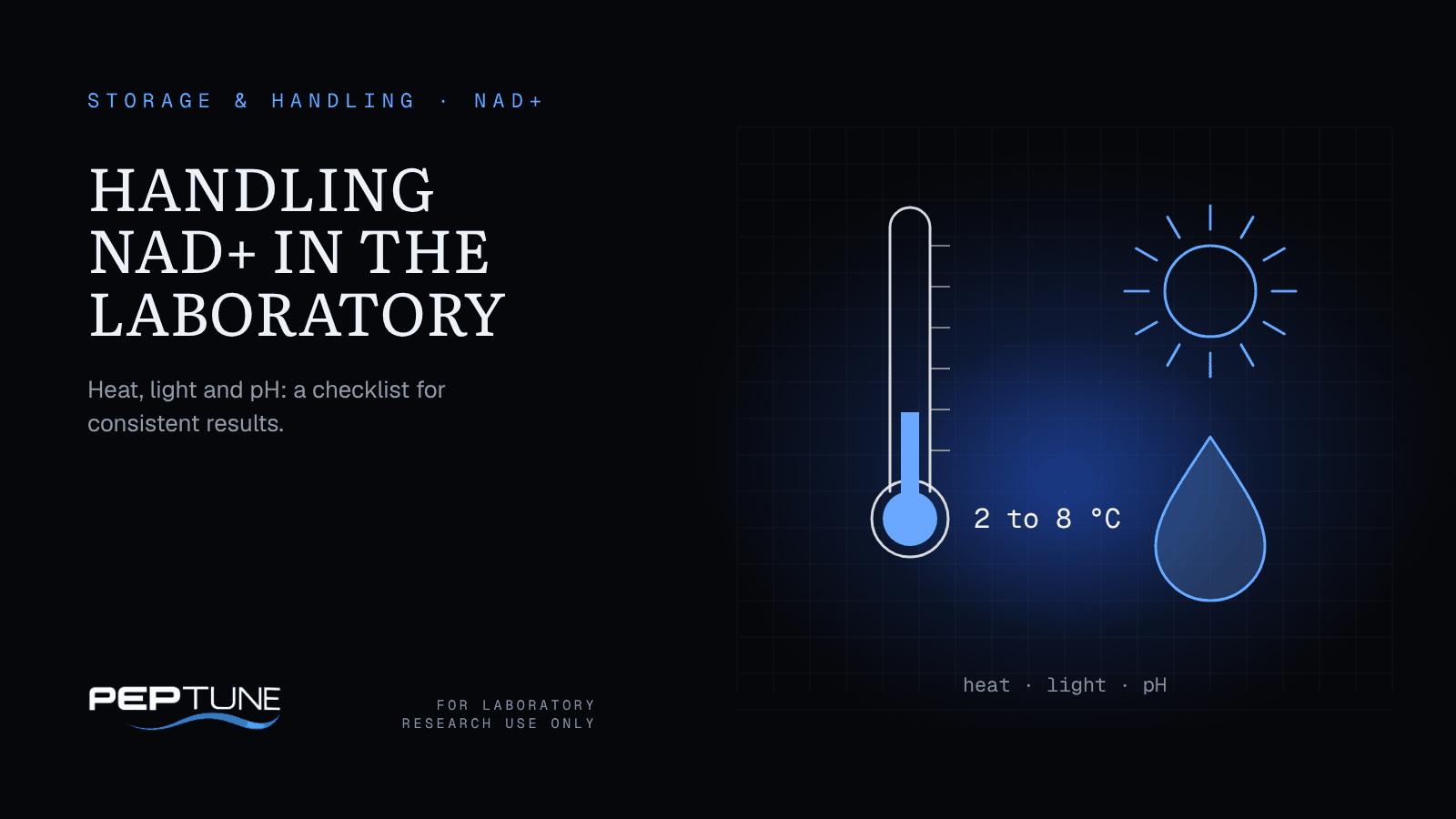 Storage & handlingHandling NAD+ in the laboratoryHeat, light and pH all affect NAD+ in solution. A practical storage and handling checklist for consistent results.3 min read
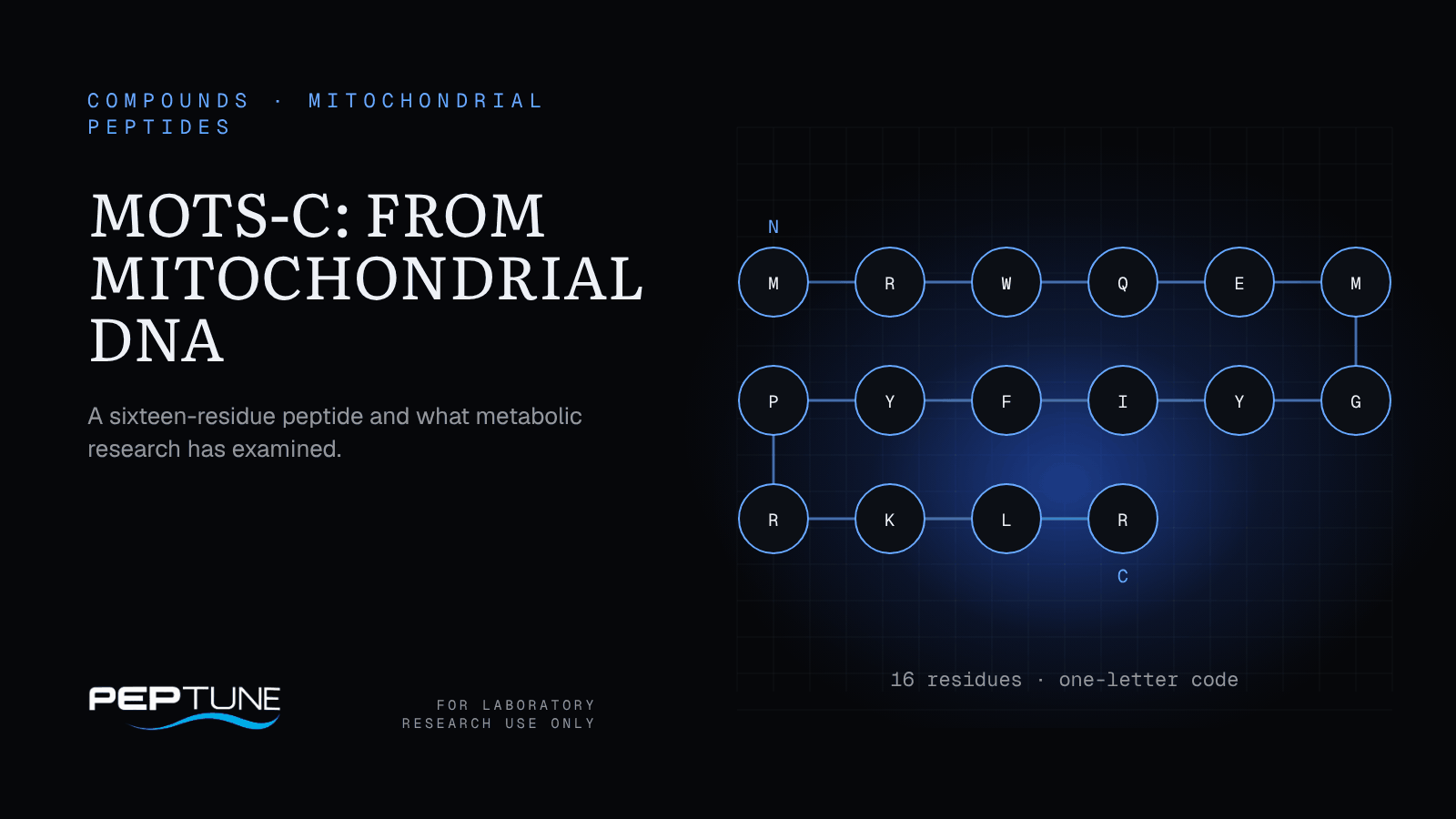 CompoundsMOTS-c: a peptide encoded in mitochondrial DNAA sixteen-residue peptide encoded in mitochondrial DNA, and what metabolic research has examined so far.3 min read
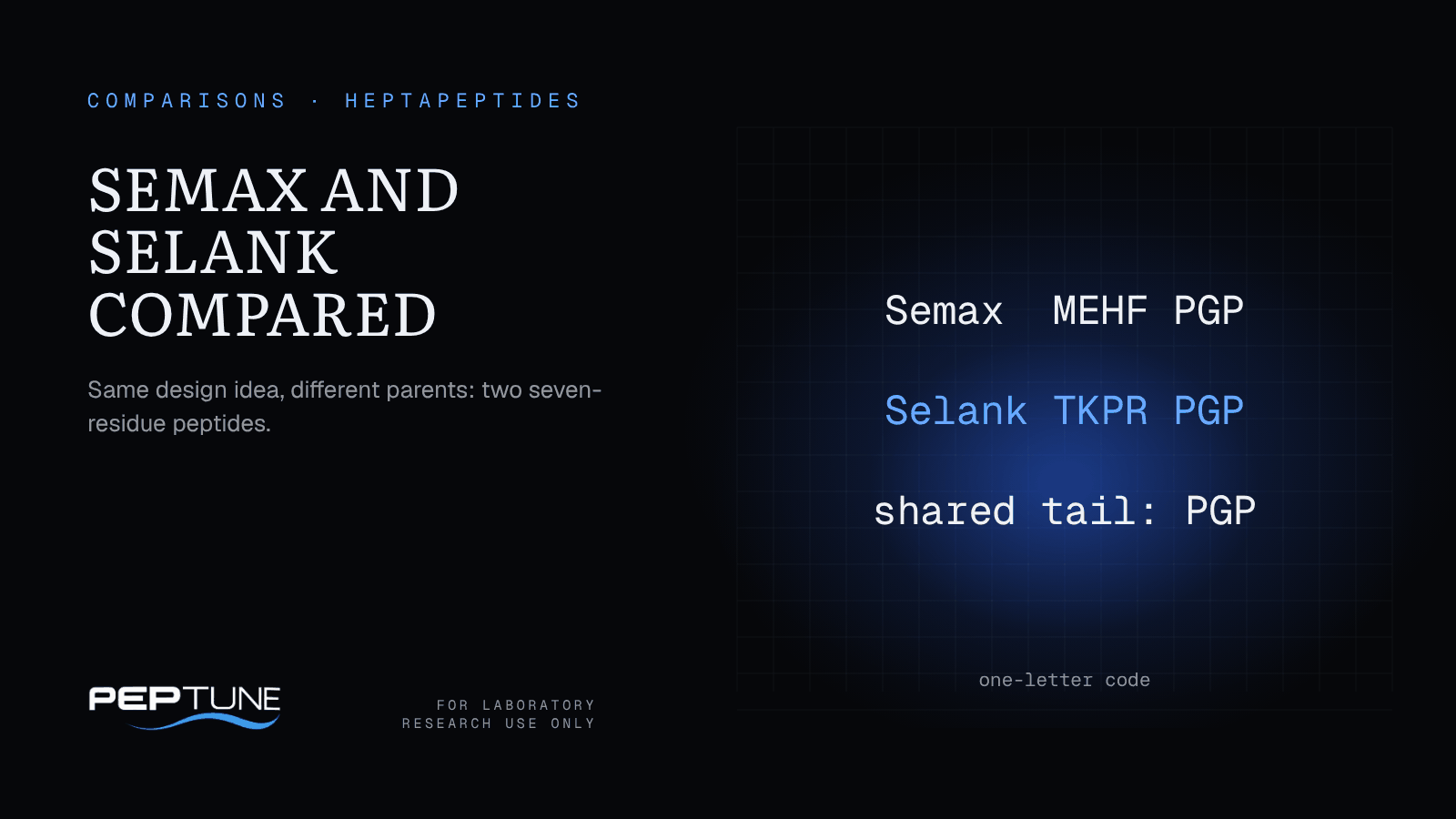 ComparisonsSemax and Selank: two stabilised heptapeptidesSame design idea, different parents. How Semax and Selank, two seven-residue peptides, compare in structure and research use.3 min read
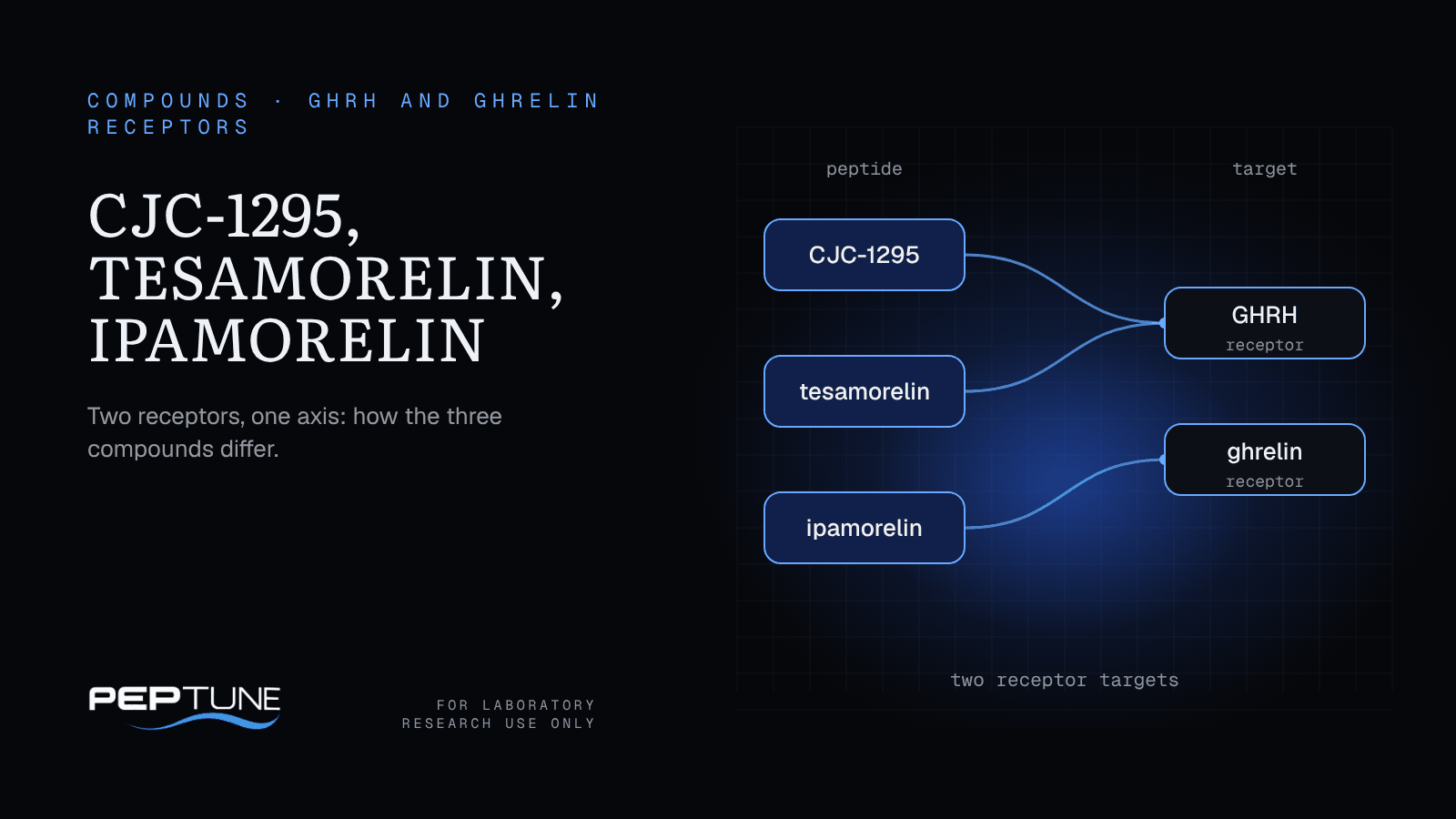 CompoundsCJC-1295, tesamorelin and ipamorelin: two receptors, one axisGHRH analogues and a ghrelin-receptor agonist. How CJC-1295, tesamorelin and ipamorelin differ, and why they are often studied together.3 min read
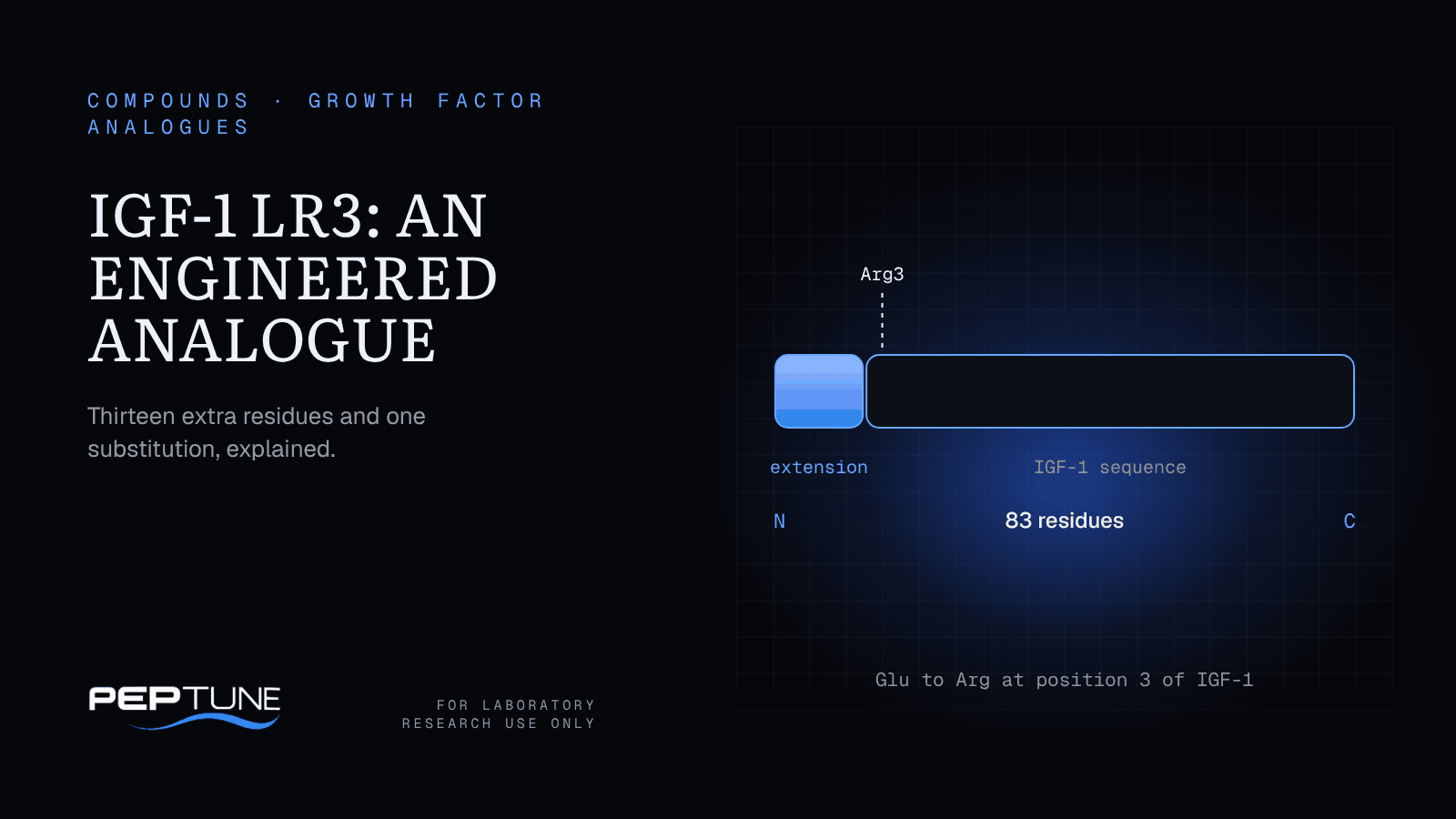 CompoundsIGF-1 LR3: an engineered IGF-1 analogueThirteen extra residues and one substitution. Why IGF-1 LR3 is a staple of cell-culture research, and how to handle it.3 min read
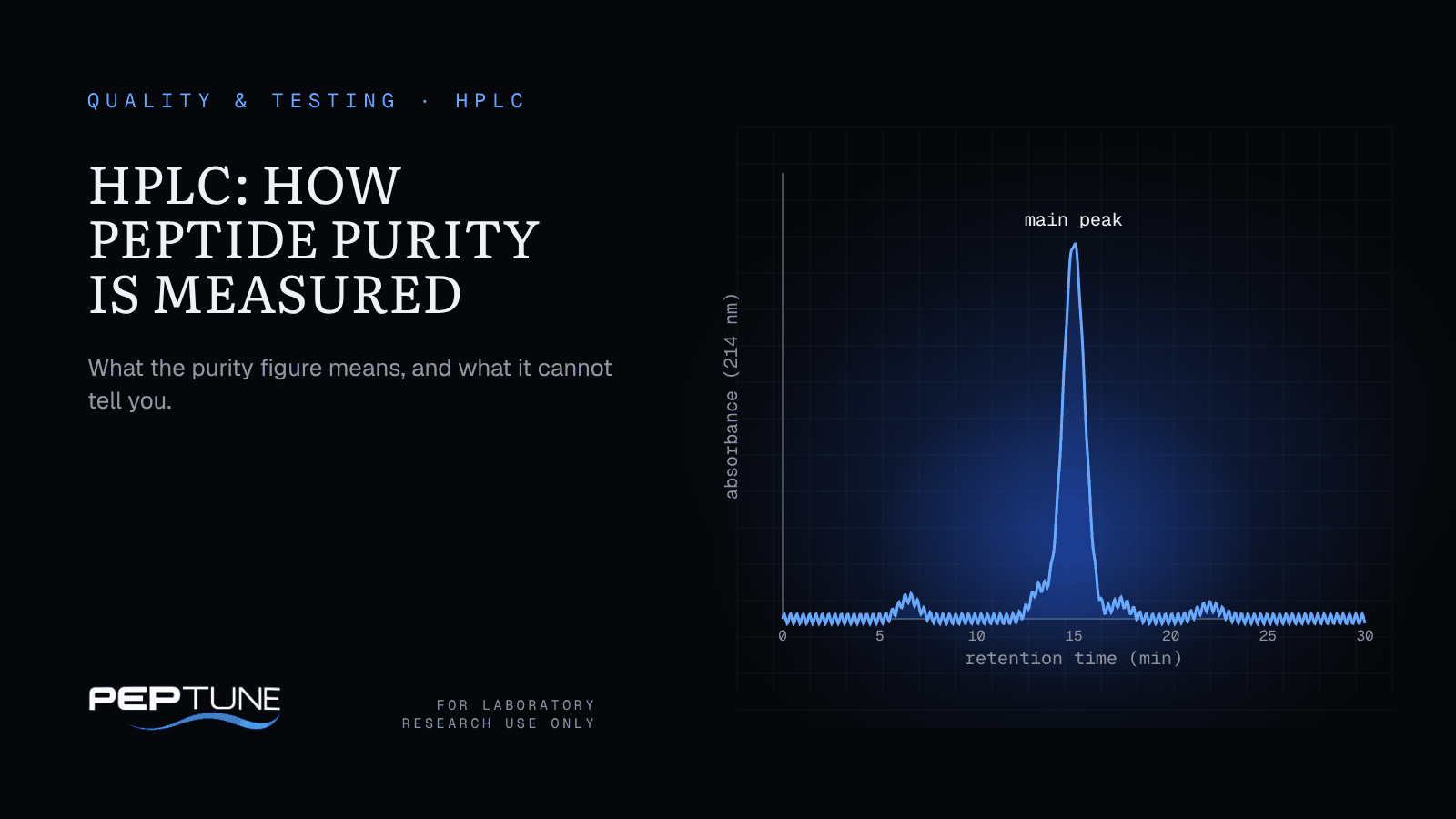 Quality & testingHPLC: how peptide purity is measuredWhat high-performance liquid chromatography does, what the purity figure on a certificate means, and what it cannot tell you.4 min read
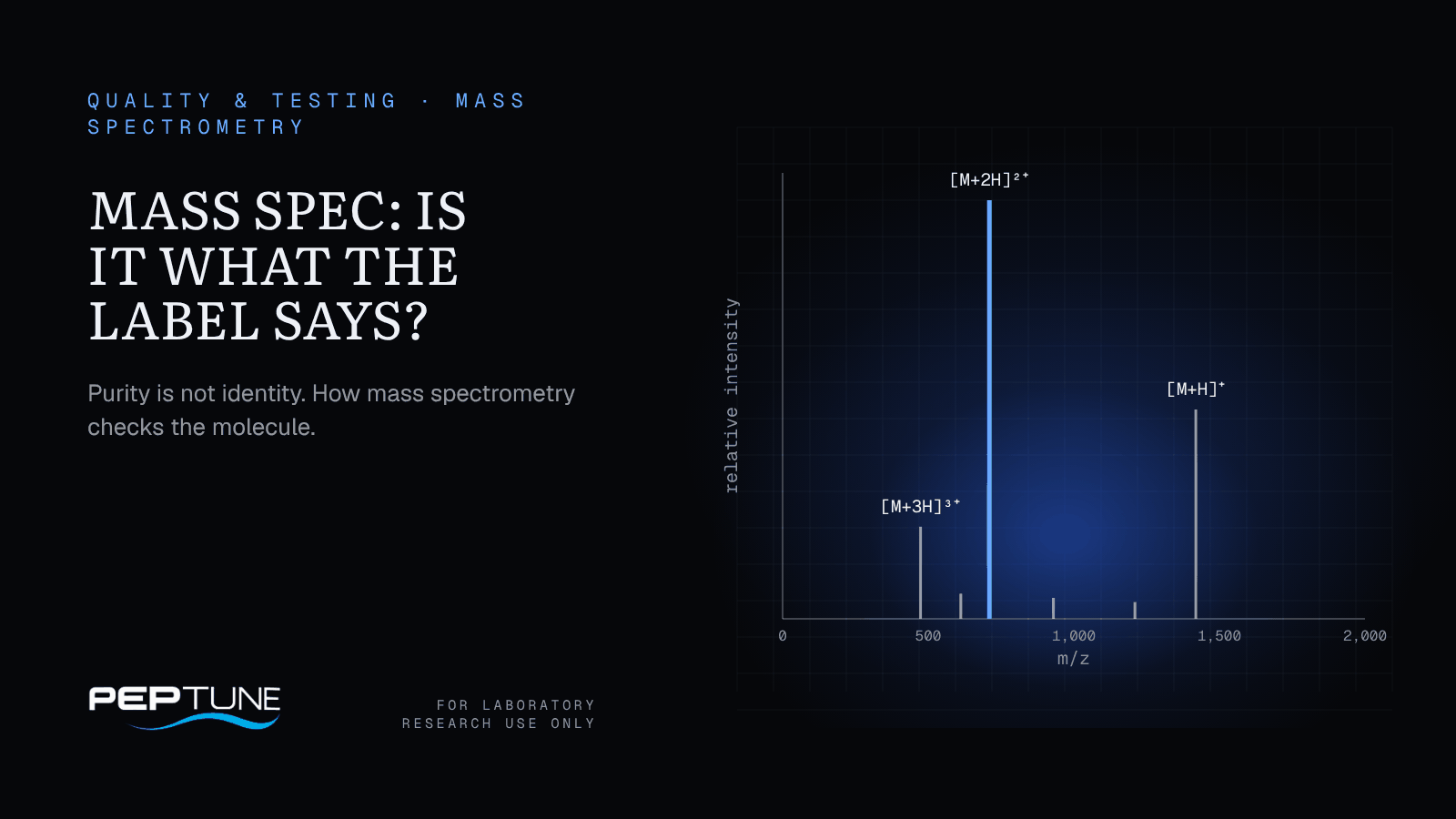 Quality & testingMass spectrometry: confirming a peptide is what the label saysWhy purity is not identity, and how mass spectrometry checks that the molecule in the vial is the one named on it.3 min read
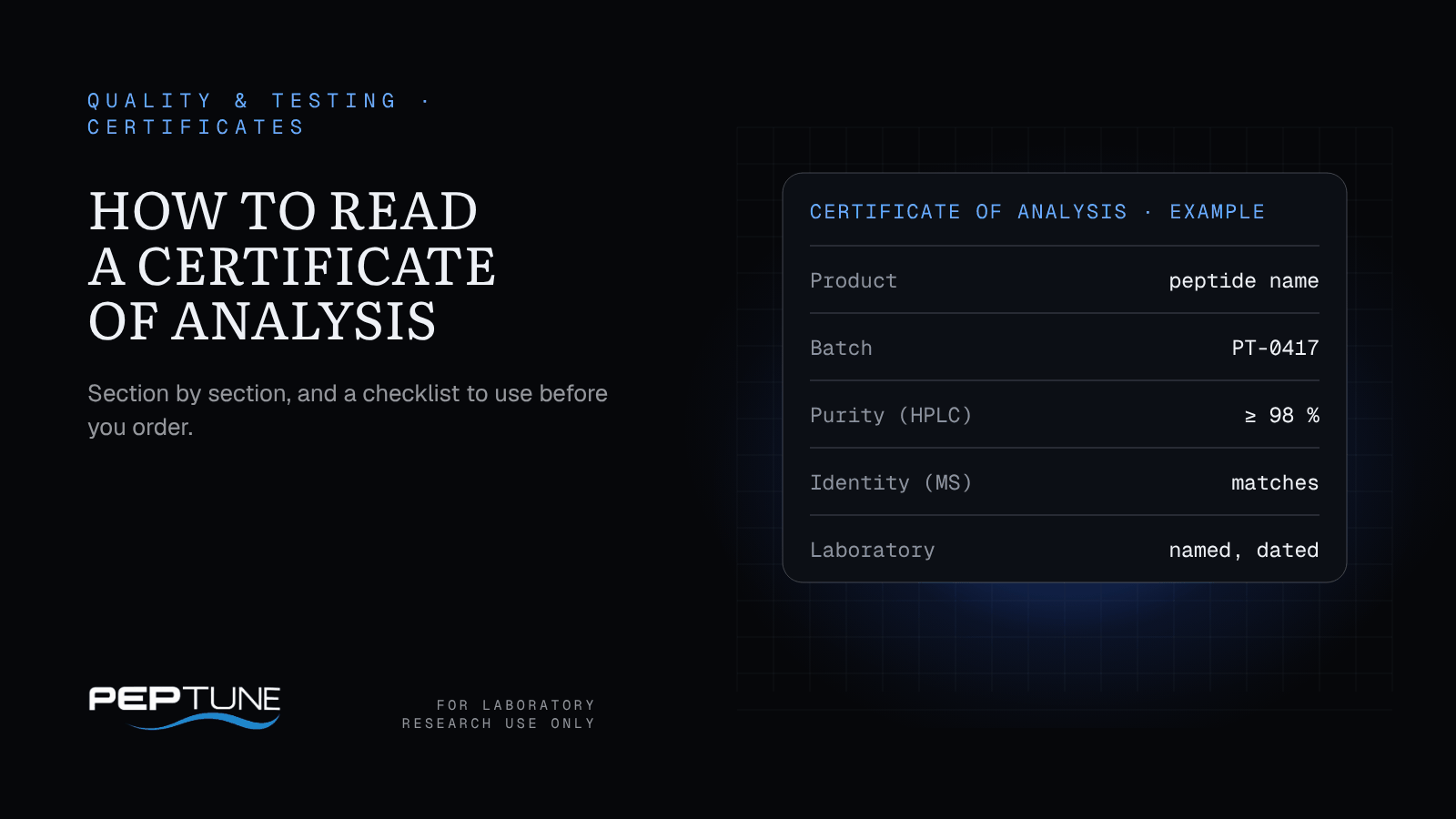 Quality & testingHow to read a certificate of analysisA section-by-section guide to the certificate of analysis that should come with every research peptide batch, and a checklist to use before you order.4 min read
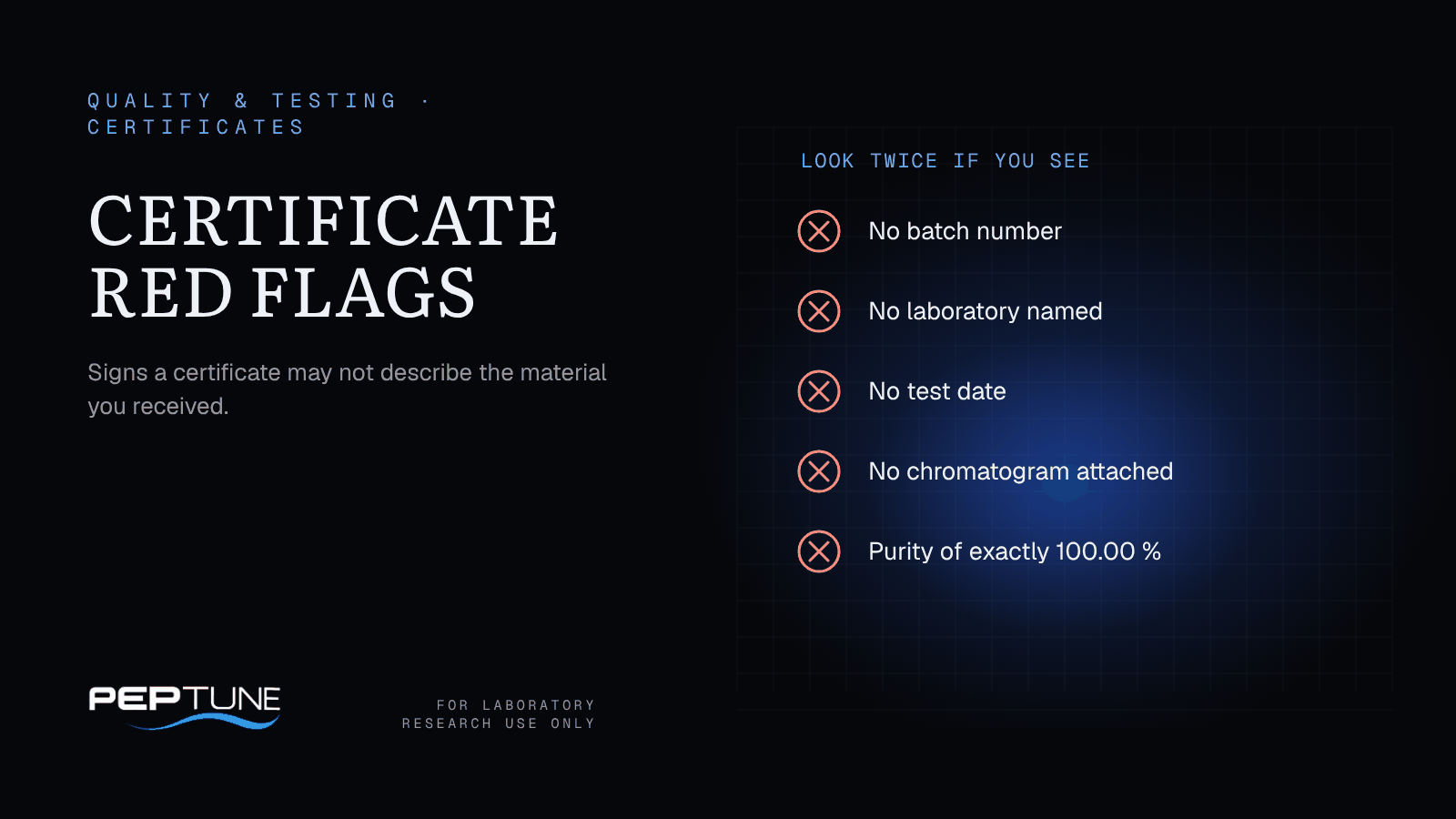 Quality & testingCertificate red flags: what should make you look twiceThe warning signs that a certificate of analysis may not describe the material you received, and what to do when you spot one.3 min read
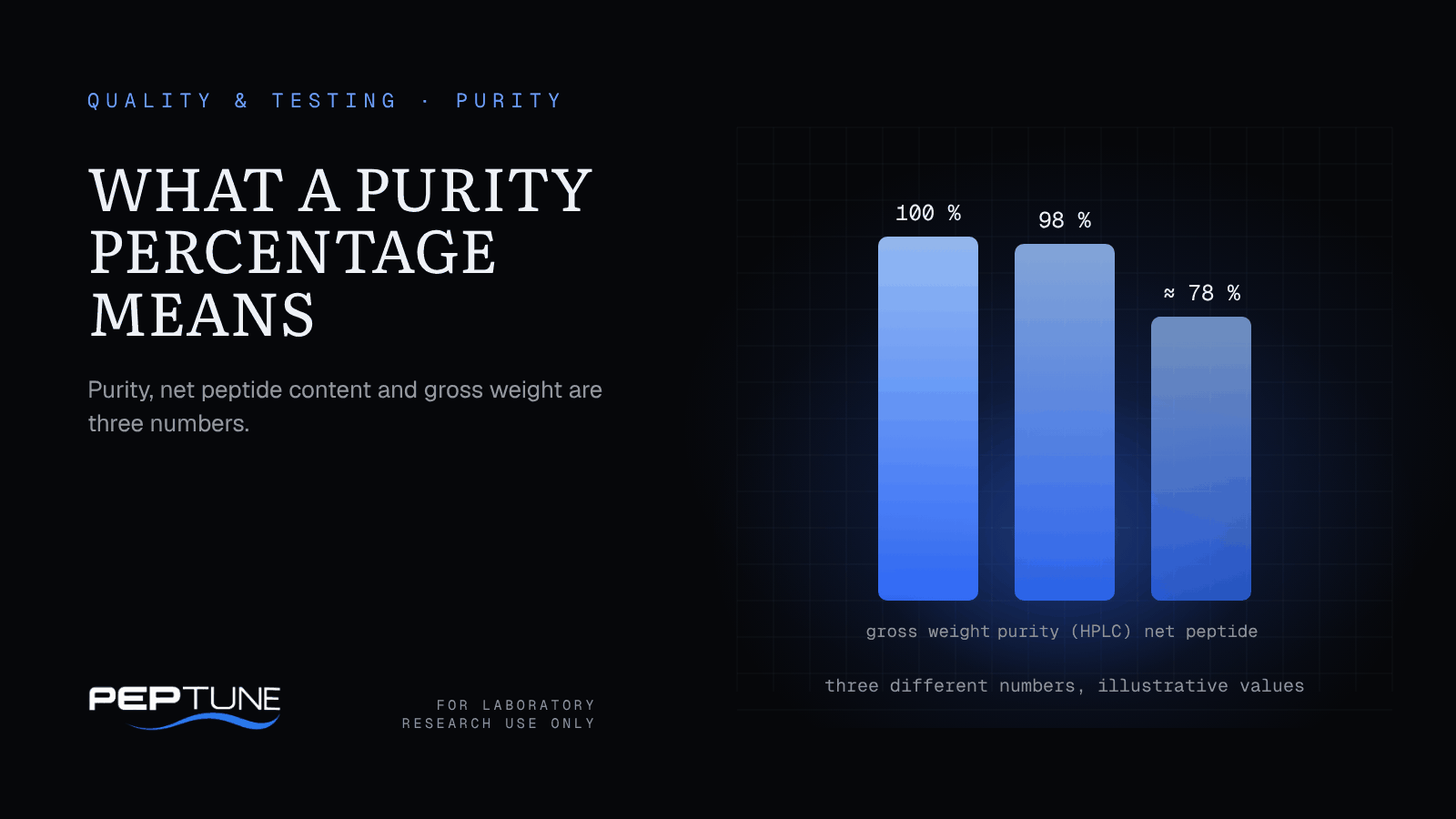 Quality & testingWhat a purity percentage does and does not meanPurity, net peptide content and gross weight are three different numbers. Here is how they relate, and why it matters in the lab.3 min read
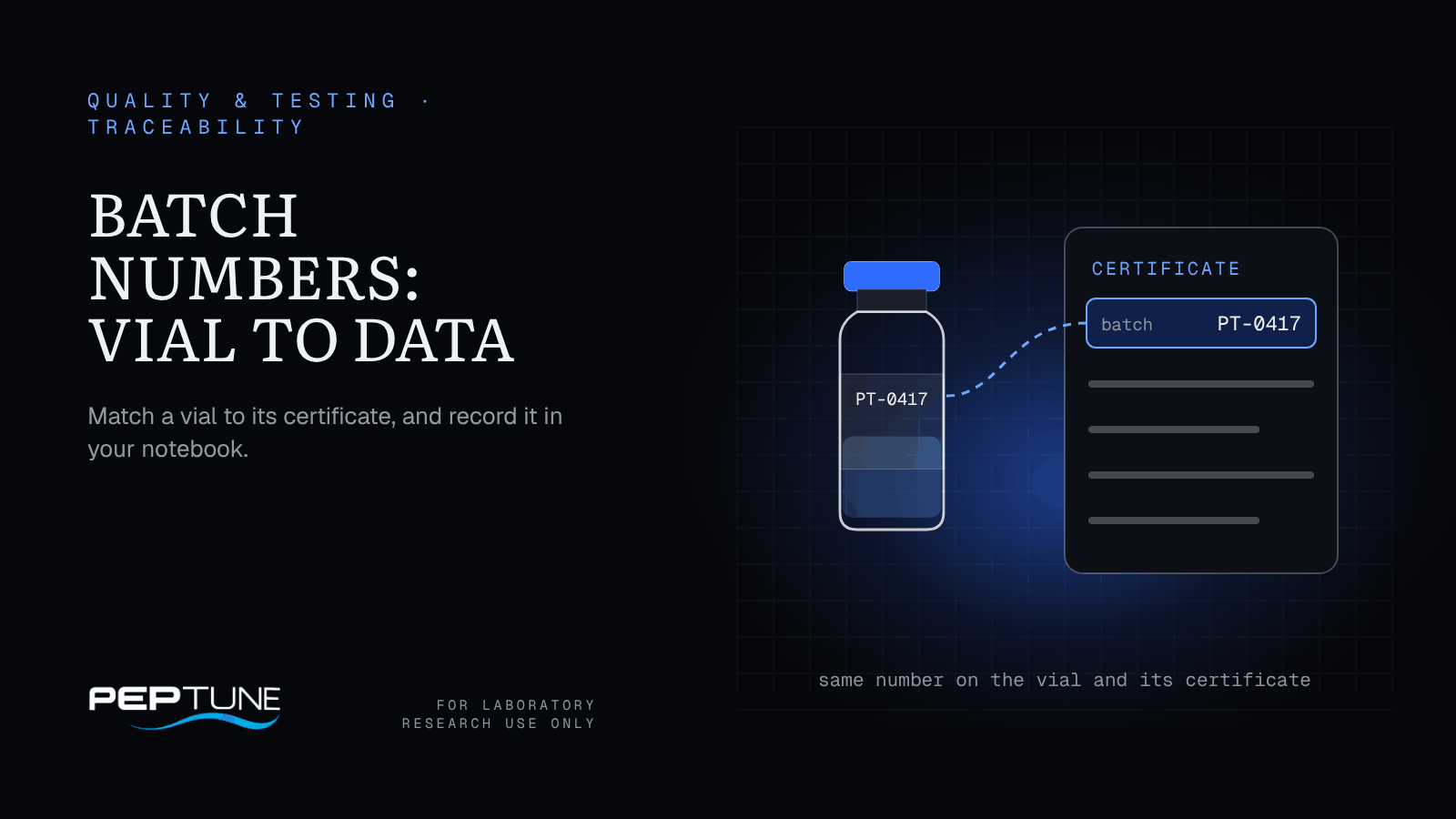 Quality & testingBatch numbers: the link between a vial and its dataEvery vial carries a batch number. Here is how to match it to its certificate, what to compare and what to record in your lab notebook.4 min read
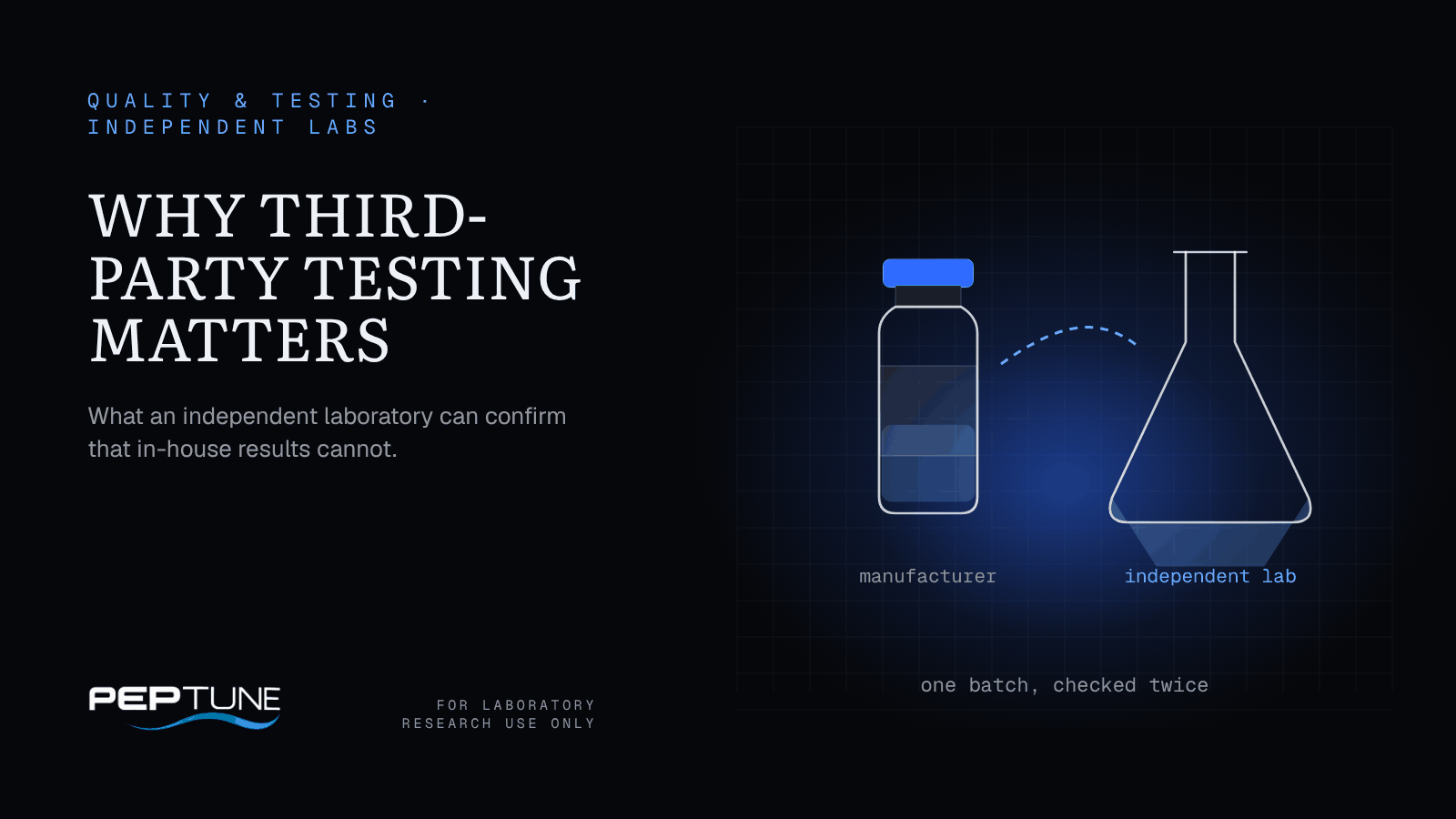 Quality & testingWhy third-party testing mattersIn-house results, independent laboratories and what each can and cannot assure about a research peptide.3 min read
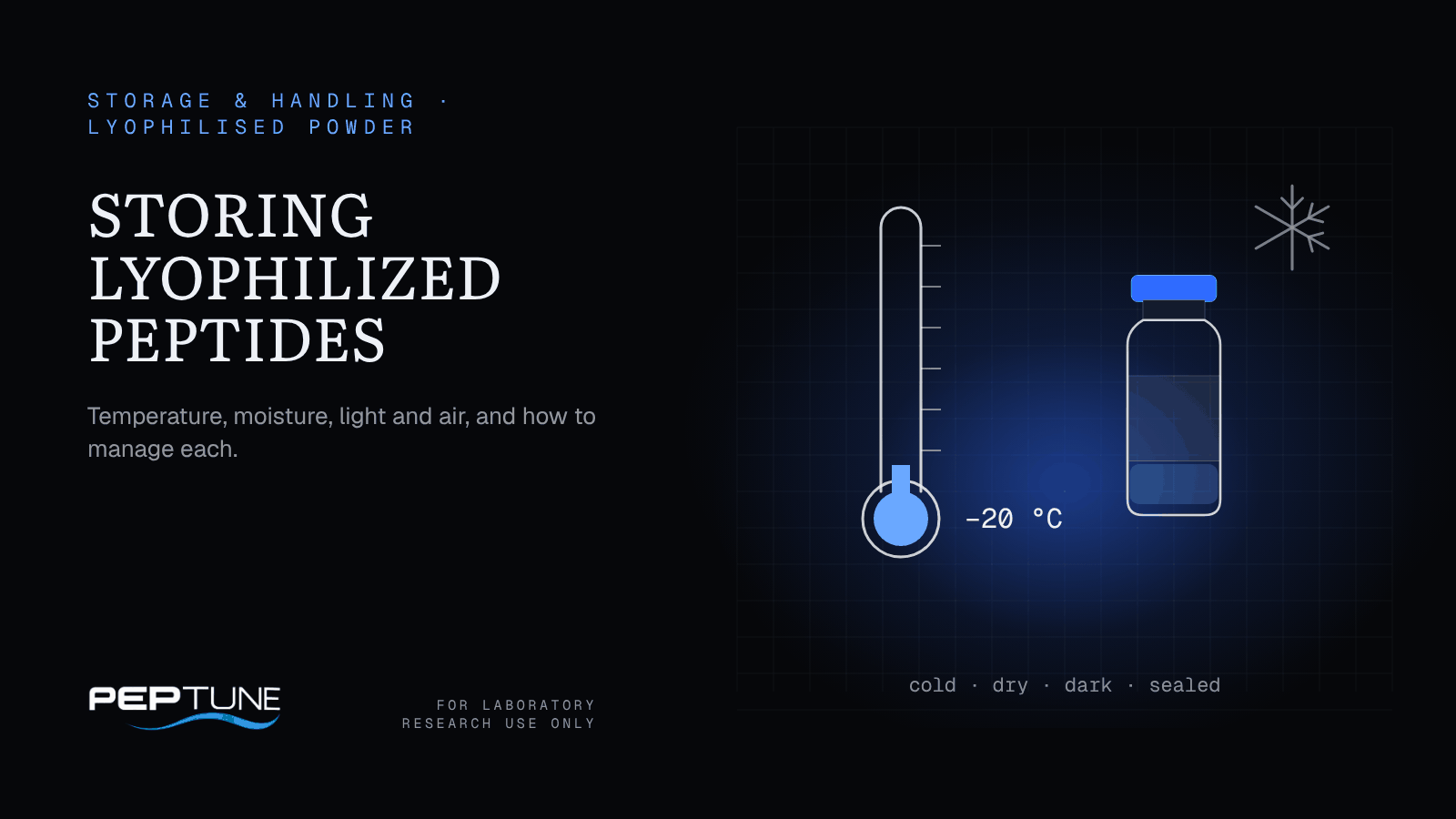 Storage & handlingStoring lyophilized peptidesTemperature, moisture, light and air: the four things that decide how long a dry peptide stays intact, and how to manage each.3 min read
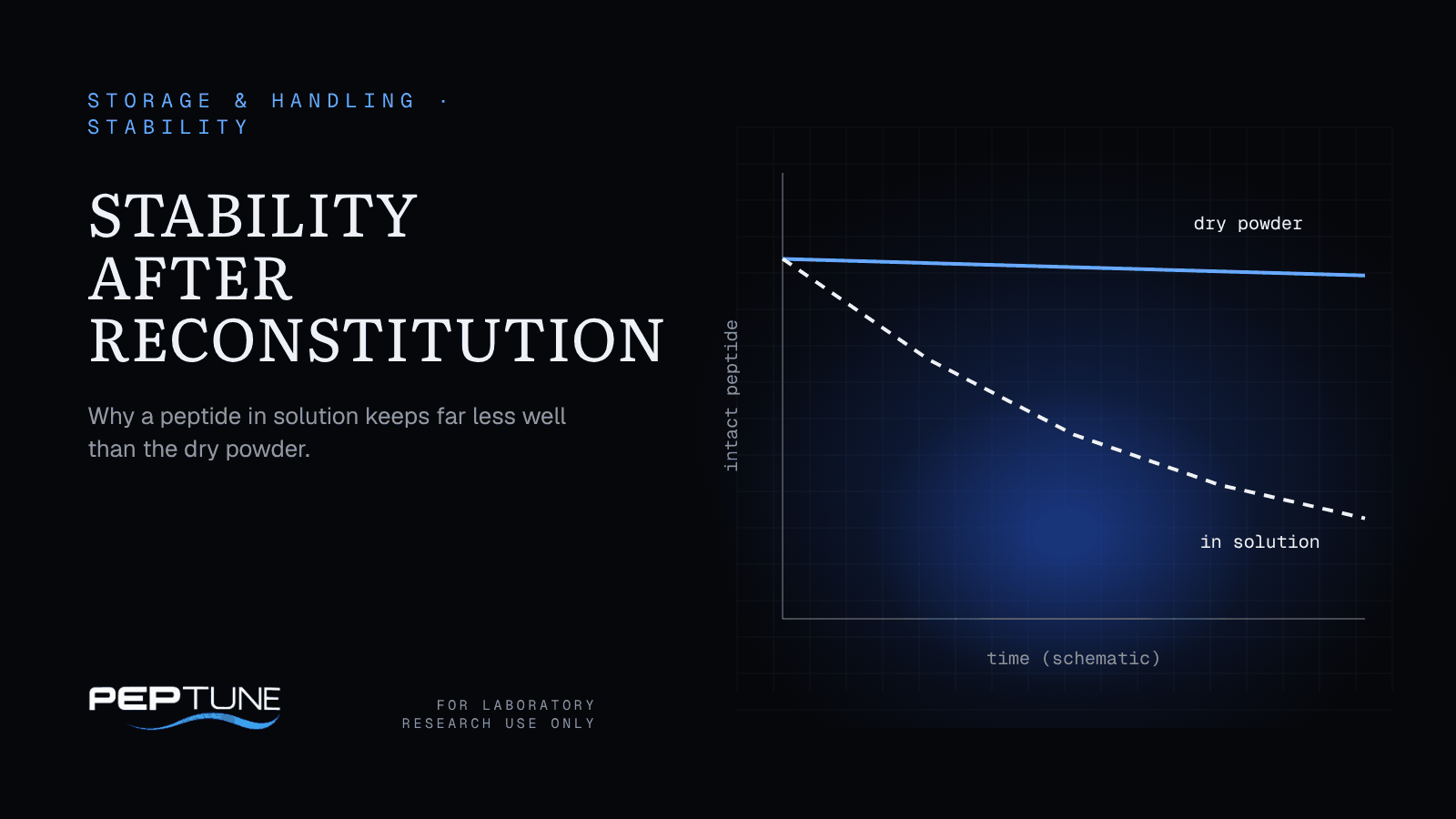 Storage & handlingPeptide stability after reconstitutionWhy a peptide in solution is far less stable than the dry powder, which reactions are at work, and how to plan around them.3 min read
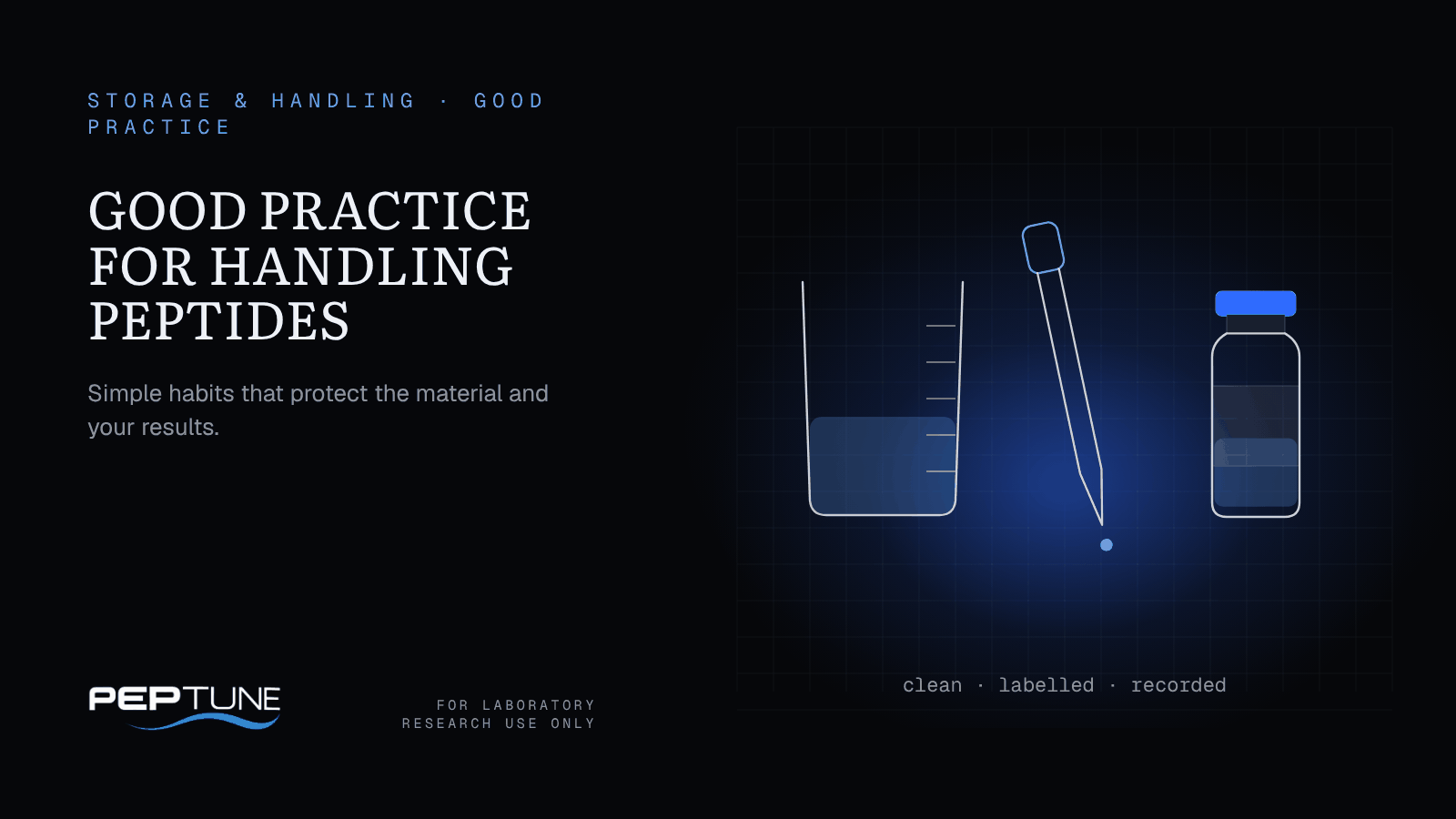 Storage & handlingGood laboratory practice for handling peptidesSimple habits for peptide handling that protect both the material and the reliability of your results.3 min read
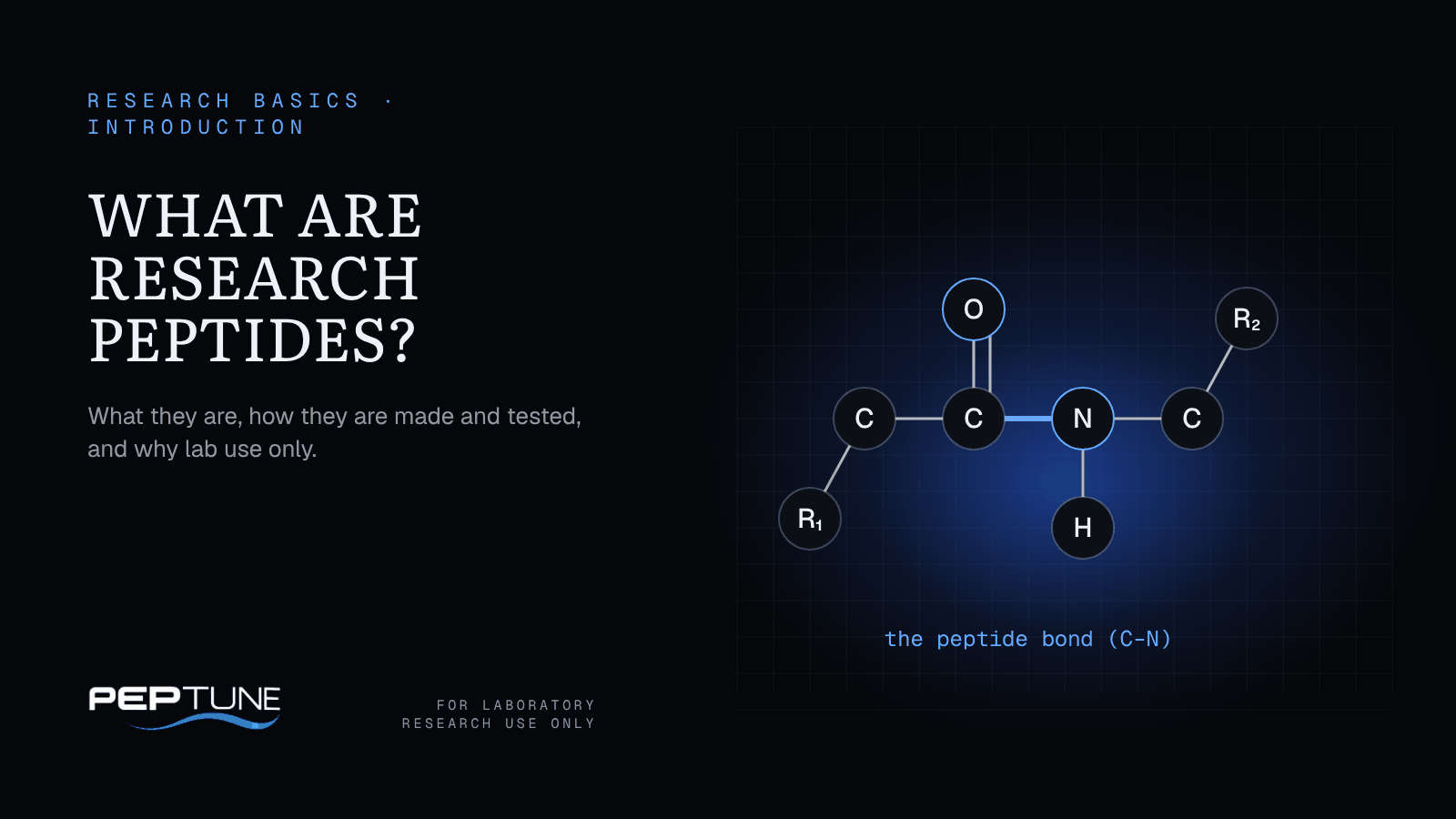 Research basicsWhat are research peptides?A plain introduction to synthetic peptides: what they are, how they are made and tested, and why they are sold for laboratory use only.3 min read
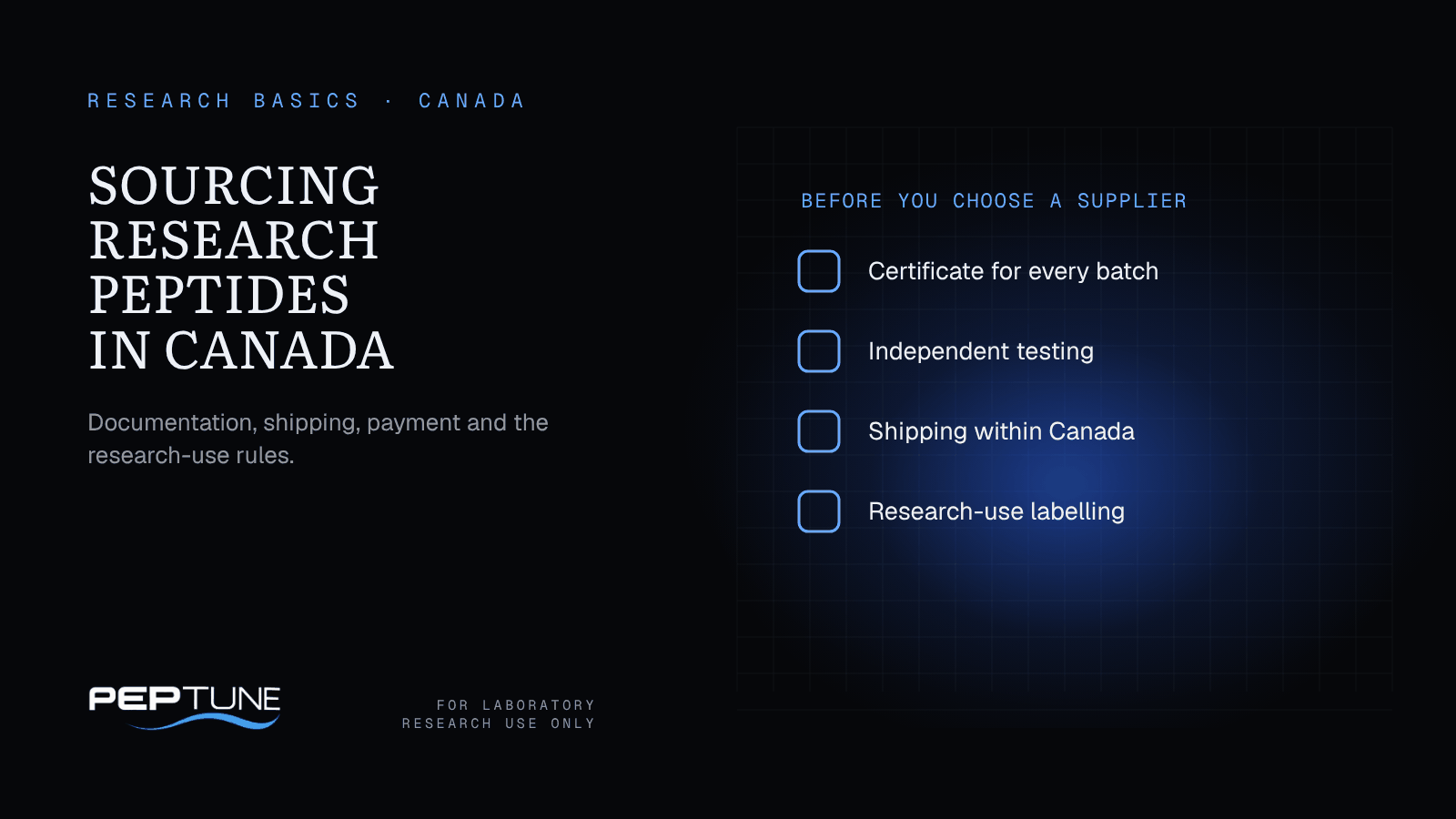 Research basicsSourcing research peptides in CanadaWhat Canadian laboratories should check before choosing a supplier of research peptides: documentation, shipping, payment and the research-use rules.5 min read